
Yak-25
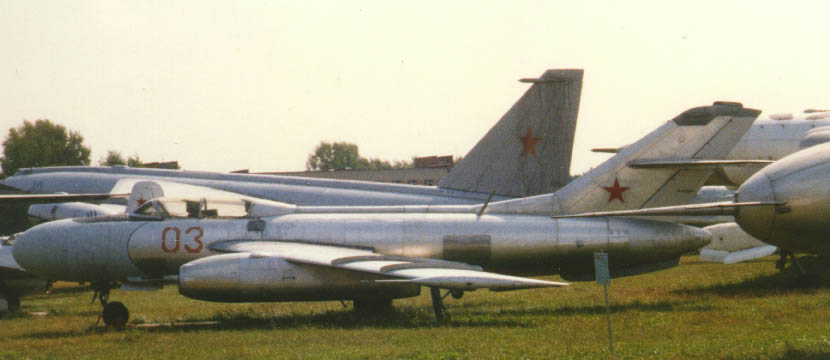
1952 fighter aircraft family by Yakovlev
Press Enter · cited answer in seconds
0 sources
Yak-25
Summary
Yak-25 is an aircraft family[1]. Yak-25 draws 618 Wikipedia views per month (aircraft_family category, ranking #507 of 1,568).[2]
Key Facts
- Yak-25 is in the country of Soviet Union[3].
- Yak-25's instance of is recorded as aircraft family[4].
- Yak-25 is operated by Soviet Air Forces[5].
- Yak-25 is operated by Soviet Air Defence Forces[6].
- Yak-25's manufacturer is recorded as Yakovlev[7].
- Yak-25's manufacturer is recorded as Saratov Aviation Plant[8].
- Yak-25's developer is recorded as Yakovlev[9].
- Yak-25 is a type of interceptor[10].
- Yak-25 is a type of fighter-reconnaissance aircraft[11].
- Yak-25 is a type of two-seat fighter[12].
- Yak-25 is a type of reconnaissance aircraft[13].
- Yak-25's Commons category is recorded as Yakovlev Yak-25[14].
- Yak-25's powered by is recorded as Tumansky RD-9[15].
- Yak-25's armament is recorded as Nudelman N-37[16].
- Yak-25's NATO reporting name is recorded as Flashlight-A[17].
- Yak-25's NATO reporting name is recorded as Mandrake[18].
- Yak-25's first flight is recorded as June 19, 1952[19].
- Yak-25's service entry is recorded as 1955[20].
- Yak-25's service retirement is recorded as 1967[21].
- Yak-25's total produced is recorded as {'amount': '+638'}[22].
- Yak-25's wing configuration is recorded as mid wing[23].
- Yak-25's length is recorded as {'unit': 'Q11573', 'amount': '+15.665'}[24].
- Yak-25's wingspan is recorded as {'unit': 'Q11573', 'amount': '+10.964'}[25].
- Yak-25's wing area is recorded as {'unit': 'Q25343', 'amount': '+28.95'}[26].
Body
Geography
Yak-25 is in the country of Soviet Union[3].
Physical Characteristics
Yak-25's length is recorded as {'unit': 'Q11573', 'amount': '+15.665'}[24].
Designation and Status
Yak-25's instance of is recorded as aircraft family[4].
Why It Matters
Yak-25 draws 618 Wikipedia views per month (aircraft_family category, ranking #507 of 1,568).[2] Yak-25 has Wikipedia articles in 20 language editions, a strong signal of global cultural recognition.[27] Yak-25 is known by 17 alternative names across languages and contexts.[28]