
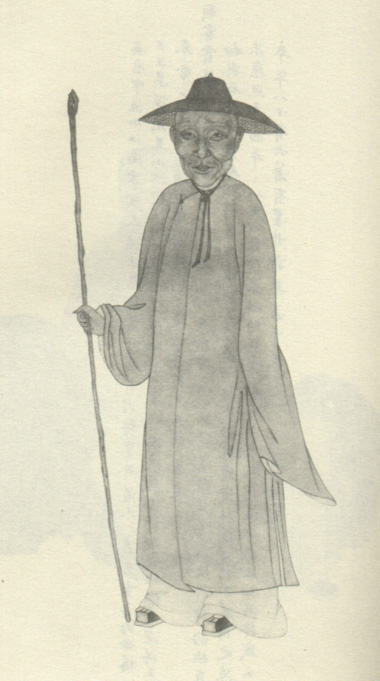
Wu Li
Chinese painter (1632-1718)
Press Enter · cited answer in seconds
0 sources
Summary
Wu Li was born on January 1, 1632[1], in Changshu[2]. He died on January 1, 1718[3], in Shanghai[4]. He worked as a painter[5], writer[6], poet[7], calligrapher[8], and missionary[9]. He ranks in the top 0.73% of human entities by monthly Wikipedia readership (85 views/month, #7,295 of 1,000,298).[10]
Key Facts
- Date of death: February 24, 1718[11]
- Country of citizenship: Qing dynasty[12], Ming dynasty[13]
- Occupation: scholar[14]
- Field of work: shan shui[15]
- Member of: Six Masters of the early Qing period[16]
- Religion or worldview: Catholic Church[17], Buddhism[18]
- Influenced by: Su Shi[19]
- Sex or gender: male[20]
- Ancestral home: Changshu County[21]
- Genre: landscape painting[22]
- Commons category: Wu Li[23]
- Religious order: Society of Jesus[24]
- Family name: Wu[25]
- Work location: Beijing[26], Macau[27], Nanjing[28]
- Student of: Wang Shimin[29]
- Described by source: Qingdai Xuezhe Xiangzhuan[30], Guochao Qixian Leizheng[31], Eminent Chinese of the Ch'ing Period[32]
- Languages spoken, written or signed: Chinese[33]
- Commons Creator page: Wu Li[34]
- Religious name: 西满[35]
- Courtesy name: 漁山[36]
- Art name: 墨井道人[37], 桃溪居士[38]
- Name in kana: ご れき[39]
- Has works in the collection: National Gallery of Canada[40], Metropolitan Museum of Art[41], Art Gallery of New South Wales[42], Los Angeles County Museum of Art[43], Yale University Art Gallery[44], Cleveland Museum of Art[45], The Palace Museum[46], National Palace Museum[47], Shanghai Museum[48]
Why It Matters
Wu Li has Wikipedia articles in 9 language editions, a strong signal of global cultural recognition.[49] He is known by 40 alternative names across languages and contexts.[50]
FAQs
Where was Wu Li born?
Wu Li's place of birth was Changshu[2].
Where did Wu Li die?
Wu Li died in Shanghai[4].
What did Wu Li do for work?
Wu Li worked as a painter[5], writer[6], poet[7], calligrapher[8], and missionary[9].