
William Butler Yeats
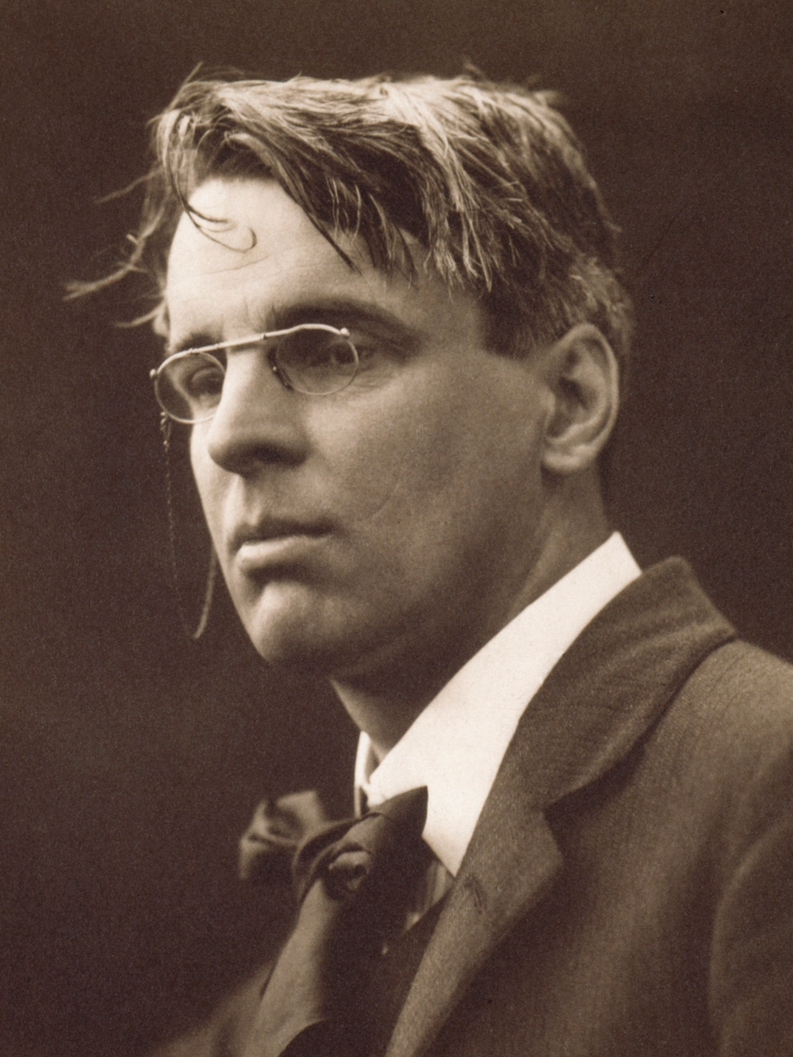
0 sources
Summary
William Butler Yeats was born on June 13, 1865[1], in Sandymount[2]. He died on January 28, 1939[3], in Menton[4]. He worked as a poet[5], playwright[6], writer[7], politician[8], and mystic[9]. He ranks in the top 0.51% of human entities by monthly Wikipedia readership (15,570 views/month, #5,106 of 1,000,298).[10]
Key Facts
- Place of death: Roquebrune-Cap-Martin[11]
- Date of birth: March 13, 1865[12]
- Place of burial: Drumcliff[13]
- Father: John Butler Yeats[14]
- Mother: Susan Pollexfen[15]
- Spouse: Georgie Hyde-Lees[16]
- Child: Anne Yeats[17], Michael Yeats[18]
- Country of citizenship: Irish Free State[19]
- Native language: English[20]
- Ethnic group: Irish people[21]
- Occupation: astrologer[22]
- Field of work: fiction[23], poetry[24], drama[25]
- Position held: senator of Ireland[26]
- Educated at: National College of Art and Design[27], The High School, Dublin[28]
- Award received: Nobel Prize in Literature[29], Goethe Plaque of the City of Frankfurt[30], Fellow of the Royal Society of Literature[31], Doctor of Letters[32]
- Member of: Hermetic Order of the Golden Dawn[33], Royal Society of Literature[34], Yeats family[35]
- Sex or gender: male[36]
- Movement: Symbolism[37]
- Commons category: William Butler Yeats[38]
- Unmarried partner: Maud Gonne[39], Olivia Shakespear[40], Margot Ruddock[41]
- Archives at: University of Leeds Libraries[42], Stuart A. Rose Manuscript, Archives, and Rare Book Library[43], University of Victoria Special Collections and University Archives[44], Harry Ransom Center[45], Bodleian Library[46], British Library[47], University at Buffalo Libraries[48], Boston College University Libraries[49], Houghton Library[50], University of Delaware Library Special Collections[51], National Library of Ireland[52], University of Reading, Special Collections[53]
- Family name: Yeats[54], Butler[55], Butler Yeats[56]
- Given name: William[57]
Product Details
The following facts are restated verbatim from public-domain and CC0 open-data sources — every line is independently verifiable against the named source's catalog.
MusicBrainz — CC0 open music encyclopedia
-
Type: Person[58]
-
Country: IE[59]
-
Began / founded: 1865-06-13[60]
-
Ended / dissolved: 1939-01-28[61]
-
MusicBrainz ID: 60ab738d-ffe9-45f6-bc08-f9ef5d4f7731[62]
Body
Works and Contributions
Things named for William Butler Yeats include Yeats[63].
Why It Matters
William Butler Yeats has Wikipedia articles in 30 language editions, a strong signal of global cultural recognition.[64] He is known by 108 alternative names across languages and contexts.[65]
He has been cited as an influence by Friedrich Nietzsche[66], a philosopher[67], 1844–1900[68], of Kingdom of Prussia[69], specialised in classical philology[70]; Wendell Berry[71], a poet[72], 1934–2026[73], of United States[74], awarded the Guggenheim Fellowship[75], specialised in English-language literature[76]; C. S. Lewis[77], a writer[78], 1898–1963[79], of United Kingdom[80], awarded the honorary doctorate at the Laval University[81], specialised in writing[82]; T. S. Eliot[83], a playwright[84], 1888–1965[85], of United States[86], awarded the Nobel Prize in Literature[87]; Robert Frost[88], a poet[89], 1874–1963[90], of United States[91], awarded the Pulitzer Prize for Poetry[92]; and Seamus Heaney[93], a playwright[94], 1939–2013[95], of Ireland[96], awarded the Nobel Prize in Literature[97], specialised in poetry[98].
Works attributed to him include The Second Coming[99], Sailing to Byzantium[100], Down by the Salley Gardens[101], and The Stolen Child[102]. Entities named for him include Yeats[63].
FAQs
Where was William Butler Yeats born?
William Butler Yeats was born in Sandymount[2].
Where did William Butler Yeats die?
William Butler Yeats died in Menton[4].
Who were William Butler Yeats's parents?
William Butler Yeats's father was John Butler Yeats[14]. William Butler Yeats's mother was Susan Pollexfen[15].
Who was William Butler Yeats married to?
William Butler Yeats's spouses include Georgie Hyde-Lees[16].
What did William Butler Yeats do for work?
William Butler Yeats worked as a poet[5], playwright[6], writer[7], politician[8], and mystic[9].
Where did William Butler Yeats go to school?
William Butler Yeats was educated at National College of Art and Design[27] and The High School, Dublin[28].
What awards did William Butler Yeats receive?
Honors received include Nobel Prize in Literature[29], Goethe Plaque of the City of Frankfurt[30], Fellow of the Royal Society of Literature[31], and Doctor of Letters[32].
Who did William Butler Yeats influence?
William Butler Yeats has been cited as an influence by Friedrich Nietzsche[66], Wendell Berry[71], C. S. Lewis[77], and T. S. Eliot[83].