
Vladimir Kara-Murza
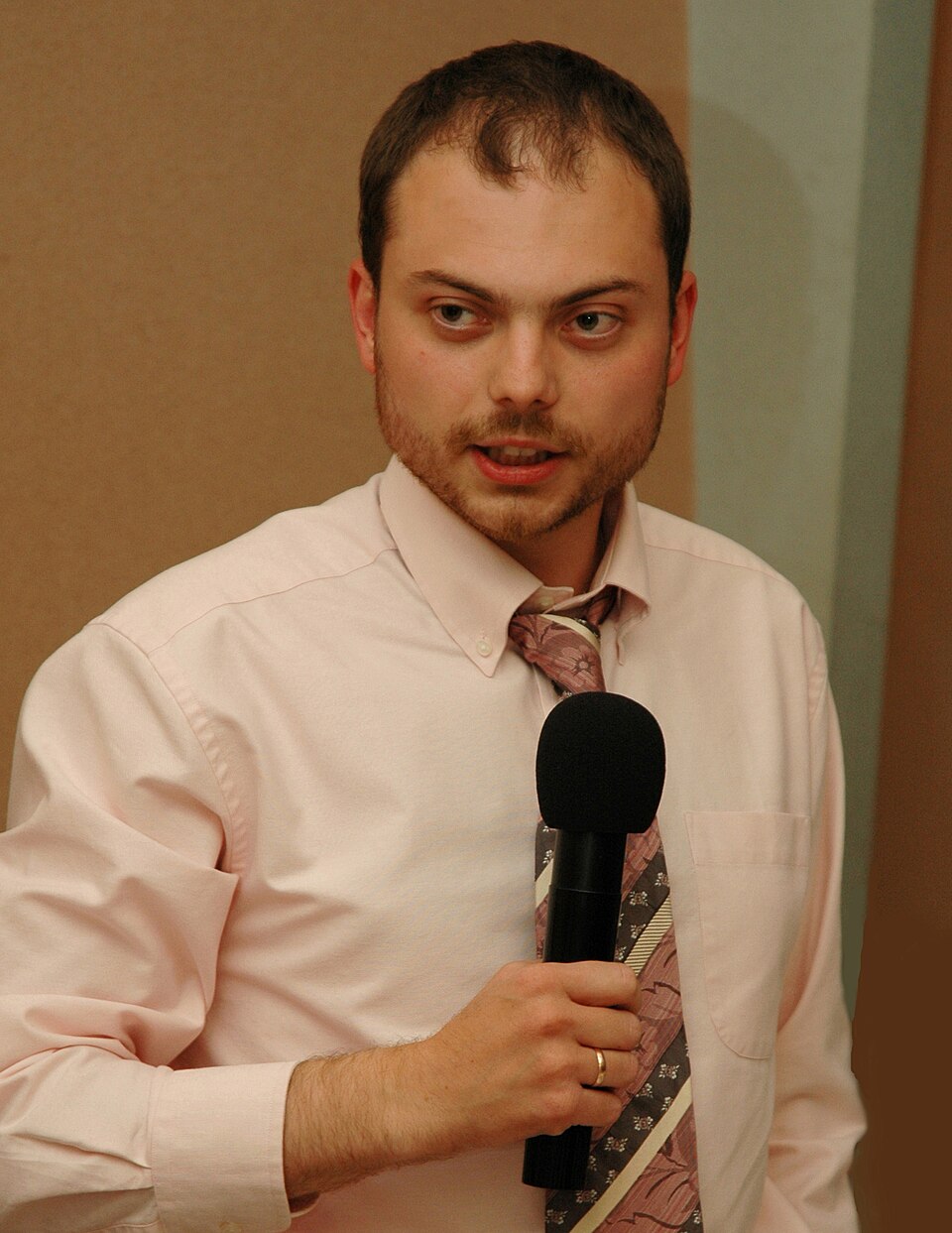
0 sources
Summary
Vladimir Kara-Murza was born on September 7, 1981[1], in Moscow[2]. He has worked as a politician[3], historian[4], opinion journalist[5], documentarian[6], and journalist[7]. He ranks in the top 0.71% of human entities by monthly Wikipedia readership (4,320 views/month, #7,059 of 1,000,298).[8]
Key Facts
- Father: Vladimir Kara-Murza[9]
- Spouse: Evgenia Kara-Murza[10]
- Country of citizenship: Soviet Union[11], Russia[12], United Kingdom[13]
- Native language: Russian[14]
- Ethnic group: Russian Jews[15]
- Field of work: journalism[16], politics[17], documentary film[18]
- Educated at: Trinity Hall[19], The John Lyon School[20]
- Award received: Civil Courage Prize[21], USTR Prize for Freedom, Democracy and Human Rights[22], Václav Havel Human Rights Prize[23], Cross of Merit of the Ministry of Foreign Affairs of Estonia, 2nd class[24], Pulitzer Prize for Commentary[25]
- Member of: Open Russia[26], The Platform of Russian Democratic Forces under PACE[27]
- Religion or worldview: Eastern Orthodoxy[28]
- Sex or gender: male[29]
- Commons category: Vladimir Vladimirovich Kara-Murza[30]
- Family name: Kara-Murza[31]
- Given name: Vladimir[32]
- Significant event: 2024 American–Russian prisoner exchange[33]
- Languages spoken, written or signed: Russian[34], English[35], Spanish[36]
- Name in native language: Владимир Владимирович Кара-Мурза[37]
- Number of children: 3[38]
- Start of work period: 1997[39]
- Patronym or matronym: Vladimirovich[40]
- Has written for: The Washington Post[41]
- Social media followers: 62,829[42], 55,397[43], 79,127[44], 119,852[45]
Why It Matters
Vladimir Kara-Murza has Wikipedia articles in 23 language editions, a strong signal of global cultural recognition.[46] He is known by 46 alternative names across languages and contexts.[47]
FAQs
Where was Vladimir Kara-Murza born?
Vladimir Kara-Murza's place of birth was Moscow[2].
Who were Vladimir Kara-Murza's parents?
Vladimir Kara-Murza's father was Vladimir Kara-Murza[9].
Who was Vladimir Kara-Murza married to?
Vladimir Kara-Murza's spouses include Evgenia Kara-Murza[10].
What did Vladimir Kara-Murza do for work?
Vladimir Kara-Murza worked as a politician[3], historian[4], opinion journalist[5], documentarian[6], and journalist[7].
Where did Vladimir Kara-Murza go to school?
Vladimir Kara-Murza was educated at Trinity Hall[19] and The John Lyon School[20].
What awards did Vladimir Kara-Murza receive?
Honors received include Civil Courage Prize[21], USTR Prize for Freedom, Democracy and Human Rights[22], Václav Havel Human Rights Prize[23], and Cross of Merit of the Ministry of Foreign Affairs of Estonia, 2nd class[24].