
Topkapi manuscript
early manuscript of the Quran
Press Enter · cited answer in seconds
0 sources
Topkapi manuscript
Summary
Topkapi manuscript is an Early Quranic manuscript[1]. It draws 78 Wikipedia views per month (early_quranic_manuscript category, ranking #5 of 7).[2]
Key Facts
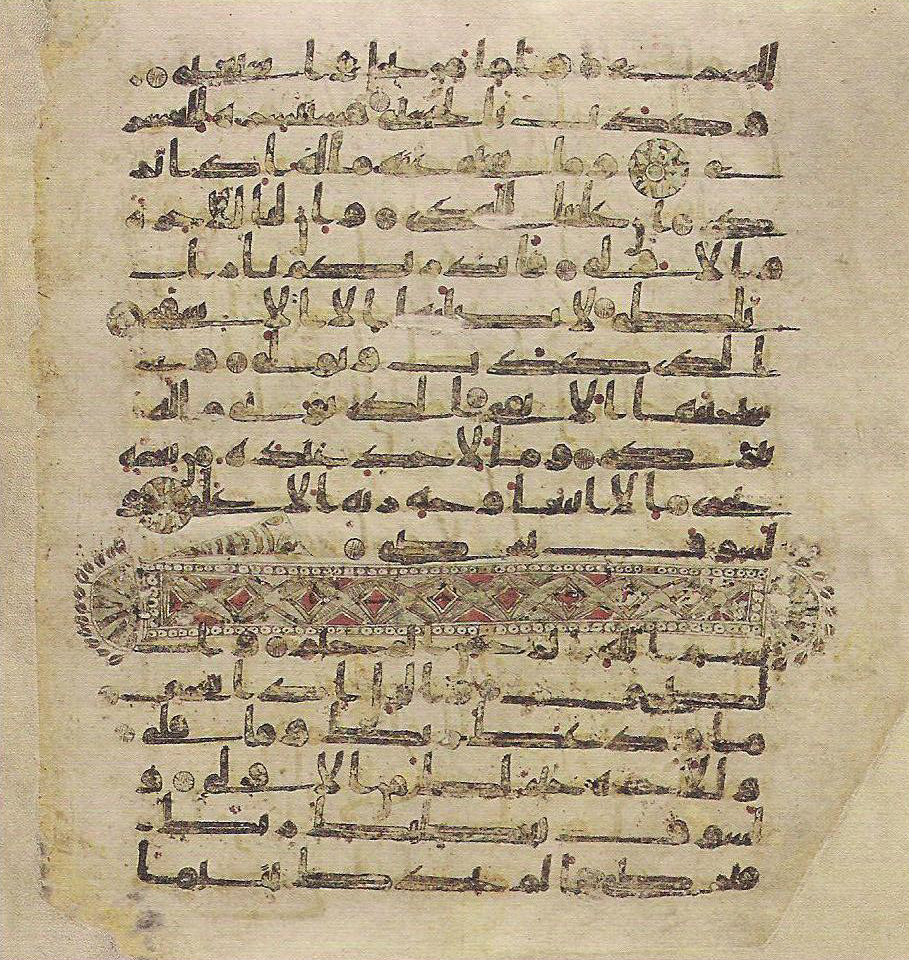
- Topkapi manuscript's image is recorded as Topkapi 92.8-93.6.png[3].
- Topkapi manuscript's instance of is recorded as Early Quranic manuscript[4].
- Topkapi manuscript's instance of is recorded as calligraphic work[5].
- Topkapi manuscript's instance of is recorded as illuminated manuscript[6].
- Topkapi manuscript's instance of is recorded as codex[7].
- Topkapi manuscript's owned by is recorded as Mahmud II[8].
- Topkapi manuscript's made from material is recorded as vellum[9].
- Topkapi manuscript's made from material is recorded as ink[10].
- Topkapi manuscript's collection is recorded as Topkapı Palace Museum Library[11].
- Topkapi manuscript's inventory number is recorded as H.S. 194[12].
- Topkapi manuscript's location is recorded as Topkapı Palace[13].
- Topkapi manuscript's language of work or name is recorded as Arabic[14].
- Topkapi manuscript's pronunciation audio is recorded as LL-Q22809485 (apc)-Hassan Hassoon-مصحف طوبقابي.wav[15].
- +0725-00-00T00:00:00Z marks the founding of Topkapi manuscript[16].
- Topkapi manuscript's Freebase ID is recorded as /m/0c0wny[17].
- Topkapi manuscript's exemplar of is recorded as Qur’an[18].
- Topkapi manuscript's height is recorded as {'unit': 'Q174728', 'amount': '+46'}[19].
- Topkapi manuscript's width is recorded as {'unit': 'Q174728', 'amount': '+41'}[20].
- Topkapi manuscript's contains is recorded as Qur’an[21].
- Topkapi manuscript's script style is recorded as Kufic[22].
Why It Matters
Topkapi manuscript draws 78 Wikipedia views per month (early_quranic_manuscript category, ranking #5 of 7).[2] It has Wikipedia articles in 7 language editions, a strong signal of global cultural recognition.[23]