
The Grapes of Wrath
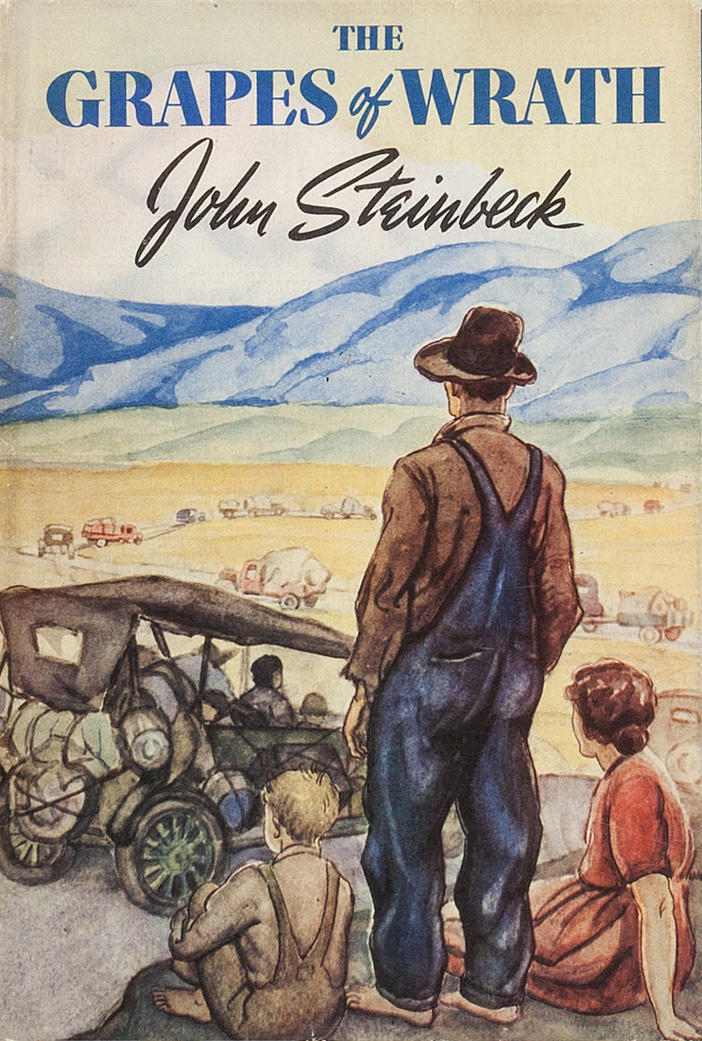
0 sources
The Grapes of Wrath
Summary
The Grapes of Wrath is a literary work[1]. It has Wikipedia articles in 28 language editions, a strong signal of global cultural recognition.[2]
Key Facts
- The Grapes of Wrath authored John Steinbeck[3].
- The Grapes of Wrath received the Le Monde's 100 Books of the Century[4].
- The Grapes of Wrath received the 20th Century's Greatest Hits: 100 English-Language Books of Fiction[5].
- The Grapes of Wrath received the Pulitzer Prize for the Novel[6].
- The Grapes of Wrath's instance of is recorded as literary work[7].
- The Grapes of Wrath is associated with the literary realism movement[8].
- The Grapes of Wrath's genre is historical fiction[9].
- Battle Hymn of the Republic is named after The Grapes of Wrath[10].
- The Grapes of Wrath followed Of Mice and Men[11].
- The Grapes of Wrath's depicts is recorded as forced displacement[12].
- The Grapes of Wrath's depicts is recorded as U.S. Route 66[13].
- The Grapes of Wrath's depicts is recorded as reserve army of labour[14].
- The Grapes of Wrath's depicts is recorded as starvation[15].
- The Grapes of Wrath's depicts is recorded as social exploitation[16].
- The Grapes of Wrath's depicts is recorded as dust storm[17].
- The Grapes of Wrath's depicts is recorded as agricultural productivity[18].
- The Grapes of Wrath's depicts is recorded as agricultural machinery[19].
- The Grapes of Wrath's place of publication is recorded as New York City[20].
- The Grapes of Wrath's Commons category is recorded as The Grapes of Wrath[21].
- The Grapes of Wrath's language of work or name is recorded as English[22].
- The Grapes of Wrath's country of origin is recorded as United States[23].
- The Grapes of Wrath was released on April 14, 1939[24].
- The Grapes of Wrath was published on 1939[25].
- The Grapes of Wrath's has edition or translation is recorded as The Grapes of Wrath[26].
- The Grapes of Wrath's has edition or translation is recorded as Q138411223[27].
Body
Authorship and Creation
The Grapes of Wrath authored John Steinbeck[3].
Publication
Publication dates include April 14, 1939[24] and 1939[25]. The Grapes of Wrath's place of publication is recorded as New York City[20]. Its language of work or name is recorded as English[22]. Its genre is historical fiction[9].
Subject and Themes
The Grapes of Wrath's main subject is Great Depression in the United States[28]. It is associated with the literary realism movement[8].
Reception
Awards received include Le Monde's 100 Books of the Century[4], a list of best books[29], in France[30], written by Le Monde[31]; 20th Century's Greatest Hits: 100 English-Language Books of Fiction[5], a list of best books[32]; and Pulitzer Prize for the Novel[6], a class of award[33], founded in 1918[34].
Adaptations and Inspiration
The Grapes of Wrath followed Of Mice and Men[11].
Cultural Impact
Things named for The Grapes of Wrath include The Crepes of Wrath[35], a television series episode[36], directed by Milton Gray[37].
Why It Matters
The Grapes of Wrath has Wikipedia articles in 28 language editions, a strong signal of global cultural recognition.[2] It is known by 20 alternative names across languages and contexts.[38]
It has been cited as an influence by When the Levee Breaks[39], a musical work/composition[40]; Led Zeppelin IV[41], an album[42]; Going to California[43], a musical work/composition[44]; and Led Zeppelin[45], a rock band[46], founded in 1968[47].
Entities named for it include The Crepes of Wrath[35], a television series episode[36], directed by Milton Gray[37].
FAQs
What awards did The Grapes of Wrath receive?
Honors received include Le Monde's 100 Books of the Century[4], 20th Century's Greatest Hits: 100 English-Language Books of Fiction[5], and Pulitzer Prize for the Novel[6].
Who did The Grapes of Wrath influence?
The Grapes of Wrath has been cited as an influence by When the Levee Breaks[39], Led Zeppelin IV[41], Going to California[43], and Led Zeppelin[45].