
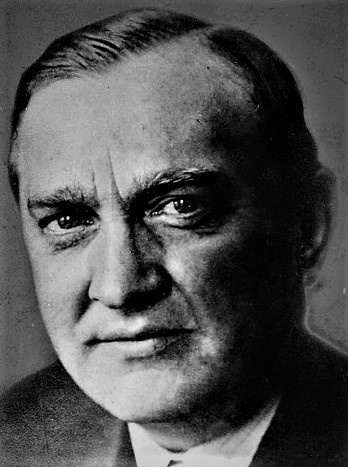
Stefan Banach
0 sources
Stefan Banach
Summary
Stefan Banach is a human[1]. Born in Kraków[2], he… he was born on March 30, 1892[3]. He passed away in Lviv[4]. He died on August 31, 1945[5]. He worked as a mathematician[6] and university teacher[7]. He has Wikipedia articles in 26 language editions, a strong signal of global cultural recognition.[8]
Key Facts
- Born in Kraków[2], Stefan Banach…
- Stefan Banach passed away in Lviv[4].
- Stefan Banach was born on March 30, 1892[3].
- Stefan Banach died on August 31, 1945[5].
- Burial took place at Lychakiv Cemetery[9].
- Among Stefan Banach's spouses was Łucja Braus[10].
- Stefan Banach held citizenship in Cisleithania[11].
- Stefan Banach held citizenship in Second Polish Republic[12].
- Stefan Banach held citizenship in Ukrainian Soviet Socialist Republic[13].
- Stefan Banach held citizenship in Reichskommissariat Ukraine[14].
- Stefan Banach held citizenship in Ukrainian Soviet Socialist Republic[15].
- Polish was Stefan Banach's native language[16].
- Stefan Banach's professions included mathematician[6].
- Stefan Banach worked as a university teacher[7].
- Stefan Banach's field of work was mathematics[17].
- Stefan Banach's field of work was functional analysis[18].
- Stefan Banach's field of work was topology[19].
- Stefan Banach's field of work was Banach space[20].
- Stefan Banach's field of work was measure theory[21].
- Stefan Banach's field of work was integral[22].
- Stefan Banach was employed by Lviv University[23].
- Stefan Banach was employed by Lviv Polytechnic[24].
- Stefan Banach was educated at IV Liceum i Gimnazjum im. Henryka Sienkiewicza w Krakowie[25].
- Stefan Banach was educated at Lviv Polytechnic[26].
- Stefan Banach was educated at Jagiellonian University[27].
Body
Origins and Family
Stefan Banach's place of birth was Kraków[2]. He was born on March 30, 1892[3]. Polish was his native language[16].
Education
Educated at IV Liceum i Gimnazjum im. Henryka Sienkiewicza w Krakowie[25], a lyceum[28], in Poland[29], founded in 1901[30]; Lviv Polytechnic[26], a university[31], in Ukraine[32], founded in 1844[33]; Jagiellonian University[27], a public university[34], in Poland[35], founded in 1364[36], headquartered in Kraków[37]; Lviv University[38], a public university[39], in Ukraine[40], founded in 1661[41], headquartered in Main building of Lviv University[42]; and Bartłomiej Nowodworski High School[43], a secondary school[44], in Poland[45], founded in 1586[46]. Doctoral advisors include Hugo Steinhaus[47], a mathematician[48], 1887–1972[49], of Cisleithania[50], awarded the Commander with Star of the Order of Polonia Restituta[51], specialised in probability theory[52] and Kazimierz Twardowski[53], a philosopher[54], 1866–1938[55], of Austria–Hungary[56], awarded the Cross of Valour[57], specialised in philosophy[58]. Stefan Banach earned the academic degree of Doctor of Philosophy[59].
Career and Affiliations
Recorded occupations include mathematician[6] and university teacher[7]. Fields of work include mathematics[17], an academic discipline[60]; functional analysis[18], a branch of mathematics[61]; topology[19], a branch of mathematics[62]; Banach space[20], a mathematical concept[63], founded in 1920[64]; measure theory[21], a branch of mathematics[65]; and integral[22], a mathematical concept[66]. Employers include Lviv University[23], a public university[67], in Ukraine[68], founded in 1661[69], headquartered in Main building of Lviv University[70] and Lviv Polytechnic[24], a university[71], in Ukraine[72], founded in 1844[73]. Stefan Banach supervised Stanisław Mazur as a doctoral student[74].
Works and Contributions
Notable works include Banach space[75], Banach algebra[76], Banach–Tarski paradox[77], Banach manifold[78], uniform boundedness principle[79], and Hahn–Banach theorem[80]. Things named for Stefan Banach include Stefan Banach Prize[81], a science award[82], in Poland[83], founded in 1946[84]; Banach fixed-point theorem[85], a fixed-point theorem[86]; Hahn–Banach theorem[87], a theorem[88]; Banach space[89]; Banach's matchbox problem[90]; Stefan Banach International Prize[91]; Banach–Alaoglu theorem[92]; and Banach algebra[93].
Recognition
Stefan Banach received the Order of the White Eagle[94].
Personal Life
Stefan Banach was married to Łucja Braus[10].
Death and Burial
Stefan Banach died on August 31, 1945[5]. He passed away in Lviv[4]. The cause of death was lung cancer[95]. He is buried at Lychakiv Cemetery[9].
Why It Matters
Stefan Banach has Wikipedia articles in 26 language editions, a strong signal of global cultural recognition.[8] He is known by 22 alternative names across languages and contexts.[96]
He is credited with the discovery of Banach fixed-point theorem[97], a fixed-point theorem[98]. Entities named for him include Stefan Banach Prize[81], a science award[82], in Poland[83], founded in 1946[84]; Banach fixed-point theorem[85], a fixed-point theorem[86]; Hahn–Banach theorem[87], a theorem[88]; Banach space[89]; Banach's matchbox problem[90]; and Stefan Banach International Prize[91].
His notable doctoral advisees include Stanisław Mazur[99], a mathematician[100], 1905–1981[101], of Poland[102], awarded the Officer of the Order of Polonia Restituta[103], specialised in functional analysis[104].
FAQs
Where was Stefan Banach born?
Stefan Banach's place of birth was Kraków[2].
Where did Stefan Banach die?
Stefan Banach died in Lviv[4].
Who was Stefan Banach married to?
Stefan Banach's spouses include Łucja Braus[10].
What did Stefan Banach do for work?
Stefan Banach worked as mathematician[6] and university teacher[7].
Where did Stefan Banach go to school?
Stefan Banach was educated at IV Liceum i Gimnazjum im. Henryka Sienkiewicza w Krakowie[25], Lviv Polytechnic[26], Jagiellonian University[27], and Lviv University[38].
What awards did Stefan Banach receive?
Honors received include Order of the White Eagle[94].
What did Stefan Banach discover?
Stefan Banach is credited as discoverer of Banach fixed-point theorem[97].