
Sheldon Glashow
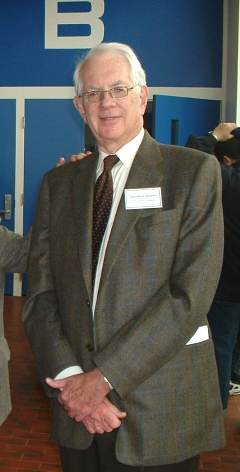
0 sources
Sheldon Glashow was born on December 5, 1932, in New York City.[1][2][3][4][5][6] He has United States citizenship.[7] His religion is atheism.
He is a physicist, scientist, theoretical physicist, and university teacher.[8][9][10][11] His field includes theoretical physics, electroweak interaction, particle physics, and field theory.[11] His education includes Harvard University, Cornell University, Bronx High School of Science, and Boston University.[12]
His employers include Harvard University, Boston University, and University of California, Berkeley. His awards include the Nobel Prize in Physics, High Energy and Particle Physics Prize, J. Robert Oppenheimer Memorial Prize, honorary doctor of the Bar-Ilan University, Richtmyer Memorial Lecture Award, and honorary doctor of Yeshiva University + 1 more.[13][14][15][16][17] He is a member of the National Academy of Sciences, American Academy of Arts and Sciences, Russian Academy of Sciences, and American Philosophical Society.[12] His notable works include string theory..
Key Facts
- Country of citizenship: United States[8]
- Field of work: theoretical physics[9], electroweak interaction[10], particle physics[11], field theory[12]
- Employer: Harvard University[13], Boston University[14], University of California, Berkeley[15]
- Educated at: Harvard University[16], Cornell University[17], Bronx High School of Science[18], Boston University[19]
- Doctoral advisor: Julian Schwinger[20]
- Notable work: string theory[21]
- Award received: Nobel Prize in Physics[22], High Energy and Particle Physics Prize[23], J. Robert Oppenheimer Memorial Prize[24], honorary doctor of the Bar-Ilan University[25], Richtmyer Memorial Lecture Award[26], honorary doctor of Yeshiva University[27], honorary doctorate of the University of the Mediterranean - Aix Marseille II[28]
- Member of: National Academy of Sciences[29], American Academy of Arts and Sciences[30], Russian Academy of Sciences[31], American Philosophical Society[32], American Association for the Advancement of Science[33], American Physical Society[34], Accademia Nazionale dei Lincei[35]
- Religion or worldview: atheism[36]
- Sex or gender: male[37]
- Doctoral student: Elizabeth Ellen Jenkins[38], Uri Sarid[39]
- Commons category: Sheldon Lee Glashow[40]
- Family name: Glashow[41]
- Given name: Sheldon[42], Lee[43]
- Student of: Julian Schwinger[44]
- Described by source: Physicists: Biographical Dictionary[45]
- Languages spoken, written or signed: English[46]
- Name in native language: Sheldon Lee Glashow[47]
- Erdős number: 2[48]
Body
Works and Contributions
Things named for Sheldon Glashow include GIM mechanism[49].
Why It Matters
Sheldon Glashow has Wikipedia articles in 28 language editions, a strong signal of global cultural recognition.[50] He is known by 64 alternative names across languages and contexts.[51]
He is credited with the discovery of unified field theory[52], a concept[53]. Entities named for him include GIM mechanism[49].
FAQs
Where was Sheldon Glashow born?
Sheldon Glashow was born in New York City[2].
What did Sheldon Glashow do for work?
Sheldon Glashow worked as a physicist[3], scientist[4], theoretical physicist[5], and university teacher[6].
Where did Sheldon Glashow go to school?
Sheldon Glashow was educated at Harvard University[16], Cornell University[17], Bronx High School of Science[18], and Boston University[19].
What awards did Sheldon Glashow receive?
Honors received include Nobel Prize in Physics[22], High Energy and Particle Physics Prize[23], J. Robert Oppenheimer Memorial Prize[24], and honorary doctor of the Bar-Ilan University[25].
What did Sheldon Glashow discover?
Sheldon Glashow is credited as discoverer of unified field theory[52].