
Romeo and Juliet
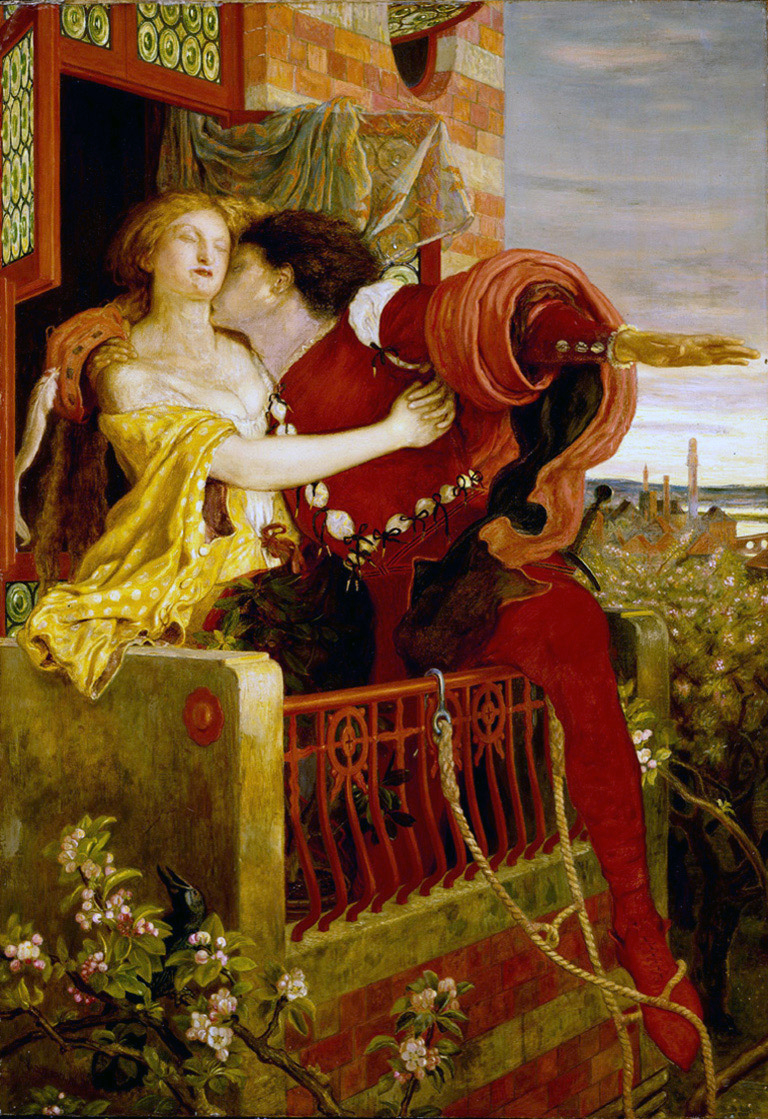
0 sources
Summary
Romeo and Juliet is a dramatic work[1]. It ranks in the top 0.7% of dramatic work entities by monthly Wikipedia readership (46,881 views/month, #2 of 285).[2]
Key Facts
- Author: William Shakespeare[3]
- Genre: tragedy[4], melodrama[5]
- Based on: The Tragicall Historye of Romeus and Juliet[6]
- Depicts: star-crossed lovers[7]
- Commons category: Romeo and Juliet[8]
- Language of work or name: English[9]
- Distribution format: printed book[10]
- Country of origin: Kingdom of England[11]
- Inception: 1597[12]
- Edition or translation of: U Romeo bad Ka Juliet[13]
- Characters: Romeo[14], Juliet[15], Tybalt[16], Mercutio[17], Benvolio[18], Friar Laurence[19], Count Paris[20], Lady Capulet[21], Nurse[22], Lady Montague[23], Prince Escalus[24]
- Has edition or translation: Romeo and Juliet[25], Roméo et Juliette[26], The Tragedy of Romeo and Juliet[27], The tragedie of Romeo and Juliet[28], Ромео и Јулија[29], Romeo und Juliette[30], Romaios kai Ioulieta[31], Romeo y Julieta[32], Romeo és Júlia[33], Romeo și Julieta[34], Q58896074[35], Q58896163[36], Romeo i Julia[37], Q58896349[38]
- Narrative location: Verona[39], Mantua[40]
- Topic's main category: Category:Romeo and Juliet[41]
- Main subject: forbidden love[42]
- Commons gallery: Romeo and Juliet[43]
Product Details
The following facts are restated verbatim from public-domain and CC0 open-data sources — every line is independently verifiable against the named source's catalog.
MusicBrainz — CC0 open music encyclopedia
Body
Cultural Impact
Things named for Romeo and Juliet include Romeu and Julieta[46], a dessert[47]; The Romeo and Juliet Effect[48], a psychological phenomenon[49]; and Rome-old and Juli-eh[50], a television series episode[51], directed by Nancy Kruse[52].
Why It Matters
Romeo and Juliet has Wikipedia articles in 30 language editions, a strong signal of global cultural recognition.[53] It is known by 81 alternative names across languages and contexts.[54]
Entities named for it include Romeu and Julieta[46], a dessert[47]; The Romeo and Juliet Effect[48], a psychological phenomenon[49]; and Rome-old and Juli-eh[50], a television series episode[51], directed by Nancy Kruse[52].