
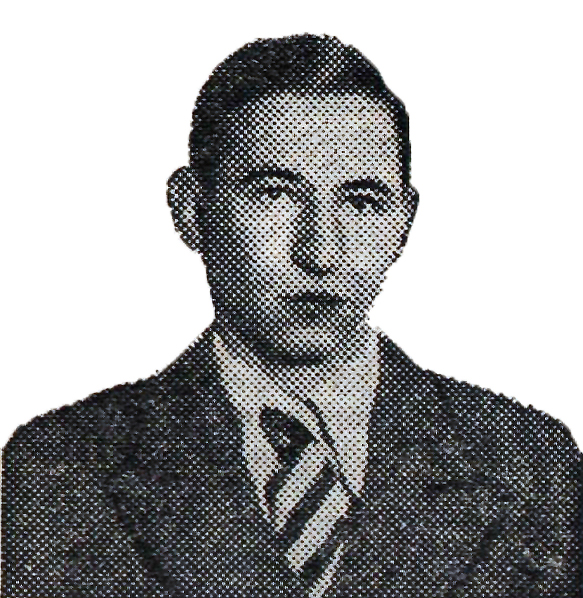
Roland Rainer
0 sources
Roland Rainer
Summary
Roland Rainer is a human[1]. His place of birth was Klagenfurt am Wörthersee[2]. He was born on May 1, 1910[3]. He passed away in Vienna[4]. He died on April 10, 2004[5]. He worked as an architect[6], university teacher[7], curator[8], and urban planner[9]. He ranks in the top 0.73% of human entities by monthly Wikipedia readership (23 views/month, #7,296 of 1,000,298).[10]
Key Facts
- Roland Rainer's place of birth was Klagenfurt am Wörthersee[2].
- Roland Rainer died in Vienna[4].
- Roland Rainer was born on May 1, 1910[3].
- Roland Rainer died on April 10, 2004[5].
- Roland Rainer held citizenship in Austria[11].
- Roland Rainer's professions included architect[6].
- Roland Rainer worked as a university teacher[7].
- Roland Rainer's professions included curator[8].
- Roland Rainer worked as an urban planner[9].
- Roland Rainer was employed by Technical University of Munich[12].
- Among Roland Rainer's employers was Technische Universität Berlin[13].
- Among Roland Rainer's employers was TU Braunschweig[14].
- Roland Rainer was employed by Leibniz University Hannover[15].
- Among Roland Rainer's employers was Academy of Fine Arts Vienna[16].
- Among Roland Rainer's employers was Technion – Israel Institute of Technology[17].
- Roland Rainer's education included a stint at TU Wien[18].
- A notable student of Roland Rainer was Helmuth Frank[19].
- A notable student of Roland Rainer was Klara Hautmann-Kiss[20].
- A notable student of Roland Rainer was Roland Berreck[21].
- A notable student of Roland Rainer was Andreas Zangerl[22].
- A notable work attributed to Roland Rainer is ÖVB Arena[23].
- A notable work attributed to Roland Rainer is Wiener Stadthalle[24].
- A notable work attributed to Roland Rainer is Friedrich-Ebert-Halle[25].
- Roland Rainer received the Ring of Honour of the City of Vienna[26].
- Roland Rainer received the City of Vienna Prize for Architecture[27].
Product Details
The following facts are restated verbatim from public-domain and CC0 open-data sources — every line is independently verifiable against the named source's catalog.
MusicBrainz — CC0 open music encyclopedia
Body
Origins and Family
Roland Rainer's place of birth was Klagenfurt am Wörthersee[2]. He was born on May 1, 1910[3].
Education
Roland Rainer's education included a stint at TU Wien[18].
Career and Affiliations
Recorded occupations include architect[6], university teacher[7], curator[8], and urban planner[9]. Employers include Technical University of Munich[12], an institute of technology[30], in Germany[31], founded in 1868[32], headquartered in Munich[33]; Technische Universität Berlin[13], a public research university[34], in Germany[35], founded in 1946[36], headquartered in Technische Universität Berlin, Hauptgebäude[37]; TU Braunschweig[14], an institute of technology[38], in Germany[39], founded in 1745[40], headquartered in Brunswick[41]; Leibniz University Hannover[15], a public university[42], in Germany[43], founded in 1831[44], headquartered in Hanover[45]; Academy of Fine Arts Vienna[16], an academy of fine arts[46], in Austria[47], founded in 1692[48], headquartered in Vienna[49]; and Technion – Israel Institute of Technology[17], a university[50], in Israel[51], founded in 1924[52], headquartered in Haifa[53]. Notable students include Helmuth Frank[19], Klara Hautmann-Kiss[20], Roland Berreck[21], and Andreas Zangerl[22].
Works and Contributions
Notable works include ÖVB Arena[23], a multi-purpose hall[54], in Germany[55], founded in 1964[56]; Wiener Stadthalle[24], a multi-purpose hall[57], in Austria[58], founded in 1950[59]; and Friedrich-Ebert-Halle[25], a multi-purpose hall[60], in Germany[61], founded in 1965[62].
Recognition
Awards received include Ring of Honour of the City of Vienna[26], an award[63], in Austria[64], founded in 1925[65]; City of Vienna Prize for Architecture[27], an architecture award[66], in Austria[67], founded in 1947[68]; Austrian Decoration for Science and Art[69], a state decoration[70], in Austria[71], founded in 1955[72]; honorary doctor of the Vienna Technical University[73], an award[74], in Austria[75]; Grand Officer, Special Class of the Order of Honour for Services to the Republic of Austria[76], a grade of an order[77]; and Kardinal-Innitzer-Preis[78], a science award[79], in Austria[80].
Personal Life
Roland Rainer was affiliated with the Nazi Party[81].
Death and Burial
Roland Rainer died on April 10, 2004[5]. He died in Vienna[4].
Why It Matters
Roland Rainer ranks in the top 0.73% of human entities by monthly Wikipedia readership (23 views/month, #7,296 of 1,000,298).[10] He has Wikipedia articles in 8 language editions, a strong signal of global cultural recognition.[82] He is known by 12 alternative names across languages and contexts.[83]
FAQs
Where was Roland Rainer born?
Born in Klagenfurt am Wörthersee[2], Roland Rainer…
Where did Roland Rainer die?
Roland Rainer passed away in Vienna[4].
What did Roland Rainer do for work?
Roland Rainer worked as architect[6], university teacher[7], curator[8], and urban planner[9].
Where did Roland Rainer go to school?
Roland Rainer was educated at TU Wien[18].
What awards did Roland Rainer receive?
Honors received include Ring of Honour of the City of Vienna[26], City of Vienna Prize for Architecture[27], Austrian Decoration for Science and Art[69], and honorary doctor of the Vienna Technical University[73].