
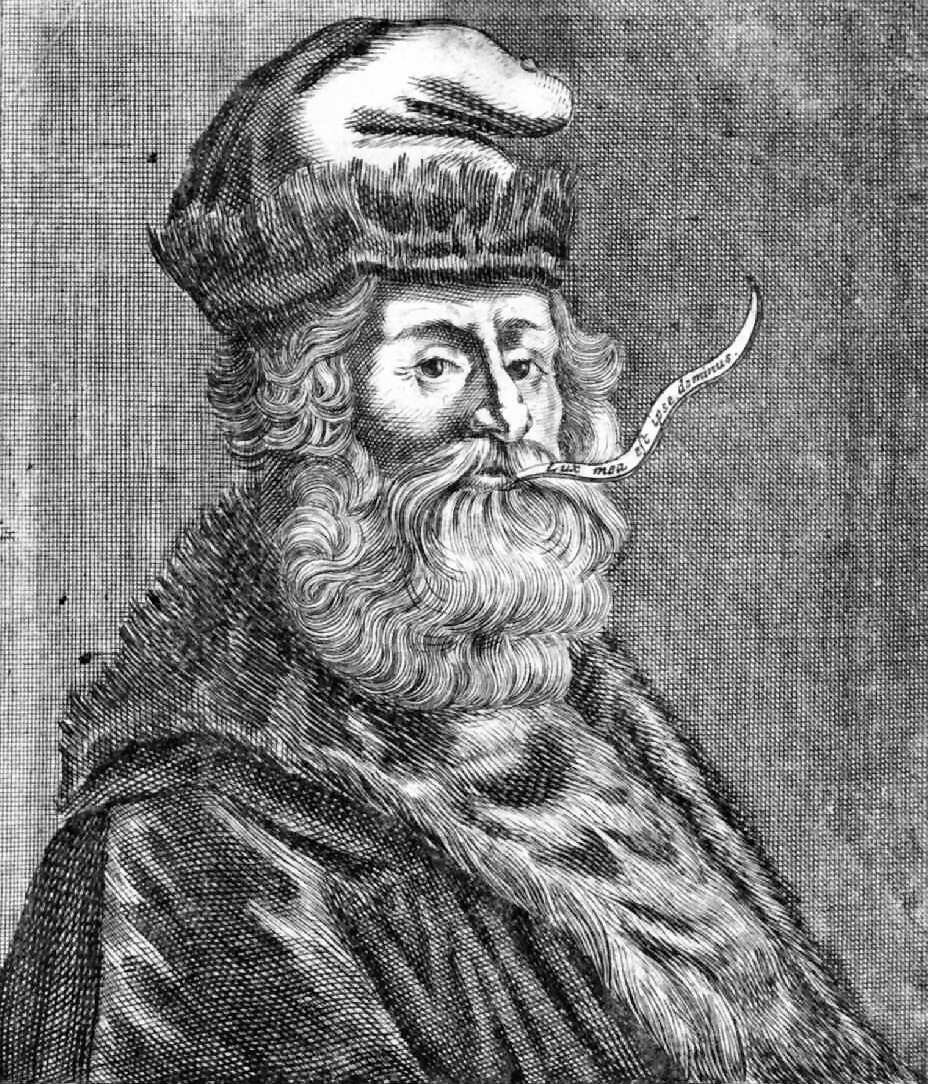
Ramon Llull
0 sources
Ramon Llull
Summary
Ramon Llull is a human[1]. His place of birth was Palma[2]. He was born on 1232[3]. He passed away in Mediterranean Sea[4]. He died on 1316[5]. He worked as a philosopher[6], writer[7], theologian[8], missionary[9], and astrologer[10]. He ranks in the top 0.69% of human entities by monthly Wikipedia readership (12,475 views/month, #6,912 of 1,000,298).[11]
Key Facts
- Born in Palma[2], Ramon Llull…
- Ramon Llull died in Mediterranean Sea[4].
- Ramon Llull was born on 1232[3].
- Ramon Llull was born on January 1, 1232[12].
- Ramon Llull died on 1316[5].
- Burial took place at Basilica of St. Francis[13].
- Ramon Llull was married to Blanca Picany[14].
- Ramon Llull held citizenship in Kingdom of Majorca[15].
- Old Occitan was Ramon Llull's native language[16].
- Ramon Llull worked as a philosopher[6].
- Ramon Llull worked as a writer[7].
- Ramon Llull's professions included theologian[8].
- Ramon Llull worked as a missionary[9].
- Ramon Llull's professions included astrologer[10].
- Ramon Llull worked as a poet[17].
- Ramon Llull was educated at Q64690423[18].
- A notable student of Ramon Llull was Thomas Le Myesier[19].
- A notable work attributed to Ramon Llull is Felix or the Book of Wonders[20].
- A notable work attributed to Ramon Llull is Blanquerna[21].
- A notable work attributed to Ramon Llull is Book of the Beasts[22].
- A notable work attributed to Ramon Llull is Tree of Science[23].
- A notable work attributed to Ramon Llull is Ars magna[24].
- A notable work attributed to Ramon Llull is Book of the Order of Chivalry[25].
- Ramon Llull's religion is recorded as Catholic Church[26].
- Ramon Llull is recorded as male[27].
Body
Origins and Family
Ramon Llull's place of birth was Palma[2]. Recorded date of birth include 1232[3] and January 1, 1232[12]. Old Occitan was his native language[16].
Education
Ramon Llull was educated at Q64690423[18].
Career and Affiliations
Recorded occupations include philosopher[6], writer[7], theologian[8], missionary[9], astrologer[10], and poet[17]. A notable student of Ramon Llull was Thomas Le Myesier[19].
Works and Contributions
Notable works include Felix or the Book of Wonders[20], a literary work[28]; Blanquerna[21], a literary work[29]; Book of the Beasts[22], a literary work[30]; Tree of Science[23], a literary work[31]; Ars magna[24], a literary work[32], founded in 1274[33]; and Book of the Order of Chivalry[25], a literary work[34]. Things named for Ramon Llull include University Ramon Llull[35], Institut Ramon Llull[36], Ramon Llull Novel Award[37], Fundació Ramon Llull[38], 9900 Llull[39], Estudi General Lul·lià[40], Raimundus Lullus Institut[41], and Premi Internacional Ramon Llull[42].
Personal Life
Among Ramon Llull's spouses was Blanca Picany[14]. His religion is recorded as Catholic Church[26].
Death and Burial
Ramon Llull died on 1316[5]. He died in Mediterranean Sea[4]. Burial took place at Basilica of St. Francis[13].
Why It Matters
Ramon Llull ranks in the top 0.69% of human entities by monthly Wikipedia readership (12,475 views/month, #6,912 of 1,000,298).[11] He has Wikipedia articles in 28 language editions, a strong signal of global cultural recognition.[43] He is known by 110 alternative names across languages and contexts.[44]
He has been cited as an influence by Gottfried Wilhelm Leibniz[45], a mathematician[46], 1646–1716[47], of Electorate of Saxony[48], awarded the Fellow of the Royal Society[49], specialised in mathematical analysis[50]; Giordano Bruno[51], an astronomer[52], 1548–1600[53], of Kingdom of Naples[54], specialised in philosophy[55]; Eliphas Levi[56], an occultist[57], 1810–1875[58], of France[59], specialised in occultism[60]; Raymond of Sabunde[61], a philosopher[62], 1385–1436[63], of Crown of Aragon[64]; Josep Palau i Fabre[65], a poet[66], 1917–2008[67], of Spain[68], awarded the Officer of Arts and Letters[69]; and Sebastián Izquierdo[70], a mathematician[71], 1601–1681[72], of Spanish Empire[73].
Works attributed to him include Ars magna[74], a literary work[75], founded in 1274[76]; Book of the Beasts[77], a literary work[78]; Mil proverbis[79]; and Llibre d'Amic e Amat[80]. Entities named for him include University Ramon Llull[35], Institut Ramon Llull[36], Ramon Llull Novel Award[37], Fundació Ramon Llull[38], 9900 Llull[39], and Estudi General Lul·lià[40].
FAQs
Where was Ramon Llull born?
Ramon Llull's place of birth was Palma[2].
Where did Ramon Llull die?
Ramon Llull passed away in Mediterranean Sea[4].
Who was Ramon Llull married to?
Ramon Llull's spouses include Blanca Picany[14].
What did Ramon Llull do for work?
Ramon Llull worked as philosopher[6], writer[7], theologian[8], missionary[9], and astrologer[10].
Where did Ramon Llull go to school?
Ramon Llull was educated at Q64690423[18].
Who did Ramon Llull influence?
Ramon Llull has been cited as an influence by Gottfried Wilhelm Leibniz[45], Giordano Bruno[51], Eliphas Levi[56], and Raymond of Sabunde[61].