
Philokalia
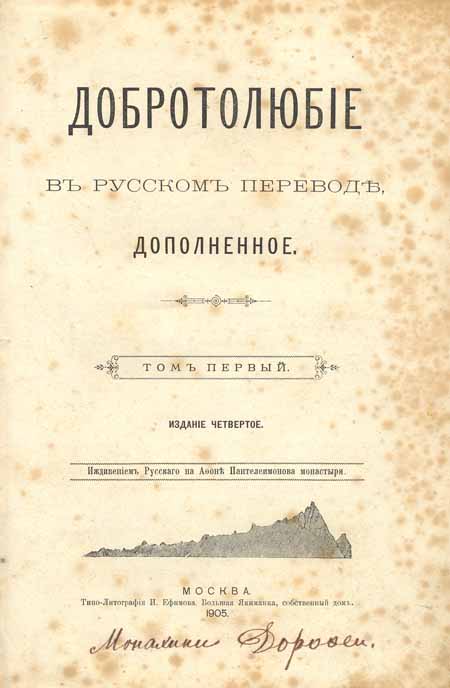
0 sources
Philokalia
Summary
Philokalia is a literary work[1]. Philokalia ranks in the top 3% of literary_work entities by monthly Wikipedia readership (1,656 views/month).[2]
Key Facts
- Philokalia authored Nicodemus the Hagiorite[3].
- Philokalia authored Macarius of Corinth[4].
- Philokalia's instance of is recorded as literary work[5].
- Philokalia's genre is essay[6].
- Philokalia's place of publication is recorded as Venice[7].
- Philokalia's Commons category is recorded as Philokalia[8].
- Philokalia's language of work or name is recorded as Greek[9].
- Philokalia was published on 1782[10].
- Philokalia's topic's main category is recorded as Category:Philokalia[11].
- Philokalia's main subject is Christianity[12].
- Philokalia's title is recorded as {'lang': 'el', 'text': 'Φιλοκαλία'}[13].
- Philokalia's copyright status is recorded as public domain[14].
- Philokalia's copyright status is recorded as public domain[15].
Body
Authorship and Creation
Authored works include Nicodemus the Hagiorite[3], a monk[16], 1749–1809[17], of Greece[18] and Macarius of Corinth[4], a writer[19], 1731–1805[20], of Ottoman Empire[21], specialised in priest[22].
Publication
Philokalia was published on 1782[10]. Philokalia's place of publication is recorded as Venice[7]. Philokalia's language of work or name is recorded as Greek[9]. Philokalia's genre is essay[6].
Subject and Themes
Philokalia's main subject is Christianity[12].
Why It Matters
Philokalia ranks in the top 3% of literary_work entities by monthly Wikipedia readership (1,656 views/month).[2] Philokalia has Wikipedia articles in 21 language editions, a strong signal of global cultural recognition.[23] Philokalia is known by 11 alternative names across languages and contexts.[24]