
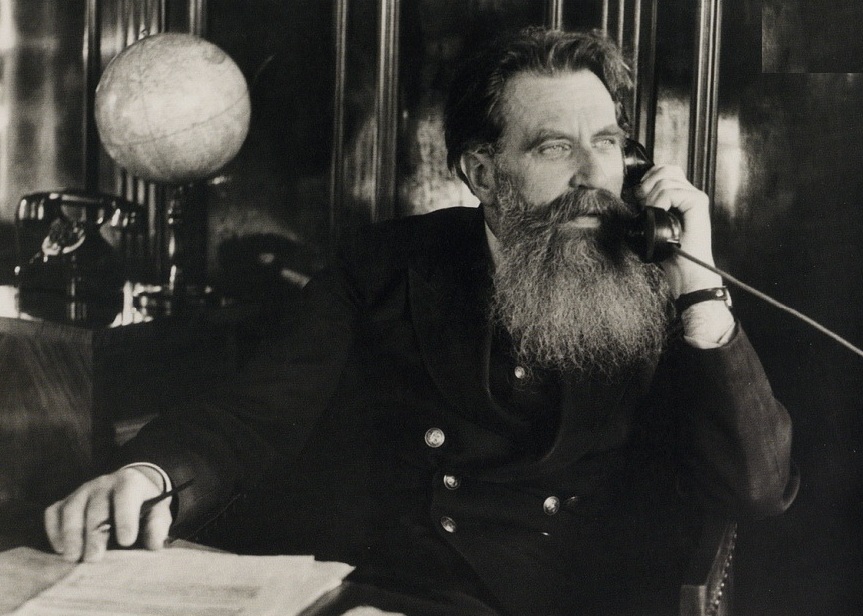
Otto Schmidt
0 sources
Summary
Otto Schmidt was born in Mogilev[1]. He died in Moscow[2]. He worked as an astronomer[3], mathematician[4], explorer[5], politician[6], and university teacher[7]. He ranks in the top 0.72% of human entities by monthly Wikipedia readership (3,370 views/month, #7,235 of 1,000,298).[8]
Key Facts
- Place of burial: Novodevichy Cemetery[9]
- Spouse: Vera Schmidt[10]
- Child: Vladimir Schmidt[11], Sigurd Ottovich Schmidt[12]
- Country of citizenship: Russian Empire[13], Russian Republic[14], Russian Socialist Federative Soviet Republic[15], Soviet Union[16]
- Native language: Russian[17]
- Ethnic group: Baltic Germans[18]
- Occupation: physicist[19], statesperson[20], psychoanalyst[21], geophysicist[22], geographer[23], traveler[24]
- Field of work: group theory[25], astronomy[26], mathematics[27], geography[28], geophysics[29], psychoanalysis[30]
- Position held: deputy of the Supreme Soviet of the Soviet Union[31], director[32], Privatdozent[33], editor-in-chief[34], head of department[35], expedition leader[36], chief manager[37], vice president[38]
- Employer: Russian Academy of Sciences[39], Imperial University of St. Vladimir[40], Lomonosov Moscow State University[41], Chief Directorate of the Northern Sea Route[42], Schmidt Institute of Physics of the Earth[43], RSFSR People's Commissariat on Food[44], OGIZ[45], Matematicheskii Sbornik[46], Arctic and Antarctic Research Institute[47], Taras Shevchenko National University of Kyiv[48]
- Educated at: Faculty of Physics and Mathematics of Kyiv University[49], Second Kyevan gymnasium[50], Mogilev Male Gymnasium[51]
- Doctoral advisor: Dmitry Grave[52]
- Award received: Hero of the Soviet Union[53], Order of Lenin[54], Order of the Red Banner of Labour[55], Order of the Red Star[56], Medal "For Valiant Labour in the Great Patriotic War 1941–1945"[57], Medal "In Commemoration of the 800th Anniversary of Moscow"[58]
- Sex or gender: male[59]
- Member of political party: Communist Party of the Soviet Union[60], Russian Social Democratic Labour Party[61], Russian Social Democratic Labour Party (of Internationalists)[62]
- Doctoral student: Vladimir Andrunakievich[63], Sergey Antonovich Chunikhin[64], Leopold Yakovlevich Okunev[65], Aleksandr Antipovich Kulakov[66], Aleksey Petrovich Ditsman[67], Vladimir Konstantinovich Turkin[68]
Body
Works and Contributions
Things named for Otto Schmidt include Schmidt Island[69], an island[70], in Russia[71]; Krull–Schmidt theorem[72], a theorem[73]; and 2108 he[74], an asteroid[75].
Why It Matters
Otto Schmidt has Wikipedia articles in 22 language editions, a strong signal of global cultural recognition.[76] He is known by 41 alternative names across languages and contexts.[77]
Entities named for him include Schmidt Island[69], an island[70], in Russia[71]; Krull–Schmidt theorem[72], a theorem[73]; and 2108 he[74], an asteroid[75].
His notable doctoral advisees include Mark Vygodsky[78], a mathematician[79], 1898–1965[80], of Soviet Union[81], specialised in differential geometry[82]; Viktor Kuzmič Abalakin[83], an astronomer[84], 1930–2018[85], of Soviet Union[86], awarded the USSR State Prize[87], specialised in stellar dynamics[88]; and Vladimir Andrunakievich[89], a mathematician[90], 1917–1997[91], of Kingdom of Romania[92], awarded the Order of the Republic[93], specialised in algebra[94].
FAQs
Where was Otto Schmidt born?
Otto Schmidt's place of birth was Mogilev[1].
Where did Otto Schmidt die?
Otto Schmidt died in Moscow[2].
Who was Otto Schmidt married to?
Otto Schmidt's spouses include Vera Schmidt[10].
What did Otto Schmidt do for work?
Otto Schmidt worked as an astronomer[3], mathematician[4], explorer[5], politician[6], and university teacher[7].
Where did Otto Schmidt go to school?
Otto Schmidt was educated at Faculty of Physics and Mathematics of Kyiv University[49], Second Kyevan gymnasium[50], and Mogilev Male Gymnasium[51].
What awards did Otto Schmidt receive?
Honors received include Hero of the Soviet Union[53], Order of Lenin[54], Order of the Red Banner of Labour[55], and Order of the Red Star[56].