
Niels Henrik Abel
0 sources
Summary
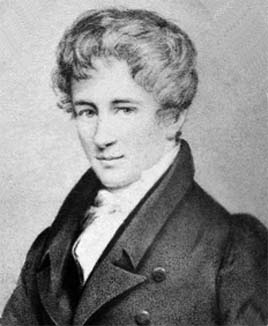
Niels Henrik Abel was born on August 5, 1802[1], in Finnøy[2]. He died on April 6, 1829[3], in Froland[4]. He worked as a mathematician[5] and university teacher[6]. He ranks in the top 0.7% of human entities by monthly Wikipedia readership (2,714 views/month, #7,029 of 1,000,298).[7]
Key Facts
- Place of burial: Froland kirkegård[8]
- Father: Søren Georg Abel[9]
- Country of citizenship: Norway[10]
- Field of work: group theory[11], calculus[12], mathematics[13], functional analysis[14], elliptic function[15], algebraic equation[16], abelian group[17], Abel Prize[18]
- Employer: University of France[19]
- Educated at: University of France[20], Oslo Cathedral School[21], University of Oslo[22]
- Doctoral advisor: Bernt Michael Holmboe[23]
- Notable work: Abel's binomial theorem[24], abelian group[25], Abel elliptic functions[26], Abel's theorem[27], Abel polynomials[28], Abel–Ruffini theorem[29], Abel transform[30], Abel's inequality[31], abelian category[32], abelian extension[33], Abel–Jacobi map[34], Abel–Plana formula[35], abelian variety[36]
- Award received: Grand prix des sciences mathématiques[37]
- Member of: Royal Norwegian Society of Sciences and Letters[38]
- Sex or gender: male[39]
- Commons category: Niels Henrik Abel[40]
- Unmarried partner: Christine Kemp[41]
- Cause of death: tuberculosis[42]
- Residence: University of France[43]
- Family name: Abel[44]
- Given name: Niels[45], Henrik[46]
- Topic's main category: Category:Niels Henrik Abel[47]
- Commons gallery: Niels Henrik Abel[48]
- Described at URL: https://matematikk.org/biografi.html?tid=62622[49]
- Medical condition: tuberculosis[50]
- Manner of death: natural causes[51]
Body
Works and Contributions
Things named for Niels Henrik Abel include Abel Prize[52], a science award[53], in Norway[54], founded in 2003[55], headquartered in Oslo[56]; abelian group[57], a mathematical concept[58]; Abel–Ruffini theorem[59], a theorem[60]; Abel's theorem[61], a theorem[62]; summation by parts[63], a theorem[64]; Abel transform[65], an integral transform[66]; Abel's identity[67]; and Abel's test[68].
Why It Matters
Niels Henrik Abel has Wikipedia articles in 29 language editions, a strong signal of global cultural recognition.[69] He is known by 63 alternative names across languages and contexts.[70]
He is credited with the discovery of elliptic function[71] and Abel's identity[72], a theorem[73]. Entities named for him include Abel Prize[52], a science award[53], in Norway[54], founded in 2003[55], headquartered in Oslo[56]; abelian group[57], a mathematical concept[58]; Abel–Ruffini theorem[59], a theorem[60]; Abel's theorem[61], a theorem[62]; summation by parts[63], a theorem[64]; and Abel transform[65], an integral transform[66].
FAQs
Where was Niels Henrik Abel born?
Niels Henrik Abel's place of birth was Finnøy[2].
Where did Niels Henrik Abel die?
Niels Henrik Abel passed away in Froland[4].
Who were Niels Henrik Abel's parents?
Niels Henrik Abel's father was Søren Georg Abel[9].
What did Niels Henrik Abel do for work?
Niels Henrik Abel worked as a mathematician[5] and university teacher[6].
Where did Niels Henrik Abel go to school?
Niels Henrik Abel was educated at University of France[20], Oslo Cathedral School[21], and University of Oslo[22].
What awards did Niels Henrik Abel receive?
Honors received include Grand prix des sciences mathématiques[37].
What did Niels Henrik Abel discover?
Niels Henrik Abel is credited as discoverer of elliptic function[71] and Abel's identity[72].