
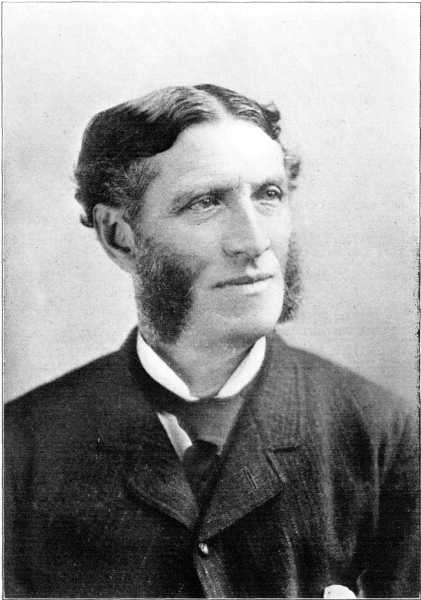
Matthew Arnold
0 sources
Summary
Matthew Arnold was born on December 24, 1822[1], in Laleham[2]. He died on April 15, 1888[3], in Liverpool[4]. He worked as a poet[5], writer[6], literary critic[7], university teacher[8], and journalist[9]. He ranks in the top 0.68% of human entities by monthly Wikipedia readership (4,057 views/month, #6,771 of 1,000,298).[10]
Key Facts
- Date of birth: January 1, 1822[11]
- Place of burial: Church of All Saints[12]
- Father: Thomas Arnold[13]
- Mother: Mary Penrose[14]
- Spouse: Frances Lucy Wightman[15]
- Child: Basil Arnold[16], Eleanore Mary Caroline Arnold[17], Thomas Arnold[18], Lucy Charlotte Arnold[19], Richard Penrose Arnold[20], Trevenen William Arnold[21]
- Country of citizenship: United Kingdom of Great Britain and Ireland[22]
- Occupation: school inspector[23], essayist[24], philologist[25], critic[26]
- Field of work: poetry[27], cultural criticism[28], essay[29], school inspection[30]
- Employer: University of Oxford[31]
- Educated at: Balliol College[32], Rugby School[33]
- Notable work: The Scholar-Gypsy[34], Thyrsis[35], Dover Beach[36], Tristram and Iseult[37], To Marguerite: Continued[38], Sohrab and Rustum[39], Balder Dead[40], On Translating Homer[41], Culture and Anarchy[42]
- Award received: Fellow of the American Academy of Arts and Sciences[43], Newdigate Prize[44]
- Member of: American Academy of Arts and Sciences[45]
- Religion or worldview: Anglicanism[46]
- Sex or gender: male[47]
- Commons category: Matthew Arnold[48]
- Archives at: Beinecke Rare Book & Manuscript Library[49], National Library of Wales[50]
- Family name: Arnold[51]
- Given name: Matthew[52]
- Topic's main category: Category:Matthew Arnold[53]
- Commons gallery: Matthew Arnold[54]
Why It Matters
Matthew Arnold has Wikipedia articles in 27 language editions, a strong signal of global cultural recognition.[55] He is known by 27 alternative names across languages and contexts.[56]
He has been cited as an influence by T. S. Eliot[57], a playwright[58], 1888–1965[59], of United States[60], awarded the Nobel Prize in Literature[61]; Lionel Trilling[62], a literary critic[63], 1905–1975[64], of United States[65], awarded the Guggenheim Fellowship[66]; Felix Adler[67], a philosopher[68], 1851–1933[69], of United States[70], specialised in ethics[71]; Florence Earle Coates[72], a poet[73], 1850–1927[74], of United States[75]; and Vishnuprasad Trivedi[76], a critic[77], 1899–1991[78], of India[79], awarded the Ranjitram Suvarna Chandrak[80].
Works attributed to him include Sohrab and Rustum[81], a literary work[82].
FAQs
Where was Matthew Arnold born?
Matthew Arnold's place of birth was Laleham[2].
Where did Matthew Arnold die?
Matthew Arnold died in Liverpool[4].
Who were Matthew Arnold's parents?
Matthew Arnold's father was Thomas Arnold[13]. Matthew Arnold's mother was Mary Penrose[14].
Who was Matthew Arnold married to?
Matthew Arnold's spouses include Frances Lucy Wightman[15].
What did Matthew Arnold do for work?
Matthew Arnold worked as a poet[5], writer[6], literary critic[7], university teacher[8], and journalist[9].
Where did Matthew Arnold go to school?
Matthew Arnold was educated at Balliol College[32] and Rugby School[33].
What awards did Matthew Arnold receive?
Honors received include Fellow of the American Academy of Arts and Sciences[43] and Newdigate Prize[44].
Who did Matthew Arnold influence?
Matthew Arnold has been cited as an influence by T. S. Eliot[57], Lionel Trilling[62], Felix Adler[67], and Florence Earle Coates[72].