
Lepiota helveola
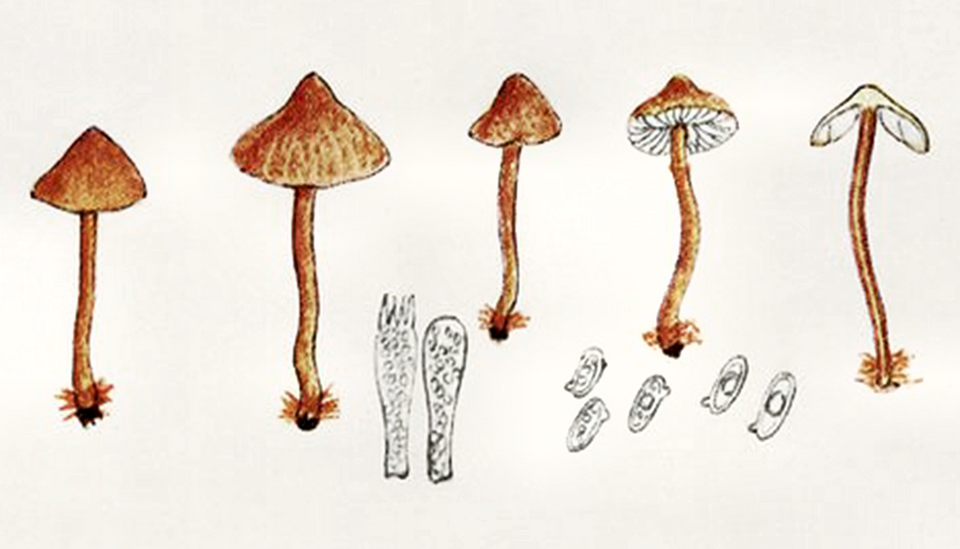
0 sources
Summary
Lepiota helveola is a taxon[1]. It ranks in the top 0.83% of taxon entities by monthly Wikipedia readership (277 views/month, #1,628 of 195,241).[2]
Key Facts
- Lepiota helveola's instance of is recorded as taxon[3].
- Lepiota helveola is classified at the rank of species[4].
- Lepiota helveola is classified within Lepiota[5].
- Lepiota helveola's scientific name is Lepiota helveola[6].
- Lepiota helveola's Commons category is recorded as Lepiota helveola[7].
- Lepiota helveola's hymenium type is recorded as lamella[8].
- Lepiota helveola's mushroom cap shape is recorded as convex mushroom cap[9].
- Lepiota helveola's hymenium attachment is recorded as free hymenium attachment[10].
- Lepiota helveola's stipe character is recorded as ring stipe[11].
- Lepiota helveola's spore print color is recorded as white[12].
- Lepiota helveola's mushroom ecological type is recorded as mycorrhiza[13].
- Lepiota helveola's edibility is recorded as deadly mushroom[14].
- Lepiota helveola's short name is recorded as L. helveola[15].
- Lepiota helveola is commonly known as 褐鱗環柄菇[16].
- Lepiota helveola is commonly known as bedla chřapáčová[17].
- Lepiota helveola's taxon author citation is recorded as Bres.[18].
Body
Classification
Lepiota helveola's scientific name is Lepiota helveola[6]. It is classified at the rank of species[4]. It belongs to the parent taxon Lepiota[5]. Recorded taxon common name include 褐鱗環柄菇[16] and bedla chřapáčová[17].
Identifiers
Lepiota helveola's iNaturalist taxon ID is recorded as 797907[19]. Lepiota helveola's NCBI taxonomy ID is recorded as 644796[20]. Lepiota helveola's Encyclopedia of Life ID is recorded as 1009333[21]. Lepiota helveola's GBIF taxon ID is recorded as 2535393[22].
Why It Matters
Lepiota helveola ranks in the top 0.83% of taxon entities by monthly Wikipedia readership (277 views/month, #1,628 of 195,241).[2] It has Wikipedia articles in 7 language editions, a strong signal of global cultural recognition.[23] It is known by 8 alternative names across languages and contexts.[24]