
Lazar Kaganovich
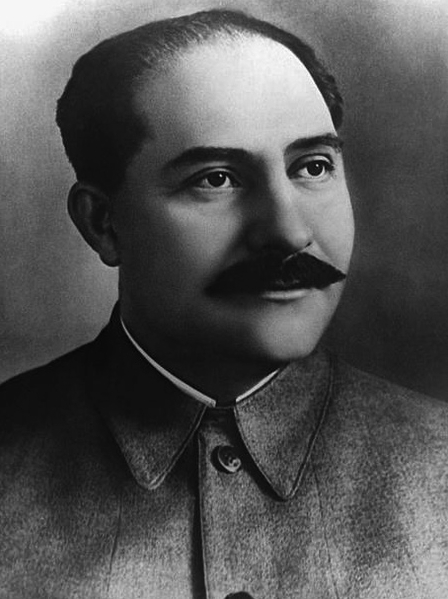
0 sources
Summary
Lazar Kaganovich was born on November 10, 1893[1], in Dibrova[2]. He died on July 25, 1991[3], in Moscow[4]. He worked as a statesperson[5], revolutionary[6], and politician[7]. He ranks in the top 0.64% of human entities by monthly Wikipedia readership (8,925 views/month, #6,400 of 1,000,298).[8]
Key Facts
- Place of burial: Novodevichy Cemetery[9]
- Country of citizenship: Russian Empire[10], Soviet Union[11]
- Ethnic group: Ukrainian Jews[12]
- Position held: First Deputy Premier of the Soviet Union[13], First Secretary of the Communist Party of Ukraine[14], deputy of the Supreme Soviet of the Soviet Union[15], Member of the Russian Constituent Assembly[16], member of the Supreme Soviet of the Byelorussian SSR of the 1st convocation[17], People's Commissar for Defense Industry[18]
- Award received: Order of Lenin[19], Hero of Socialist Labour[20], Order of the Red Banner of Labour[21], "Hammer and Sickle" gold medal[22], Medal "For Valiant Labour in the Great Patriotic War 1941–1945"[23], Medal "In Commemoration of the 800th Anniversary of Moscow"[24], Jubilee Medal "In Commemoration of the 100th Anniversary of the Birth of Vladimir Ilyich Lenin"[25]
- Member of: Politburo of the Central Committee of the Communist Party of the Soviet Union[26], All-Russian Central Executive Committee[27], All-Union Society of Old Bolsheviks[28]
- Religion or worldview: atheism[29]
- Sex or gender: male[30]
- Member of political party: Communist Party of the Soviet Union[31]
- Commons category: Lazar Kaganovich[32]
- Family name: Kaganovich[33]
- Given name: Lazar[34]
- Topic's main category: Category:Lazar Kaganovich[35]
- Commons gallery: Lazar Kaganovich[36]
- Described by source: Faces of Moscow[37]
- Participant in: 8th Congress of the Russian Communist Party[38], 10th Congress of the Russian Communist Party[39], 11th Congress of the Russian Communist Party[40], 12th Congress of the Russian Communist Party[41], 17th Congress of the All-Union Communist Party[42], 18th Congress of the All-Union Communist Party[43], 20th Congress of the Communist Party of the Soviet Union[44]
- Languages spoken, written or signed: Russian[45]
Body
Works and Contributions
Things named for Lazar Kaganovich include Moscow Metro[46], a rapid transit[47], in Russia[48], founded in 1935[49]; Okhotny Ryad[50], a metro station[51], in Russia[52], founded in 1935[53]; National University “Yaroslav the Wise Law Academy of Ukraine”[54], a university[55], in Ukraine[56], founded in 1804[57]; Sokuluk District[58], a district of Kyrgyzstan[59], in Kyrgyzstan[60], founded in 1935[61]; Kaganovich[62], a light cruiser[63]; Kyiv District[64], a raion of city in Ukraine[65], in Ukraine[66], founded in 1932[67]; Jaloliddin Balkhi District[68], a district of Tajikistan[69], in Tajikistan[70]; and LK-1[71], a trolleybus model[72].
Why It Matters
Lazar Kaganovich has Wikipedia articles in 27 language editions, a strong signal of global cultural recognition.[73] He is known by 94 alternative names across languages and contexts.[74]
Entities named for him include Moscow Metro[46], a rapid transit[47], in Russia[48], founded in 1935[49]; Okhotny Ryad[50], a metro station[51], in Russia[52], founded in 1935[53]; National University “Yaroslav the Wise Law Academy of Ukraine”[54], a university[55], in Ukraine[56], founded in 1804[57]; Sokuluk District[58], a district of Kyrgyzstan[59], in Kyrgyzstan[60], founded in 1935[61]; Kaganovich[62], a light cruiser[63]; and Kyiv District[64], a raion of city in Ukraine[65], in Ukraine[66], founded in 1932[67].
FAQs
Where was Lazar Kaganovich born?
Lazar Kaganovich was born in Dibrova[2].
Where did Lazar Kaganovich die?
Lazar Kaganovich passed away in Moscow[4].
What did Lazar Kaganovich do for work?
Lazar Kaganovich worked as a statesperson[5], revolutionary[6], and politician[7].
What awards did Lazar Kaganovich receive?
Honors received include Order of Lenin[19], Hero of Socialist Labour[20], Order of the Red Banner of Labour[21], and "Hammer and Sickle" gold medal[22].