
Day of Judgment
0 sources
Summary
Day of Judgment is an artistic theme[1]. It ranks in the top 9% of artistic theme entities by monthly Wikipedia readership (8,550 views/month).[2]
Key Facts
- Religion or worldview: Abrahamic religion[3]
- Instance of: religious belief[4], biblical concept[5]
- Subclass of: judgement[6]
- Part of: Christian eschatology[7], Islamic eschatology[8], Jewish eschatology[9]
- Commons category: Last Judgment[10]
- Has cause: Second Coming[11]
- Topic's main category: Category:Last Judgment[12]
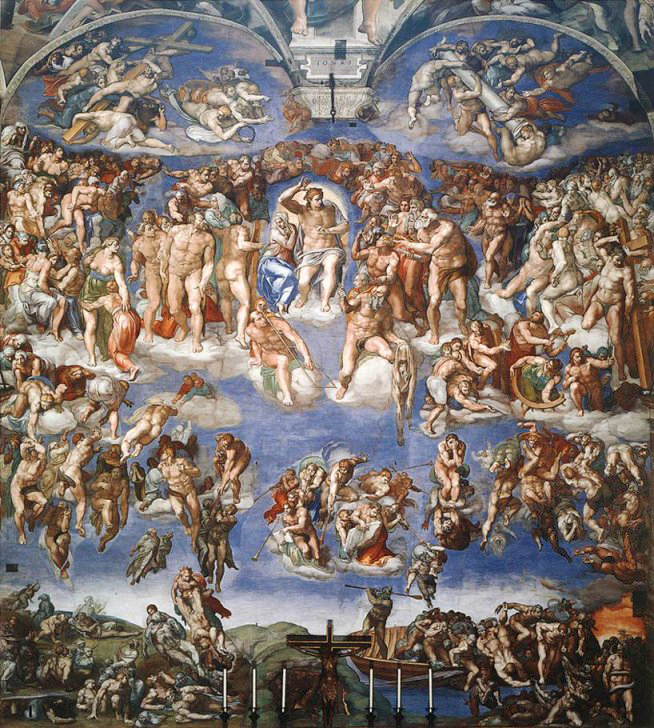
- Depicted by: Q21765396[13], Altarpiece of the Last Judgement[14], The Last Judgment[15]
- Described by source: Metropolitan Museum of Art Tagging Vocabulary[16], Jewish Encyclopedia of Brockhaus and Efron[17], Brockhaus and Efron Encyclopedic Dictionary[18], Meyers Konversations-Lexikon, 4th edition (1885–1890)[19], Red Blue Translator[20]
- Different from: Sąd Ostateczny[21]
- Maintained by WikiProject: WikiProject Bible[22], WikiProject Christianity[23], Jesus work group[24], WikiProject Christian theology[25], WikiProject Eastern Orthodoxy[26], WikiProject Anglicanism[27], WikiProject Lutheranism[28], WikiProject Reformed Christianity[29], WikiProject Catholicism[30], WikiProject Islam[31], WikiProject Ancient Near East[32], WikiProject Religion[33]
- P14483: j/juicio-final[34]
Body
Influence
Things named for Day of Judgment include Terminator 2: Judgment Day[35], a film[36], directed by James Cameron[37] and Thank God, It's Doomsday[38], a television series episode[39], directed by Michael Marcantel[40].
Why It Matters
Day of Judgment has Wikipedia articles in 29 language editions, a strong signal of global cultural recognition.[41] It is known by 106 alternative names across languages and contexts.[42]
Entities named for it include Terminator 2: Judgment Day[35], a film[36], directed by James Cameron[37] and Thank God, It's Doomsday[38], a television series episode[39], directed by Michael Marcantel[40].