
Korean
language spoken in Korean Peninsula and some parts of North-eastern China
Press Enter · cited answer in seconds
0 sources
Korean is an intangible cultural entity associated with South Korea[1].
Key Facts
- Country: South Korea[3], North Korea[4], People's Republic of China[5], Japan[6], United States[7], Canada[8], Malaysia[9], Russia[10]
- Instance of: modern language[11]
- Follows: Middle Korean[12]
- Subclass of: Koreanic[13]
- Writing system: Hangul[14], Hanja[15]
- Commons category: Korean language[16]
- Wikimedia language code: ko[17]
- Topic's main category: Category:Korean language[18]
- Language regulatory body: National Institute of Korean Language[19]
- Number of speakers, writers, or signers: 77,300,000[20], 73,233,270[21]
- Described by source: Armenian Soviet Encyclopedia, vol. 5[22]
- Replaces: Early Modern Korean[23]
- Topic has template: Template:Korean dialects[24]
- Stack Exchange tag: https://linguistics.stackexchange.com/tags/korean[25]
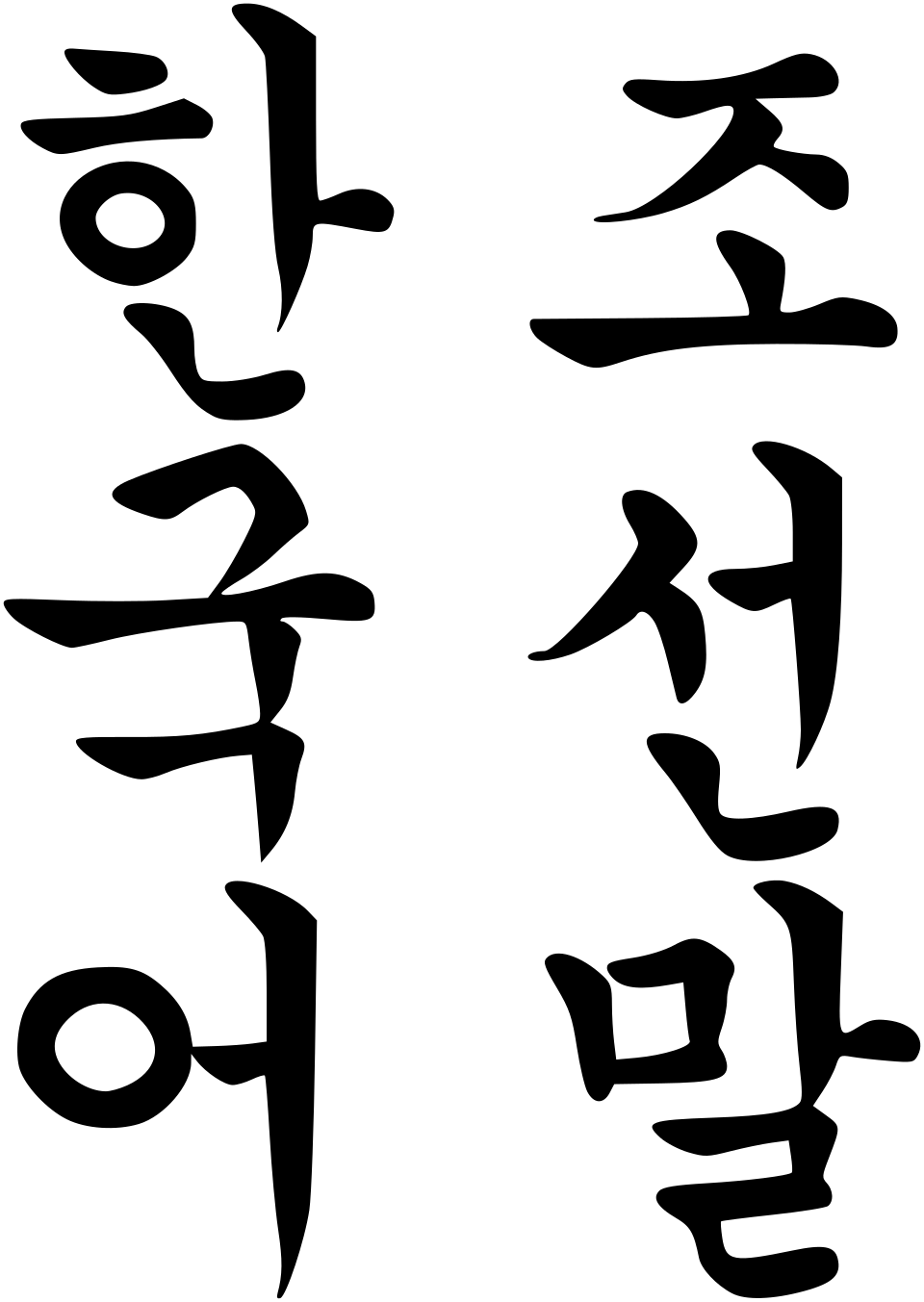
- Native label: 한국어[26], 조선말[27], 한국말[28]
- Short name: корейська[29], карэйская[30], куриёӣ[31], корейаг[32], корейский[33]
- UNESCO language status: 1 safe[34]
- History of topic: history of Korean[35]
- Indigenous to: North Korea[36], South Korea[37]
- Female form of label: la langue coréenne[38]
- Studied by: Korean studies[39]
- Exact match: http://publications.europa.eu/resource/authority/language/KOR[40]
- Has grammatical case: nominative case[41], genitive case[42], dative case[43], accusative case[44], instrumental case[45]
Why It Matters
Korean has Wikipedia articles in 30 language editions, a strong signal of global cultural recognition.[46] Korean is known by 87 alternative names across languages and contexts.[47]
Korean has been cited as an influence by Globasa[48], an international auxiliary language[49], founded in 2019[50].
FAQs
Who did Korean influence?
Korean has been cited as an influence by Globasa[48].