
Käthe Kollwitz
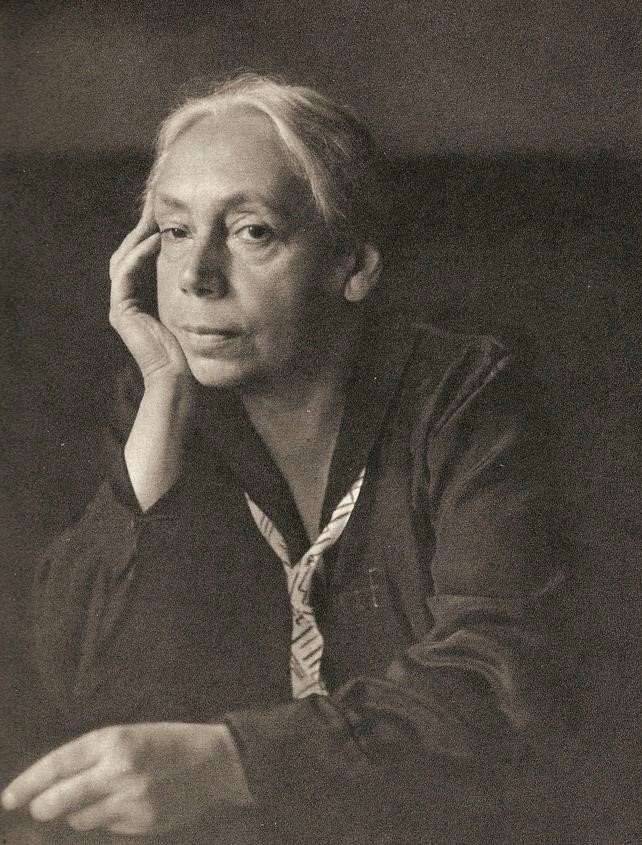
0 sources
Käthe Kollwitz
Summary
Käthe Kollwitz is a human[1]. Born in Königsberg[2], she… she was born on July 8, 1867[3]. She died in Moritzburg[4]. She died on April 22, 1945[5]. She worked as a printmaker[6], draftsperson[7], lithographer[8], poster artist[9], and illustrator[10]. She ranks in the top 0.69% of human entities by monthly Wikipedia readership (4,275 views/month, #6,913 of 1,000,298).[11]
Key Facts
- Käthe Kollwitz's place of birth was Königsberg[2].
- Käthe Kollwitz was born in Kaliningrad[12].
- Käthe Kollwitz passed away in Moritzburg[4].
- Käthe Kollwitz was born on July 8, 1867[3].
- Käthe Kollwitz was born on January 1, 1867[13].
- Käthe Kollwitz died on April 22, 1945[5].
- Käthe Kollwitz died on January 1, 1945[14].
- Käthe Kollwitz is buried at Zentralfriedhof Friedrichsfelde[15].
- Käthe Kollwitz was married to Karl Kollwitz[16].
- A child of Käthe Kollwitz was Hans Kollwitz[17].
- A child of Käthe Kollwitz was Peter Kollwitz[18].
- Käthe Kollwitz held citizenship in Weimar Republic[19].
- Käthe Kollwitz held citizenship in German Empire[20].
- German was Käthe Kollwitz's native language[21].
- Käthe Kollwitz worked as a printmaker[6].
- Käthe Kollwitz's professions included draftsperson[7].
- Käthe Kollwitz's professions included lithographer[8].
- Käthe Kollwitz worked as a poster artist[9].
- Käthe Kollwitz worked as an illustrator[10].
- Käthe Kollwitz's professions included sculptor[22].
- Käthe Kollwitz's field of work was printmaking[23].
- Käthe Kollwitz's field of work was drawing[24].
- Käthe Kollwitz's field of work was art of sculpture[25].
- Käthe Kollwitz held the position of full professor[26].
- Käthe Kollwitz was educated at Académie Julian[27].
Body
Origins and Family
Recorded place of birth include Königsberg[2], a city[28], in Prussia[29], founded in 1255[30] and Kaliningrad[12], a centre of oblast[31], in State of the Teutonic Order[32], founded in 1255[33]. Recorded date of birth include July 8, 1867[3] and January 1, 1867[13]. German was Käthe Kollwitz's native language[21].
Education
Educated at Académie Julian[27], an art academy[34], in France[35], founded in 1867[36] and Art Academy Königsberg[37], an art academy[38], in Russia[39], founded in 1841[40].
Career and Affiliations
Recorded occupations include printmaker[6], draftsperson[7], lithographer[8], poster artist[9], illustrator[10], and sculptor[22]. Fields of work include printmaking[23]; drawing[24], a type of work of art[41]; and art of sculpture[25], a type of arts[42]. Käthe Kollwitz held the position of full professor[26].
Works and Contributions
A notable work attributed to Käthe Kollwitz is Woman with Dead Child[43]. Things named for her include Käthe Kollwitz Museum Köln[44], Käthe Kollwitz Museum[45], Käthe Kollwitz Prize[46], Käthe Kollwitz House[47], and 8827 Kollwitz[48].
Recognition
Awards received include Pour le Mérite for Sciences and Arts order[49], a civil decoration[50], in Prussia[51], founded in 1842[52] and Villa Romana Prize[53], an art prize[54], founded in 1905[55].
Personal Life
Käthe Kollwitz was married to Karl Kollwitz[16]. Children include Hans Kollwitz[17], a physician[56], 1892–1971[57], of Germany[58] and Peter Kollwitz[18], a painter[59], 1896–1914[60], of Germany[61]. Her religion is recorded as Lutheranism[62]. She was affiliated with the Social Democratic Party of Germany[63].
Death and Burial
Recorded date of death include April 22, 1945[5] and January 1, 1945[14]. Käthe Kollwitz died in Moritzburg[4]. Burial took place at Zentralfriedhof Friedrichsfelde[15].
Why It Matters
Käthe Kollwitz ranks in the top 0.69% of human entities by monthly Wikipedia readership (4,275 views/month, #6,913 of 1,000,298).[11] She has Wikipedia articles in 25 language editions, a strong signal of global cultural recognition.[64] She is known by 48 alternative names across languages and contexts.[65]
She has been cited as an influence by Sue Coe[66], a painter[67], b. 1951[68], of United Kingdom[69], awarded the Women's Caucus for Art Lifetime Achievement Award[70], specialised in painting[71]; Nicolae Tonitza[72], a caricaturist[73], 1886–1940[74], of Romania[75], specialised in painting[76]; and Fayga Ostrower[77], a painter[78], 1920–2001[79], of Brazil[80], awarded the Fulbright Scholarship[81], specialised in engraving process[82].
Entities named for her include Käthe Kollwitz Museum Köln[44], Käthe Kollwitz Museum[45], Käthe Kollwitz Prize[46], Käthe Kollwitz House[47], and 8827 Kollwitz[48].
FAQs
Where was Käthe Kollwitz born?
Born in Königsberg[2], Käthe Kollwitz…
Where did Käthe Kollwitz die?
Käthe Kollwitz died in Moritzburg[4].
Who was Käthe Kollwitz married to?
Käthe Kollwitz's spouses include Karl Kollwitz[16].
What did Käthe Kollwitz do for work?
Käthe Kollwitz worked as printmaker[6], draftsperson[7], lithographer[8], poster artist[9], and illustrator[10].
Where did Käthe Kollwitz go to school?
Käthe Kollwitz was educated at Académie Julian[27] and Art Academy Königsberg[37].
What awards did Käthe Kollwitz receive?
Honors received include Pour le Mérite for Sciences and Arts order[49] and Villa Romana Prize[53].
Who did Käthe Kollwitz influence?
Käthe Kollwitz has been cited as an influence by Sue Coe[66], Nicolae Tonitza[72], and Fayga Ostrower[77].