
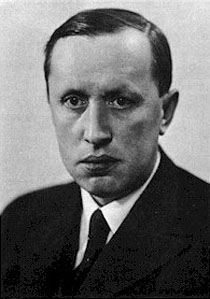
Karel Čapek
0 sources
Karel Čapek
Summary
Karel Čapek is a human[1]. His place of birth was Malé Svatoňovice[2]. He was born on January 9, 1890[3]. He passed away in Prague[4]. He died on December 25, 1938[5]. He worked as a translator[6], novelist[7], director[8], photographer[9], and playwright[10]. He ranks in the top 0.69% of human entities by monthly Wikipedia readership (2,485 views/month, #6,942 of 1,000,298).[11]
Key Facts
- Karel Čapek's place of birth was Malé Svatoňovice[2].
- Karel Čapek died in Prague[4].
- Karel Čapek died in Vinohrady[12].
- Karel Čapek was born on January 9, 1890[3].
- Karel Čapek died on December 25, 1938[5].
- Karel Čapek is buried at Vyšehrad cemetery[13].
- Karel Čapek's father was Antonín Čapek[14].
- Among Karel Čapek's spouses was Olga Scheinpflugová[15].
- Karel Čapek held citizenship in Cisleithania[16].
- Karel Čapek held citizenship in Czechoslovakia[17].
- Czech was Karel Čapek's native language[18].
- Karel Čapek is identified as part of the Czechs ethnic group[19].
- Karel Čapek's professions included translator[6].
- Karel Čapek worked as a novelist[7].
- Karel Čapek worked as a director[8].
- Karel Čapek's professions included photographer[9].
- Karel Čapek worked as a playwright[10].
- Karel Čapek worked as a journalist[20].
- Karel Čapek's field of work was young adult literature[21].
- Karel Čapek's field of work was creative and professional writing[22].
- Karel Čapek's field of work was journalism[23].
- Karel Čapek's field of work was translating activity[24].
- Karel Čapek's field of work was children's literature[25].
- Karel Čapek's field of work was play[26].
- Karel Čapek was employed by Q139552437[27].
Body
Origins and Family
Karel Čapek was born in Malé Svatoňovice[2]. He was born on January 9, 1890[3]. His father was Antonín Čapek[14]. He is identified as part of the Czechs ethnic group[19]. Czech was his native language[18].
Education
Educated at Faculty of Arts, Charles University in Prague[28], a faculty[29], in Czech Republic[30], founded in 1348[31], headquartered in Prague[32] and Humboldt-Universität zu Berlin[33], a comprehensive university[34], in Germany[35], founded in 1809[36], headquartered in Berlin[37].
Career and Affiliations
Recorded occupations include translator[6], novelist[7], director[8], photographer[9], playwright[10], and journalist[20]. Fields of work include young adult literature[21], a sub-set of literature[38]; creative and professional writing[22], an academic discipline[39]; journalism[23], an industry[40]; translating activity[24]; children's literature[25], a sub-set of literature[41]; and play[26], a literary form[42]. Employers include Q139552437[27], a theatre company[43], in Austria–Hungary[44], founded in 1907[45], headquartered in Q139552486[46] and Q139552285[47], a theatre company[48], in Czechoslovakia[49], founded in 1922[50], headquartered in Prague[51].
Recognition
Awards received include Order of Tomáš Garrigue Masaryk, 1st class[52]; honorary citizen of Hradec Králové[53], an award[54], in Czech Republic[55]; and honorary citizen of Prague 10[56], an award[57], in Czech Republic[58].
Personal Life
Among Karel Čapek's spouses was Olga Scheinpflugová[15]. His religion is recorded as lapsed Catholic[59].
Death and Burial
Karel Čapek died on December 25, 1938[5]. Recorded place of death include Prague[4], a municipality with town privileges in the Czech Republic[60], in Czech Republic[61], founded in 0800[62], headquartered in Prague[63] and Vinohrady[12], a city[64], in Czech Republic[65], founded in 1788[66]. The cause of death was pneumonia[67]. He is buried at Vyšehrad cemetery[13].
Works and Contributions
Things named for Karel Čapek include 1931 Čapek[68].
Why It Matters
Karel Čapek ranks in the top 0.69% of human entities by monthly Wikipedia readership (2,485 views/month, #6,942 of 1,000,298).[11] He has Wikipedia articles in 30 language editions, a strong signal of global cultural recognition.[69] He is known by 77 alternative names across languages and contexts.[70]
He has been cited as an influence by Ray Bradbury[71], a screenwriter[72], 1920–2012[73], of United States[74], awarded the Prometheus Award - Hall of Fame[75]; Dan Simmons[76], a writer[77], 1948–2026[78], of United States[79], awarded the Grand Prix de l'Imaginaire for Best Foreign-Language Short Story[80], specialised in literary activity[81]; Brian Aldiss[82], a science fiction writer[83], 1925–2017[84], of United Kingdom[85], awarded the Officer of the Order of the British Empire[86], specialised in journalism[87]; and Karel[88], a programming language[89], founded in 1981[90].
Works attributed to him include R.U.R.[91], a dramatic work[92], founded in 1920[93], directed by Vojta Novák[94]; War with the Newts[95], a literary work[96], founded in 1936[97]; The Makropulos Affair[98], a dramatico-musical work[99], founded in 1923[100], written by Leoš Janáček[101]; Věc Makropulos[102], a literary work[103], founded in 1922[104]; The White Disease[105]; and Pictures from the Insects' Life[106]. Entities named for him include 1931 Čapek[68].
FAQs
Where was Karel Čapek born?
Born in Malé Svatoňovice[2], Karel Čapek…
Where did Karel Čapek die?
Karel Čapek passed away in Prague[4].
Who were Karel Čapek's parents?
Karel Čapek's father was Antonín Čapek[14].
Who was Karel Čapek married to?
Karel Čapek's spouses include Olga Scheinpflugová[15].
What did Karel Čapek do for work?
Karel Čapek worked as translator[6], novelist[7], director[8], photographer[9], and playwright[10].
Where did Karel Čapek go to school?
Karel Čapek was educated at Faculty of Arts, Charles University in Prague[28] and Humboldt-Universität zu Berlin[33].
What awards did Karel Čapek receive?
Honors received include Order of Tomáš Garrigue Masaryk, 1st class[52], honorary citizen of Hradec Králové[53], and honorary citizen of Prague 10[56].
Who did Karel Čapek influence?
Karel Čapek has been cited as an influence by Ray Bradbury[71], Dan Simmons[76], Brian Aldiss[82], and Karel[88].