
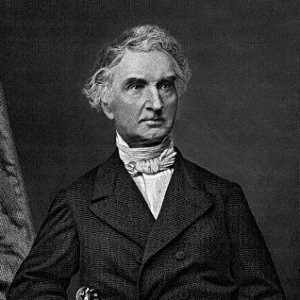
Justus von Liebig
0 sources
Summary
Justus von Liebig was born in Darmstadt[1]. He died in Munich[2]. He worked as a chemist[3], inventor[4], university teacher[5], agronomist[6], and writer[7]. He ranks in the top 0.69% of human entities by monthly Wikipedia readership (3,870 views/month, #6,938 of 1,000,298).[8]
Key Facts
- Place of burial: Alter Südfriedhof[9]
- Father: Johann Georg Liebig[10]
- Spouse: Henriette von Liebig[11]
- Child: Johanna Liebig[12], Georg von Liebig[13], Hermann von Liebig[14], Agnes Carrière[15], Marie Reichau[16]
- Country of citizenship: Grand Duchy of Hesse[17]
- Ethnic group: Germans[18]
- Field of work: chemistry[19]
- Employer: Ludwig-Maximilians-Universität München[20], University of Giessen[21], Heidelberg University[22]
- Educated at: Friedrich-Alexander-Universität Erlangen-Nürnberg[23], University of Bonn[24]
- Doctoral advisor: Karl Wilhelm Gottlob Kastner[25]
- Award received: Pour le Mérite for Sciences and Arts order[26], honorary citizen of Munich[27], Copley Medal[28], Bavarian Maximilian Order for Science and Art[29], Albert Medal[30], Foreign Member of the Royal Society[31], Fellow of the American Academy of Arts and Sciences[32], honorary member of the Physics Association (Frankfurt am Main, Germany)[33]
- Member of: Royal Society[34], German Academy of Sciences Leopoldina[35], Royal Swedish Academy of Sciences[36], Bavarian Academy of Sciences and Humanities[37], Göttingen Academy of Sciences and Humanities in Lower Saxony[38], Saint Petersburg Academy of Sciences[39], Hungarian Academy of Sciences[40], American Academy of Arts and Sciences[41], Royal Netherlands Academy of Arts and Sciences[42], Russian Academy of Sciences[43], Royal Prussian Academy of Sciences[44], Accademia Nazionale delle Scienze detta dei XL[45], Académie Nationale de Médecine[46], Royal Academy of Medicine of Belgium[47]
- Religion or worldview: Lutheranism[48]
- Sex or gender: male[49]
- Noble title: Freiherr[50]
- Doctoral student: Carl Schmidt[51], August Wilhelm von Hofmann[52], Sir Benjamin Collins Brodie, 2nd Baronet[53], August Kekulé[54], Leopold Pfaundler[55], Jacob Volhard[56], Johann Heinrich Jakob Müller[57], Carl Remigius Fresenius[58], Adolph Strecker[59], Wilhelm Henneberg[60], Heinrich Will[61]
- Commons category: Justus von Liebig[62]
Body
Works and Contributions
Things named for Justus von Liebig include Liebig's law of the minimum[63], University of Giessen[64], Liebig's Extract of Meat Company[65], Pueblo Liebig[66], Liebig Medal[67], Mount Liebig[68], liebigite[69], and Liebig[70].
Why It Matters
Justus von Liebig has Wikipedia articles in 27 language editions, a strong signal of global cultural recognition.[71] He is known by 26 alternative names across languages and contexts.[72]
He has been cited as an influence by Henri Victor Regnault[73], a physicist[74], 1810–1878[75], of France[76], awarded the Copley Medal[77], specialised in chemistry[78] and Hermann Franz Moritz Kopp[79], a chemist[80], 1817–1892[81], of Kingdom of Prussia[82], awarded the Bavarian Maximilian Order for Science and Art[83].
He is credited with the discovery of Marmite[84], a food brand[85], founded in 1902[86]; iron-nickel alloy[87]; ammeline[88], a type of chemical entity[89]; and ammelide[90], a type of chemical entity[91]. Entities named for him include Liebig's law of the minimum[63], University of Giessen[64], Liebig's Extract of Meat Company[65], Pueblo Liebig[66], Liebig Medal[67], and Mount Liebig[68].
His notable doctoral advisees include August Kekulé[92], Ascanio Sobrero[93], Emil Erlenmeyer[94], August Wilhelm von Hofmann[95], Charles Frédéric Gerhardt[96], and Nikolay Zinin[97].
FAQs
Where was Justus von Liebig born?
Justus von Liebig's place of birth was Darmstadt[1].
Where did Justus von Liebig die?
Justus von Liebig passed away in Munich[2].
Who were Justus von Liebig's parents?
Justus von Liebig's father was Johann Georg Liebig[10].
Who was Justus von Liebig married to?
Justus von Liebig's spouses include Henriette von Liebig[11].
What did Justus von Liebig do for work?
Justus von Liebig worked as a chemist[3], inventor[4], university teacher[5], agronomist[6], and writer[7].
Where did Justus von Liebig go to school?
Justus von Liebig was educated at Friedrich-Alexander-Universität Erlangen-Nürnberg[23] and University of Bonn[24].
What awards did Justus von Liebig receive?
Honors received include Pour le Mérite for Sciences and Arts order[26], honorary citizen of Munich[27], Copley Medal[28], and Bavarian Maximilian Order for Science and Art[29].
Who did Justus von Liebig influence?
Justus von Liebig has been cited as an influence by Henri Victor Regnault[73] and Hermann Franz Moritz Kopp[79].
What did Justus von Liebig discover?
Justus von Liebig is credited as discoverer of Marmite[84], iron-nickel alloy[87], ammeline[88], and ammelide[90].