
Joseph's Tunic
painting by Diego Velázquez
Press Enter · cited answer in seconds
0 sources
Summary
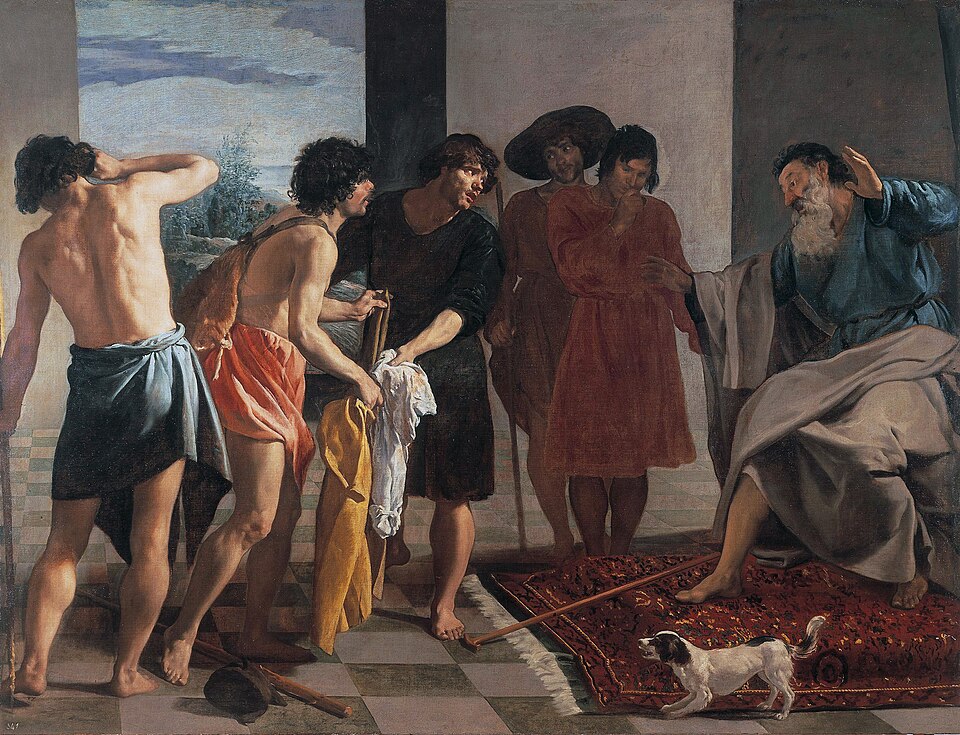
Joseph's Tunic is a painting[1]. It ranks in the top 6% of painting entities by monthly Wikipedia readership (64 views/month).[2]
Key Facts
- Joseph's Tunic is the creator of Diego Velázquez[3].
- Joseph's Tunic's instance of is recorded as painting[4].
- Joseph's Tunic is associated with the Baroque movement[5].
- Joseph's Tunic's genre is religious art[6].
- Joseph's Tunic's depicts is recorded as dog[7].
- Joseph's Tunic is made of oil paint[8].
- Joseph's Tunic is made of canvas[9].
- Joseph's Tunic's collection is recorded as Royal Monastery of San Lorenzo de El Escorial[10].
- The location of Joseph's Tunic was Royal Monastery of San Lorenzo de El Escorial[11].
- Joseph's Tunic's Commons category is recorded as La túnica de José (Velázquez)[12].
- Joseph's Tunic's catalog code is recorded as 43[13].
- Joseph's Tunic's catalog code is recorded as 40[14].
- January 1, 1630 marks the founding of Joseph's Tunic[15].
- Joseph's Tunic's exhibition history is recorded as Velázquez[16].
- Joseph's Tunic's depicts Iconclass notation is recorded as 71D128[17].
- Joseph's Tunic's title is recorded as {'lang': 'es', 'text': "Joseph's bloody coat brought to Jacob"}[18].
- Joseph's Tunic's height is recorded as {'unit': 'centimetre', 'amount': '+223'}[19].
- Joseph's Tunic's width is recorded as {'unit': 'centimetre', 'amount': '+250'}[20].
- Joseph's Tunic's copyright status is recorded as public domain[21].
Body
Authorship and Creation
Joseph's Tunic is the creator of Diego Velázquez[3].
Publication
Joseph's Tunic's genre is religious art[6].
Subject and Themes
Joseph's Tunic is associated with the Baroque movement[5].
Material and Period
Recorded made from material include oil paint[8] and canvas[9]. Joseph's Tunic took place at Royal Monastery of San Lorenzo de El Escorial[11].
Why It Matters
Joseph's Tunic ranks in the top 6% of painting entities by monthly Wikipedia readership (64 views/month).[2] It has Wikipedia articles in 8 language editions, a strong signal of global cultural recognition.[22] It is known by 3 alternative names across languages and contexts.[23]