
Joseph de Maistre
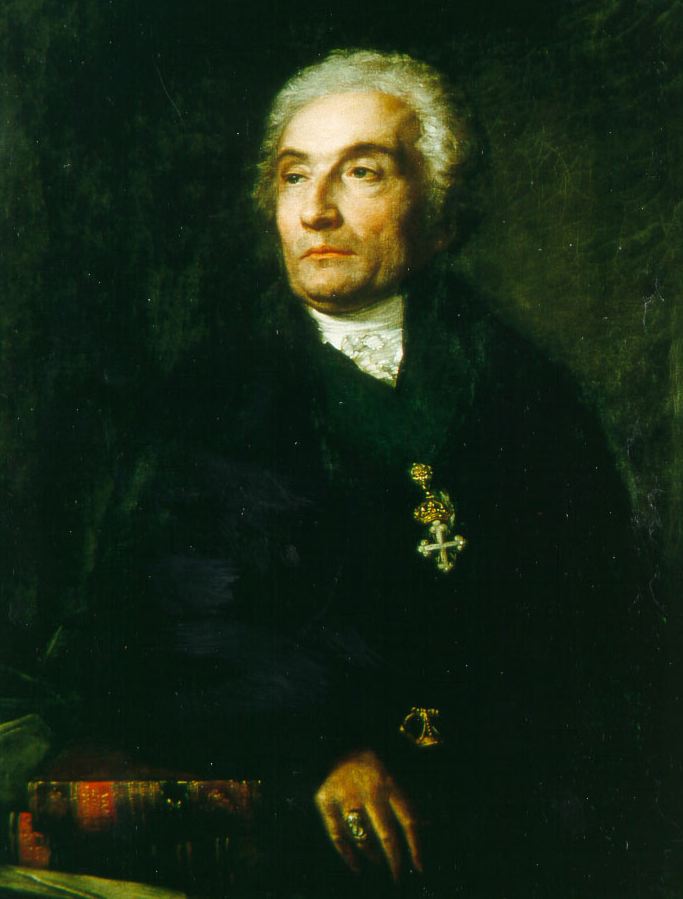
0 sources
Summary
Joseph de Maistre was born on April 1, 1753[1], in Chambéry[2]. He died on February 26, 1821[3], in Turin[4]. He worked as a philosopher[5], politician[6], writer[7], historian[8], and diplomat[9]. He ranks in the top 0.68% of human entities by monthly Wikipedia readership (5,527 views/month, #6,772 of 1,000,298).[10]
Key Facts
- Father: François-Xavier Maistre[11]
- Mother: Christine de Maistre[12]
- Spouse: Françoise-Marguerite de Maistre[13]
- Child: Rodolphe de Maistre[14], Anne Constance de Maistre[15], Adèle de Maistre[16]
- Country of citizenship: Kingdom of Sardinia[17]
- Occupation: lawyer[18]
- Position held: ambassador[19]
- Educated at: University of Turin[20]
- Member of: Académie des sciences, belles-lettres et arts de Savoie[21], Academy of Sciences of Turin[22]
- Religion or worldview: Catholicism[23]
- Sex or gender: male[24]
- Family: de Maistre (family)[25]
- Noble title: count[26]
- Commons category: Joseph de Maistre[27]
- Archives at: Departmental archives of Savoie[28]
- Family name: de Maistre[29]
- Given name: Joseph[30]
- Depicted by: Joseph de Maistre[31]
- Described by source: Encyclopedia of Political Theory[32], Brockhaus and Efron Encyclopedic Dictionary[33], The Nuttall Encyclopædia[34], Library of the World's Best Literature[35], Meyers Konversations-Lexikon, 4th edition (1885–1890)[36], Encyclopædia Britannica 11th edition[37], The Catholic Encyclopedia[38], Granat Encyclopedic Dictionary[39]
- Languages spoken, written or signed: French[40]
- Topic has template: Joseph de Maistre[41]
- Name in native language: Joseph de Maistre[42]
Why It Matters
Joseph de Maistre has Wikipedia articles in 26 language editions, a strong signal of global cultural recognition.[43] He is known by 52 alternative names across languages and contexts.[44]
He has been cited as an influence by Charles Baudelaire[45], a poet[46], 1821–1867[47], of France[48], awarded the Concours général[49], specialised in poetry[50]; Eliphas Levi[51], an occultist[52], 1810–1875[53], of France[54], specialised in occultism[55]; Jules Amédée Barbey d'Aurevilly[56], a journalist[57], 1808–1889[58], of France[59]; Miguel Antonio Caro Tobar[60], a politician[61], 1842–1909[62], of Colombia[63]; Henryk Rzewuski[64], a journalist[65], 1791–1866[66], of Russian Empire[67]; and Dimitris Michalopoulos[68], a historian[69], b. 1952[70], of Greece[71], awarded the Fulbright Scholarship[72], specialised in history[73].
FAQs
Where was Joseph de Maistre born?
Joseph de Maistre's place of birth was Chambéry[2].
Where did Joseph de Maistre die?
Joseph de Maistre passed away in Turin[4].
Who were Joseph de Maistre's parents?
Joseph de Maistre's father was François-Xavier Maistre[11]. Joseph de Maistre's mother was Christine de Maistre[12].
Who was Joseph de Maistre married to?
Joseph de Maistre's spouses include Françoise-Marguerite de Maistre[13].
What did Joseph de Maistre do for work?
Joseph de Maistre worked as a philosopher[5], politician[6], writer[7], historian[8], and diplomat[9].
Where did Joseph de Maistre go to school?
Joseph de Maistre was educated at University of Turin[20].
Who did Joseph de Maistre influence?
Joseph de Maistre has been cited as an influence by Charles Baudelaire[45], Eliphas Levi[51], Jules Amédée Barbey d'Aurevilly[56], and Miguel Antonio Caro Tobar[60].