
John Dewey
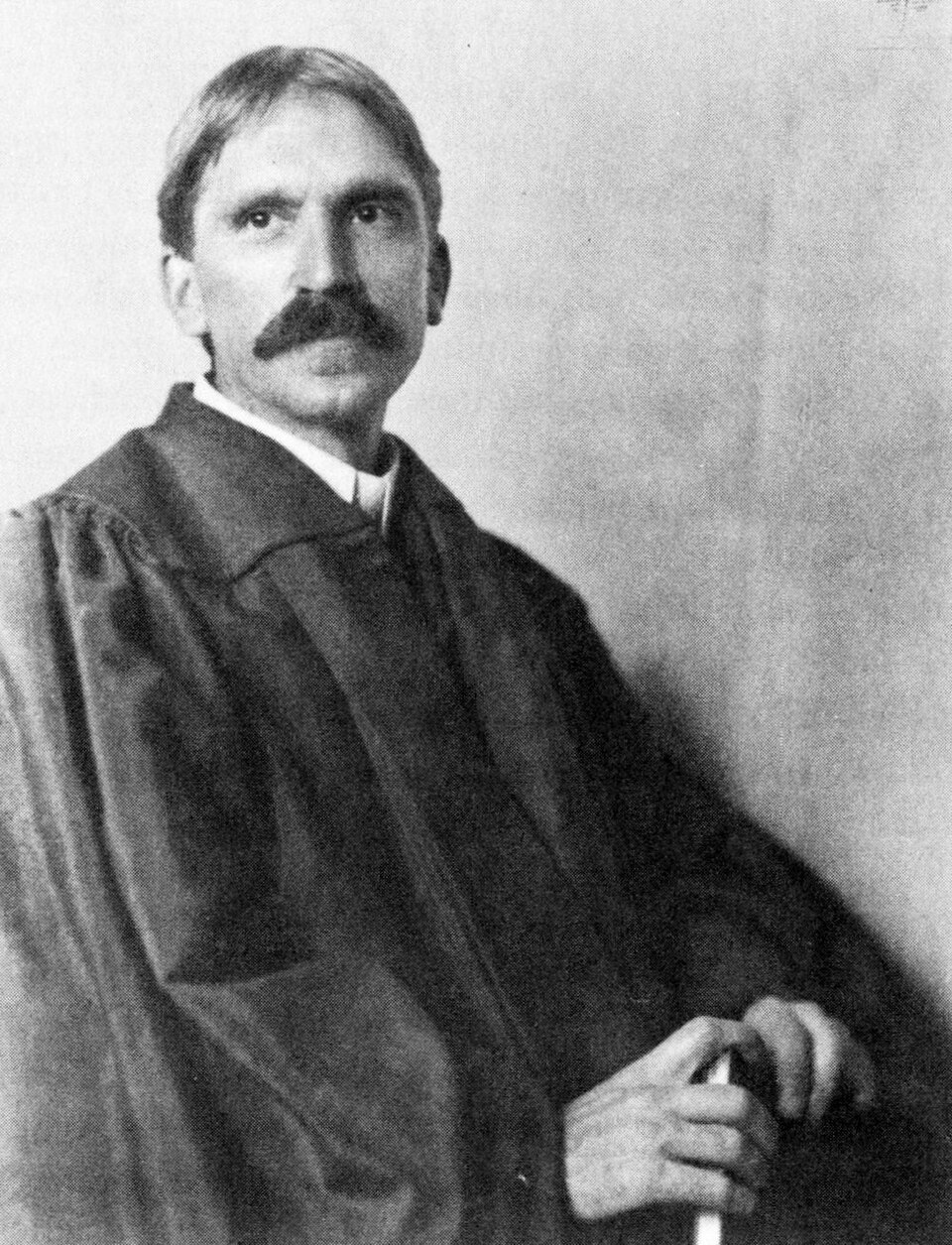
0 sources
Summary
John Dewey was born on October 20, 1859[1], in Burlington[2]. He died on June 1, 1952[3], in New York City[4]. He worked as a philosopher[5], psychologist[6], pedagogue[7], professor[8], and sociologist[9]. He ranks in the top 0.59% of human entities by monthly Wikipedia readership (21,280 views/month, #5,880 of 1,000,298).[10]
Key Facts
- Place of burial: University of Vermont[11]
- Father: Capt. Archibald Sprague Dewey[12]
- Spouse: Alice Chipman Dewey[13], Estelle Roberta Lowitz Grant[14]
- Country of citizenship: United States[15]
- Occupation: trade unionist[16], aesthetician[17], teacher[18], writer[19]
- Field of work: philosophy[20], philosophy of education[21]
- Position held: President of the American Psychological Association[22]
- Employer: University of Chicago[23], University of Michigan[24], Teachers College[25], University of Minnesota[26]
- Educated at: Johns Hopkins University[27], University of Vermont[28], Burlington High School[29]
- Student: Robert Bruce Raup[30], Lilla Belle Pitts[31], Nuri Ja'far[32]
- Notable work: The School and Society[33], Democracy and Education[34], Experience and Education[35], The Public and its Problems[36], Art as Experience[37]
- Award received: Honorary Doctorate from the National Autonomous University of Mexico[38], Carus Lectures[39], doctor honoris causa from the University of Paris[40]
- Member of: American Philosophical Society[41], American Psychological Association[42], Phi Beta Kappa Society[43], National Academy of Sciences[44]
- Religion or worldview: religious humanism[45]
- Sex or gender: male[46]
- Doctoral student: Hu Shih[47]
- Commons category: John Dewey[48]
- Residence: United States[49]
- Family name: Dewey[50]
- Given name: John[51]
- Topic's main category: Category:John Dewey[52]
- Described at URL: https://education.persee.fr/doc/revin_1775-6014_1931_num_85_1_8217[53]
Why It Matters
John Dewey has Wikipedia articles in 29 language editions, a strong signal of global cultural recognition.[54] He is known by 31 alternative names across languages and contexts.[55]
He has been cited as an influence by B. R. Ambedkar[56], an economist[57], 1891–1956[58], of British Raj[59], awarded the Bharat Ratna[60], specialised in economics[61]; Aurobindo Ghosh[62], a linguist[63], 1872–1950[64], of British Raj[65], specialised in philosophy[66]; Richard Rorty[67], a philosopher[68], 1931–2007[69], of United States[70], awarded the Guggenheim Fellowship[71], specialised in philosophy[72]; Hilary Putnam[73], a mathematician[74], 1926–2016[75], of United States[76], awarded the Nicholas Rescher Prize for Systematic Philosophy[77], specialised in philosophy[78]; Hu Shih[79], a diplomat[80], 1891–1962[81], of Taiwan[82], awarded the honorary doctor of the University of Hong Kong[83], specialised in philosophy[84]; and Axel Honneth[85], a philosopher[86], b. 1949[87], of Germany[88], awarded the Ernst Bloch Award[89].
Works attributed to him include Art as Experience[90], The School and Society[91], and Democracy and Education[92].
His notable doctoral advisees include Hu Shih[93] and William Heard Kilpatrick[94].
FAQs
Where was John Dewey born?
John Dewey's place of birth was Burlington[2].
Where did John Dewey die?
John Dewey passed away in New York City[4].
Who were John Dewey's parents?
John Dewey's father was Capt. Archibald Sprague Dewey[12].
Who was John Dewey married to?
John Dewey's spouses include Alice Chipman Dewey[13] and Estelle Roberta Lowitz Grant[14].
What did John Dewey do for work?
John Dewey worked as a philosopher[5], psychologist[6], pedagogue[7], professor[8], and sociologist[9].
Where did John Dewey go to school?
John Dewey was educated at Johns Hopkins University[27], University of Vermont[28], and Burlington High School[29].
What awards did John Dewey receive?
Honors received include Honorary Doctorate from the National Autonomous University of Mexico[38], Carus Lectures[39], and doctor honoris causa from the University of Paris[40].
Who did John Dewey influence?
John Dewey has been cited as an influence by B. R. Ambedkar[56], Aurobindo Ghosh[62], Richard Rorty[67], and Hilary Putnam[73].