
James Watson
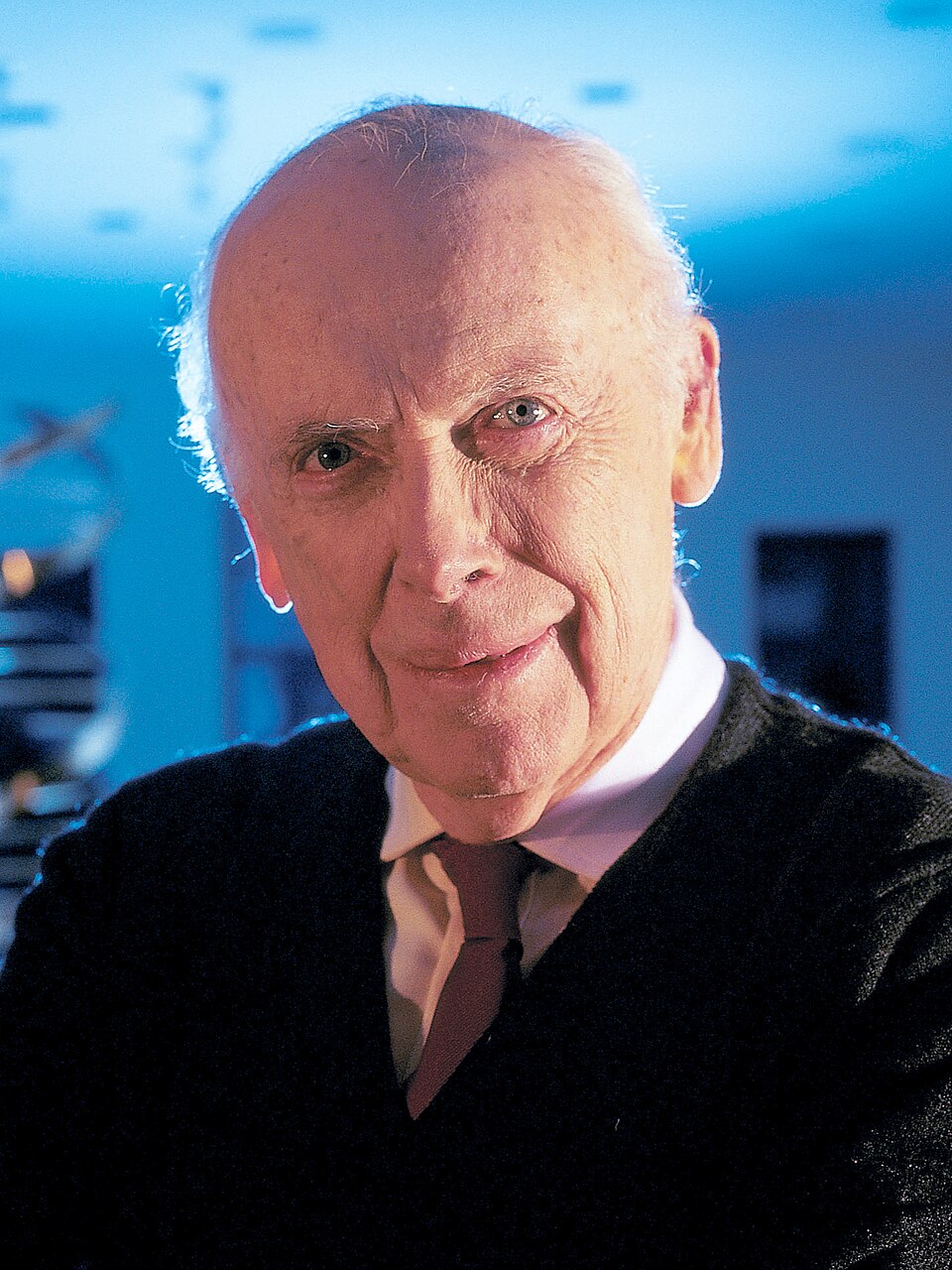
0 sources
James Watson
Summary
James Watson is a human[1]. Born in Chicago[2], he… he died in East Northport[3]. He worked as a biologist[4], geneticist[5], zoologist[6], biochemist[7], and molecular biologist[8]. He has Wikipedia articles in 30 language editions, a strong signal of global cultural recognition.[9]
Key Facts
- James Watson's place of birth was Chicago[2].
- James Watson passed away in East Northport[3].
- James Watson's father was James Dewey Watson[10].
- James Watson held citizenship in United States[11].
- American English was James Watson's native language[12].
- James Watson worked as a biologist[4].
- James Watson's professions included geneticist[5].
- James Watson's professions included zoologist[6].
- James Watson worked as a biochemist[7].
- James Watson worked as a molecular biologist[8].
- James Watson's professions included academic[13].
- James Watson's field of work was biochemistry[14].
- James Watson's field of work was genetics[15].
- James Watson's field of work was molecular biology[16].
- James Watson's field of work was molecular genetics[17].
- James Watson's field of work was DNA structure[18].
- James Watson's field of work was molecular biochemistry[19].
- James Watson was employed by Harvard University[20].
- Among James Watson's employers was University of Cambridge[21].
- James Watson was employed by Cold Spring Harbor Laboratory[22].
- James Watson was employed by United States National Institutes of Health[23].
- James Watson was employed by California Institute of Technology[24].
- James Watson's education included a stint at Indiana University Bloomington[25].
- James Watson's education included a stint at University of Chicago[26].
- James Watson was educated at South Shore High School[27].
Body
Origins and Family
James Watson was born in Chicago[2]. His father was James Dewey Watson[10]. American English was his native language[12].
Education
Educated at Indiana University Bloomington[25], a public research university[28], in United States[29], founded in 1820[30], headquartered in Bloomington[31]; University of Chicago[26], a private university[32], in United States[33], founded in 1890[34], headquartered in Chicago[35]; and South Shore High School[27], a high school[36], in United States[37], founded in 1940[38]. James Watson's doctoral advisor was Salvador Luria[39].
Career and Affiliations
Recorded occupations include biologist[4], geneticist[5], zoologist[6], biochemist[7], molecular biologist[8], and academic[13]. Fields of work include biochemistry[14], an interdisciplinary science[40]; genetics[15], a science[41], founded in 1900[42]; molecular biology[16], a branch of biology[43]; molecular genetics[17], a branch of genetics[44]; DNA structure[18]; and molecular biochemistry[19]. Employers include Harvard University[20], a private university[45], in United States[46], founded in 1636[47], headquartered in Cambridge[48]; University of Cambridge[21], a collegiate university[49], in United Kingdom[50], founded in 1209[51], headquartered in Cambridge[52]; Cold Spring Harbor Laboratory[22], a research institute[53], in United States[54], founded in 1890[55]; United States National Institutes of Health[23], an United States federal agency[56], in United States[57], founded in 1887[58], headquartered in Bethesda[59]; and California Institute of Technology[24], a university[60], in United States[61], founded in 1891[62], headquartered in California[63]. Doctoral students include Mario Capecchi[64], H. Robert Horvitz[65], Peter Moore[66], and Joan A. Steitz[67].
Recognition
Awards received include Copley Medal[68], a medallion[69], in United Kingdom[70], founded in 1731[71]; Presidential Medal of Freedom[72], an award[73], in United States[74], founded in 1963[75]; Lomonosov Gold Medal[76], a science award[77], in Russia[78]; Albert Lasker Award for Basic Medical Research[79], a class of award[80], in United States[81], founded in 1946[82]; Canada Gairdner International Award[83]; and Honorary Knight Commander of the Order of the British Empire[84].
Personal Life
James Watson's religion is recorded as atheism[85].
Death and Burial
James Watson died in East Northport[3].
Works and Contributions
Things named for James Watson include James D. Watson Institute of Genome Sciences, Zhejiang University[86].
Why It Matters
James Watson has Wikipedia articles in 30 language editions, a strong signal of global cultural recognition.[9] He is known by 62 alternative names across languages and contexts.[87]
He has been cited as an influence by Joan A. Steitz[88], a biologist[89], b. 1941[90], of United States[91], awarded the Canada Gairdner International Award[92], specialised in biophysics[93].
He is credited with the discovery of nucleic acid double helix[94], a macromolecular conformation[95]. Works attributed to him include Molecular Structure of Nucleic Acids: A Structure for Deoxyribose Nucleic Acid[96], a scholarly article[97] and The Double Helix[98], a written work[99]. Entities named for him include James D. Watson Institute of Genome Sciences, Zhejiang University[86].
His notable doctoral advisees include Mario Capecchi[100], Joan A. Steitz[101], Peter Moore[102], and H. Robert Horvitz[103].
FAQs
Where was James Watson born?
Born in Chicago[2], James Watson…
Where did James Watson die?
James Watson passed away in East Northport[3].
Who were James Watson's parents?
James Watson's father was James Dewey Watson[10].
What did James Watson do for work?
James Watson worked as biologist[4], geneticist[5], zoologist[6], biochemist[7], and molecular biologist[8].
Where did James Watson go to school?
James Watson was educated at Indiana University Bloomington[25], University of Chicago[26], and South Shore High School[27].
What awards did James Watson receive?
Honors received include Copley Medal[68], Presidential Medal of Freedom[72], Lomonosov Gold Medal[76], and Albert Lasker Award for Basic Medical Research[79].
Who did James Watson influence?
James Watson has been cited as an influence by Joan A. Steitz[88].
What did James Watson discover?
James Watson is credited as discoverer of nucleic acid double helix[94].