
Ion Luca Caragiale
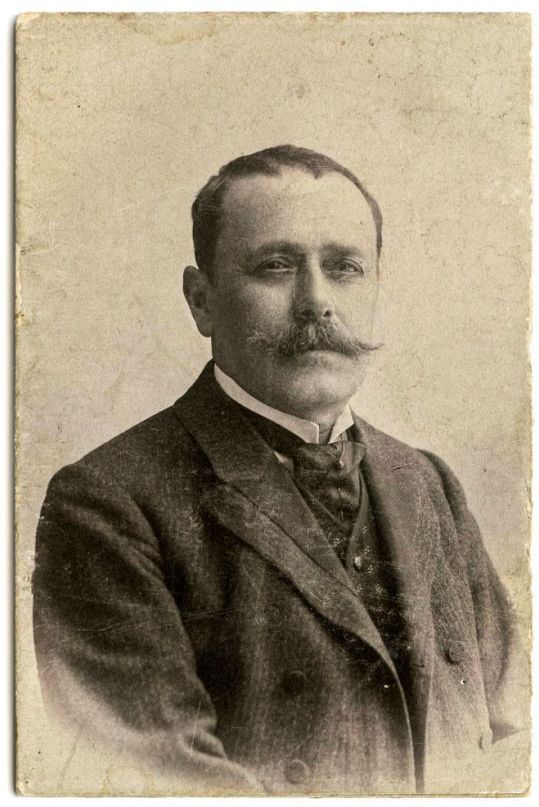
0 sources
Summary
Ion Luca Caragiale was born on February 13, 1852[1], in I.L. Caragiale[2]. He died on June 9, 1912[3], in Berlin[4]. He worked as a linguist[5], poet[6], writer[7], journalist[8], and playwright[9]. He ranks in the top 0.72% of human entities by monthly Wikipedia readership (899 views/month, #7,210 of 1,000,298).[10]
Key Facts
- Date of birth: January 30, 1845[11]
- Place of burial: Bellu Cemetery[12]
- Father: Luca Șt. Caragiale[13]
- Spouse: Alexandrina Burelly[14]
- Child: Luca Caragiale[15], Mateiu Caragiale[16]
- Country of citizenship: Principality of Wallachia[17], United Principalities of Moldavia and Wallachia[18], Kingdom of Romania[19]
- Ethnic group: Greeks in Romania[20]
- Occupation: children's writer[21], translator[22], short story writer[23]
- Field of work: literature[24], drama[25], poetry[26], translation[27], journalism[28]
- Award received: Order of the Star of Romania[29]
- Member of: Romanian Academy[30]
- Influenced by: Georges Courteline[31], Eugène Labiche[32], Victorien Sardou[33], Eugène Scribe[34]
- Sex or gender: male[35]
- Member of political party: Conservative-Democratic Party[36]
- Genre: drama fiction[37]
- Commons category: Ion Luca Caragiale[38]
- Family name: Caragiale[39]
- Given name: Ion[40], Luca[41]
- Topic's main category: Category:Ion Luca Caragiale[42]
- Commons gallery: Ion Luca Caragiale[43]
- Described by source: Brockhaus and Efron Encyclopedic Dictionary[44], Armenian Soviet Encyclopedia, vol. 5[45], Dicţionarul Contimporanilor (1897)[46]
- Languages spoken, written or signed: Romanian[47], German[48], French[49]
Body
Works and Contributions
Things named for Ion Luca Caragiale include National Theatre Bucharest "he"[50], I. L. Caragiale National University of Theatre and Film[51], and I.L. Caragiale[52].
Why It Matters
Ion Luca Caragiale has Wikipedia articles in 23 language editions, a strong signal of global cultural recognition.[53] He is known by 52 alternative names across languages and contexts.[54]
He has been cited as an influence by Eugène Ionesco[55], a playwright[56], 1909–1994[57], of Romania[58], awarded the Commandeur des Arts et des Lettres[59], specialised in performing arts[60]; Mihail Sadoveanu[61], a linguist[62], 1880–1961[63], of Romania[64], awarded the Lenin Peace Prize[65]; Urmuz[66], a magistrate[67], 1883–1923[68], of Kingdom of Romania[69]; Păstorel Teodoreanu[70], a linguist[71], 1894–1964[72], of Romania[73]; Ion Călugăru[74], a poet[75], 1902–1956[76], of Romania[77], specialised in creative and professional writing[78]; and Anton Bacalbașa[79], a poet[80], 1865–1899[81], of Romania[82].
Works attributed to him include A Lost Letter[83] and O făclie de Paște[84]. Entities named for him include National Theatre Bucharest "he"[50], I. L. Caragiale National University of Theatre and Film[51], and I.L. Caragiale[52].
FAQs
Where was Ion Luca Caragiale born?
Ion Luca Caragiale was born in I.L. Caragiale[2].
Where did Ion Luca Caragiale die?
Ion Luca Caragiale died in Berlin[4].
Who were Ion Luca Caragiale's parents?
Ion Luca Caragiale's father was Luca Șt. Caragiale[13].
Who was Ion Luca Caragiale married to?
Ion Luca Caragiale's spouses include Alexandrina Burelly[14].
What did Ion Luca Caragiale do for work?
Ion Luca Caragiale worked as a linguist[5], poet[6], writer[7], journalist[8], and playwright[9].
What awards did Ion Luca Caragiale receive?
Honors received include Order of the Star of Romania[29].
Who did Ion Luca Caragiale influence?
Ion Luca Caragiale has been cited as an influence by Eugène Ionesco[55], Mihail Sadoveanu[61], Urmuz[66], and Păstorel Teodoreanu[70].