
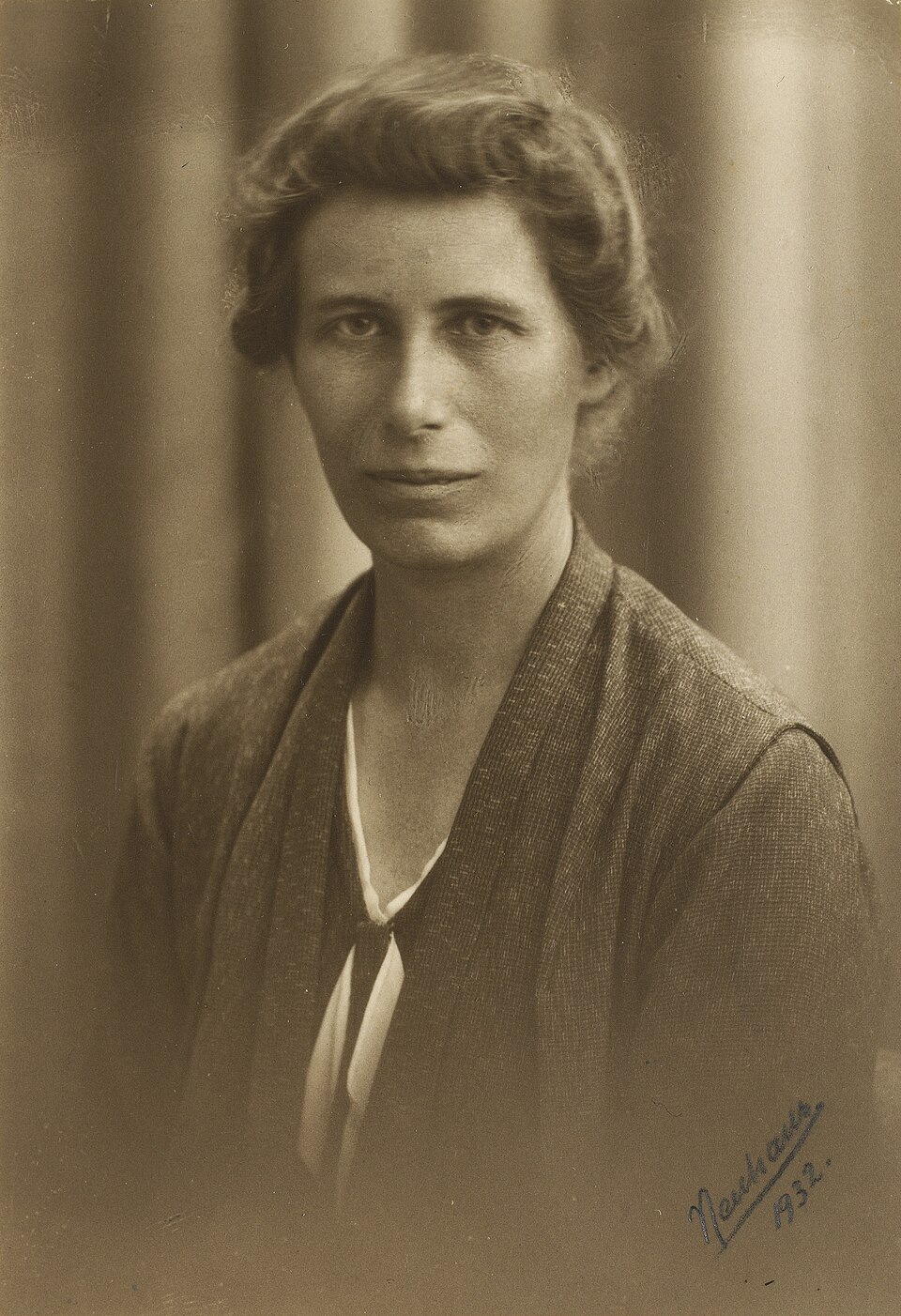
Inge Lehmann
0 sources
Summary
Inge Lehmann was born on May 13, 1888[1], in Copenhagen[2]. She died on February 21, 1993[3], in Copenhagen[4]. She worked as a seismologist[5], geologist[6], surveyor[7], naturalist[8], and geophysicist[9]. She ranks in the top 0.72% of human entities by monthly Wikipedia readership (1,977 views/month, #7,210 of 1,000,298).[10]
Key Facts
- Place of birth: Østerbro[11]
- Place of burial: Hørsholm Kirkegård[12]
- Father: Alfred Lehmann[13]
- Country of citizenship: Kingdom of Denmark[14]
- Occupation: geodesist[15]
- Field of work: seismology[16], university teacher[17]
- Employer: Geodætisk Institut[18]
- Educated at: University of Copenhagen[19], Newnham College[20]
- Notable work: Lehmann discontinuity[21]
- Award received: William Bowie Medal[22], Tagea Brandt Rejselegat[23], Emil Wiechert Medal[24], honorary doctorate from Columbia University[25], Foreign Member of the Royal Society[26], The Royal Danish Academy Gold Medal[27], honorary doctorate of the University of Copenhagen[28]
- Member of: Royal Society[29]
- Sex or gender: female[30]
- Commons category: Inge Lehmann[31]
- Family name: Lehmann[32]
- Given name: Inge[33]
- Described at URL: https://www.aip.org/history-programs/physics-history/teaching-guides-women-minorities/inge-lehmann-danish-seismologist[34], https://herlegacymatters.de/beruehmte-frauen/inge-lehmann-seismologin-und-entdeckerin-des-inneren-erdkerns/[35]
- Relative: Orla Lehmann[36], Signe Tørsleff[37]
- Student of: Niels Erik Nørlund[38]
- Described by source: Forgotten Women: The Scientists[39], Kvinde kend din historie[40], Kvindelige Akademikere 1875-1925[41]
- Languages spoken, written or signed: Danish[42]
- Name in native language: Inge Lehmann[43]
- Subject has role: centenarian[44]
- Sibling: Harriet Lehmann[45]
- On focus list of Wikimedia project: gender gap on Dutch Wikipedia[46], Wikipedia:WikiProject 1000 important articles about Denmark[47]
- Maintained by WikiProject: WikiProject Mathematics[48]
Body
Works and Contributions
Things named for Inge Lehmann include Lehmann discontinuity[49], a discontinuity[50]; Inge Lehmann Medal[51], an award[52], founded in 1997[53]; and Lehmann[54], a crater[55].
Why It Matters
Inge Lehmann has Wikipedia articles in 27 language editions, a strong signal of global cultural recognition.[56] She is known by 15 alternative names across languages and contexts.[57]
She has been cited as an influence by Bruce Bolt[58], a geophysicist[59], 1930–2005[60], of United States[61], awarded the Fellow of the Seismological Society of America[62].
She is credited with the discovery of inner core[63], a physical object[64]. Entities named for her include Lehmann discontinuity[49], a discontinuity[50]; Inge Lehmann Medal[51], an award[52], founded in 1997[53]; and Lehmann[54], a crater[55].
FAQs
Where was Inge Lehmann born?
Inge Lehmann was born in Copenhagen[2].
Where did Inge Lehmann die?
Inge Lehmann died in Copenhagen[4].
Who were Inge Lehmann's parents?
Inge Lehmann's father was Alfred Lehmann[13].
What did Inge Lehmann do for work?
Inge Lehmann worked as a seismologist[5], geologist[6], surveyor[7], naturalist[8], and geophysicist[9].
Where did Inge Lehmann go to school?
Inge Lehmann was educated at University of Copenhagen[19] and Newnham College[20].
What awards did Inge Lehmann receive?
Honors received include William Bowie Medal[22], Tagea Brandt Rejselegat[23], Emil Wiechert Medal[24], and honorary doctorate from Columbia University[25].
Who did Inge Lehmann influence?
Inge Lehmann has been cited as an influence by Bruce Bolt[58].
What did Inge Lehmann discover?
Inge Lehmann is credited as discoverer of inner core[63].