
Hugo Simberg
Finnish painter (1873-1917)
Press Enter · cited answer in seconds
0 sources
Summary
Hugo Simberg was born on June 24, 1873[1], in Hamina[2]. He died on July 12, 1917[3], in Ähtäri[4]. He worked as a painter[5], sculptor[6], architect[7], graphic artist[8], and exlibrist[9]. He ranks in the top 0.72% of human entities by monthly Wikipedia readership (2,122 views/month, #7,195 of 1,000,298).[10]
Key Facts
- Place of burial: Hietaniemi cemetery[11]
- Father: Tom Simberg[12]
- Country of citizenship: Grand Duchy of Finland[13]
- Native language: Swedish[14]
- Ethnic group: Finland Swedes[15]
- Occupation: etcher[16]
- Field of work: painting[17], visual arts[18]
- Student: Sulho Sipilä[19], Rudolf Koivu[20]
- Notable work: The Garden of Death[21], The Wonderful Flower[22], The Wounded Angel[23]
- Sex or gender: male[24]
- Movement: Symbolism[25]
- Genre: Symbolism[26]
- Commons category: Hugo Simberg[27]
- Family name: Simberg[28]
- Given name: Hugo[29], Gerhard[30]
- Topic's main category: Category:Hugo Simberg[31]
- Work location: Helsinki[32], Ruovesi[33], Tampere[34]
- Student of: Helene Schjerfbeck[35], Elin Danielson-Gambogi[36]
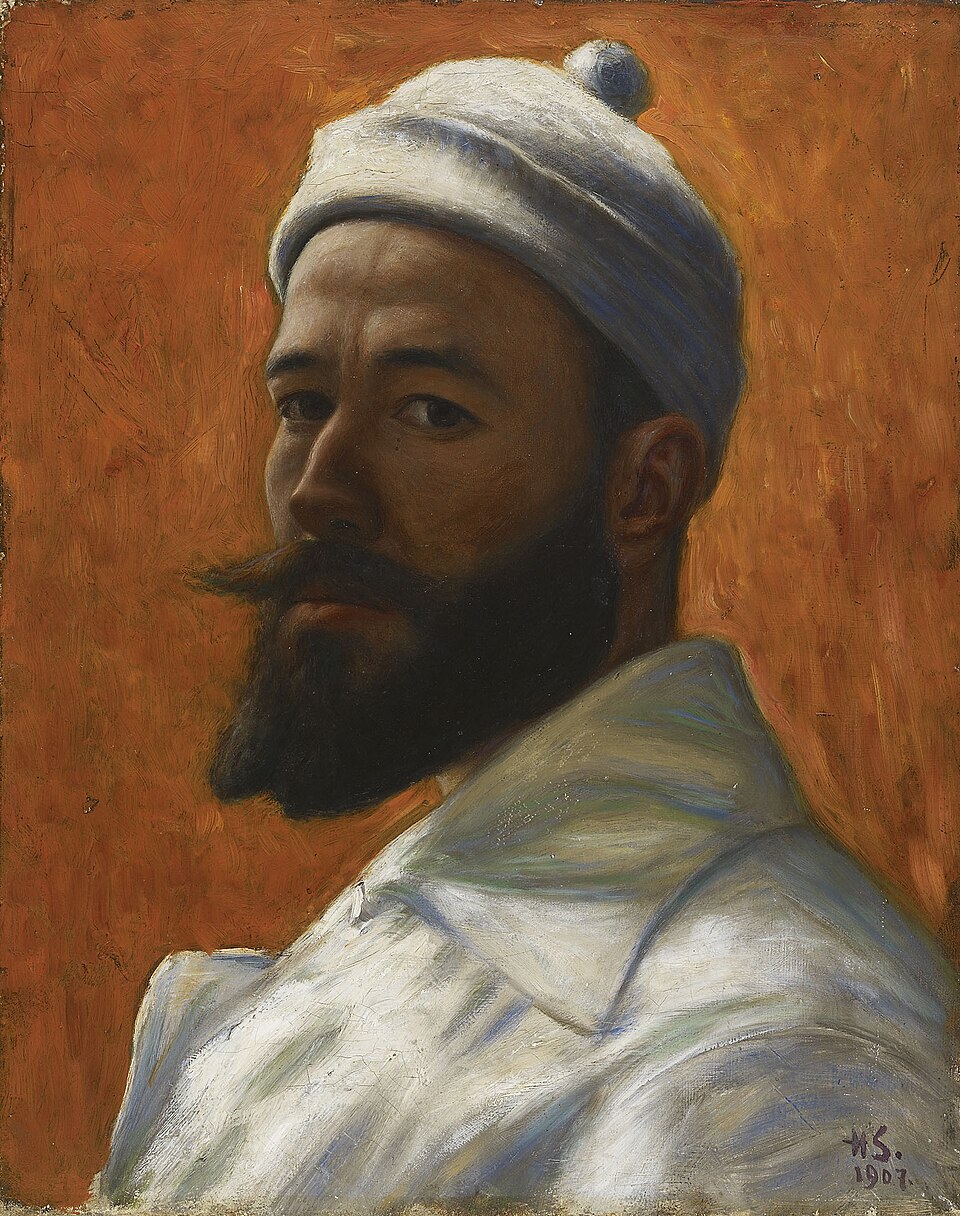
- Depicted by: Self-Portrait[37]
- Languages spoken, written or signed: Finnish[38], Swedish[39]
- Commons Creator page: Hugo Simberg[40]
- Birth name: Hugo Gerhard Simberg[41]
- Significant person: Magnus Enckell[42]
- On focus list of Wikimedia project: WikiProject PCC Wikidata Pilot/Frick Art Reference Library[43]
Why It Matters
Hugo Simberg has Wikipedia articles in 19 language editions, a strong signal of global cultural recognition.[44] He is known by 26 alternative names across languages and contexts.[45]
FAQs
Where was Hugo Simberg born?
Hugo Simberg was born in Hamina[2].
Where did Hugo Simberg die?
Hugo Simberg passed away in Ähtäri[4].
Who were Hugo Simberg's parents?
Hugo Simberg's father was Tom Simberg[12].
What did Hugo Simberg do for work?
Hugo Simberg worked as a painter[5], sculptor[6], architect[7], graphic artist[8], and exlibrist[9].