
Hans Bethe
0 sources
Summary
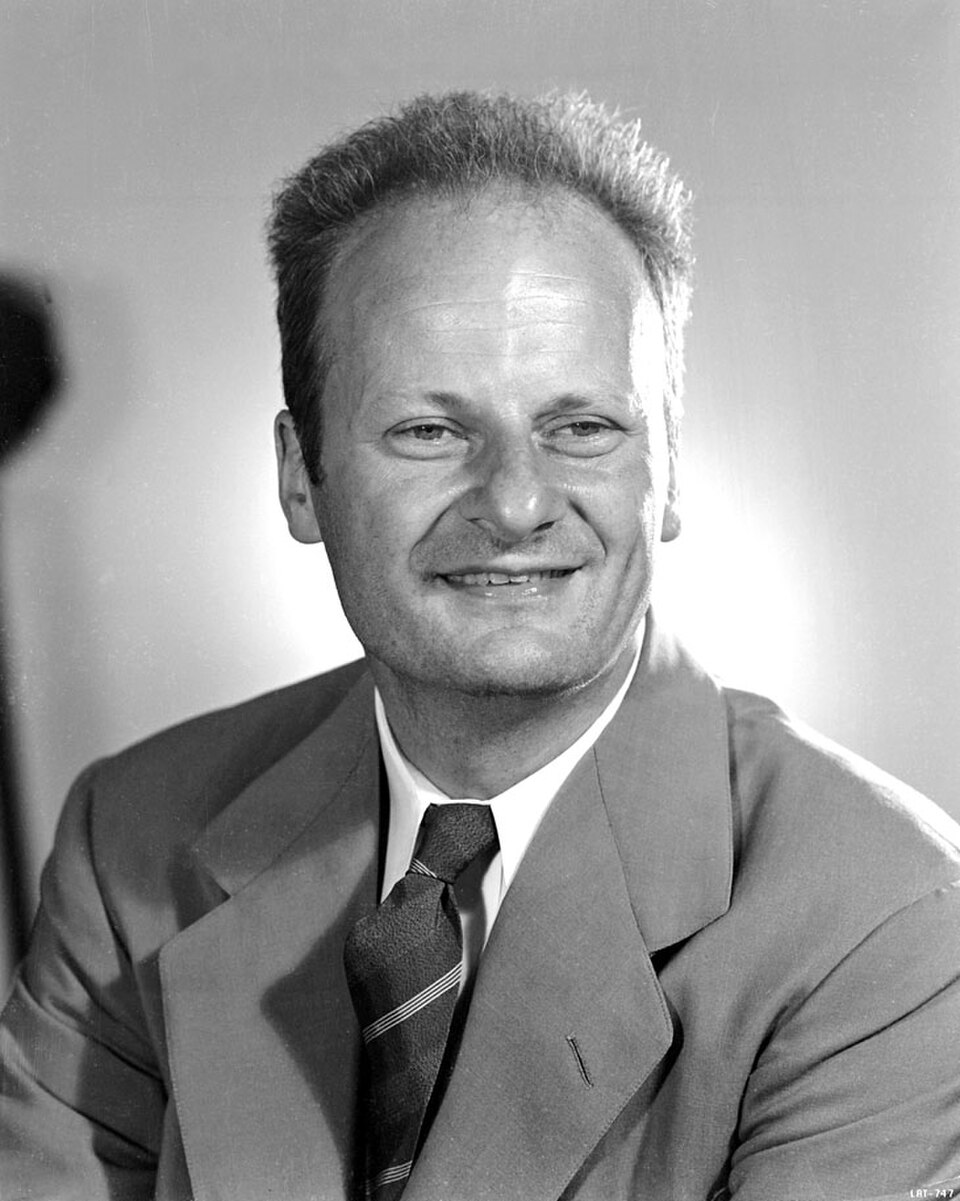
Hans Bethe was born in Strasbourg[1]. He died in Ithaca[2]. He worked as a physicist[3], university teacher[4], nuclear physicist[5], and scientist[6]. He ranks in the top 0.67% of human entities by monthly Wikipedia readership (10,098 views/month, #6,681 of 1,000,298).[7]
Key Facts
- Place of burial: Pleasant Grove Cemetery[8]
- Father: Albrecht Bethe[9]
- Spouse: Rose Ewald[10]
- Country of citizenship: German Reich[11], United States[12]
- Ethnic group: Jewish people[13]
- Field of work: astrophysics[14]
- Position held: chairperson[15]
- Employer: University of Tübingen[16], Cornell University[17], Manhattan Project[18]
- Educated at: Ludwig-Maximilians-Universität München[19], Goethe University Frankfurt[20], University of Cambridge[21], Sapienza University of Rome[22], Goethe-Gymnasium[23]
- Doctoral advisor: Arnold Sommerfeld[24]
- Award received: Pour le Mérite for Sciences and Arts order[25], Niels Bohr International Gold Medal[26], Nobel Prize in Physics[27], Max Planck Medal[28], Lomonosov Gold Medal[29], Rumford Prize[30], Henry Draper Medal[31], Franklin Medal[32], Bruce Medal[33], Oersted Medal[34], Oskar Klein Medal[35], Eddington Medal[36], National Medal of Science[37], Leo Szilard Lectureship Award[38]
- Religion or worldview: atheism[39]
- Sex or gender: male[40]
- Doctoral student: Robert Marshak[41], Jeffrey Goldstone[42], J. J. Sakurai[43], Francis E. Low[44], John Negele[45], Michel Baranger[46], Roman Jackiw[47], David J. Thouless[48], John L. Gammel, Jr.[49], Harold Saul Zapolsky[50], David Breed Beard[51], Mark S Nelkin[52], Walter McAfee[53], Benjamin D. Day[54]
- Commons category: Hans Bethe[55]
Body
Works and Contributions
Things named for Hans Bethe include Bethe formula[56], Alpher–Bethe–Gamow theory[57], Bethe–Salpeter equation[58], Bethe ansatz[59], foe[60], Bethe lattice[61], Bethe-Slater curve[62], and Hans A. Bethe Prize[63].
Why It Matters
Hans Bethe has Wikipedia articles in 30 language editions, a strong signal of global cultural recognition.[64] He is known by 61 alternative names across languages and contexts.[65]
He has been cited as an influence by M. Stanley Livingston[66], a physicist[67], 1905–1986[68], of United States[69], awarded the Fellow of the American Physical Society[70], specialised in accelerator physics[71].
Entities named for him include Bethe formula[56], Alpher–Bethe–Gamow theory[57], Bethe–Salpeter equation[58], Bethe ansatz[59], foe[60], and Bethe lattice[61].
His notable doctoral advisees include J. J. Sakurai[72], a physicist[73], 1933–1982[74], of Japan[75], awarded the Guggenheim Fellowship[76]; George Irving Bell[77], a physicist[78], 1926–2000[79], of United States[80], awarded the Fellow of the American Physical Society[81]; David J. Thouless[82], a physicist[83], 1934–2019[84], of United Kingdom[85], awarded the Fellow of the Royal Society[86], specialised in nuclear physics[87]; Roman Jackiw[88], a theoretical physicist[89], 1939–2023[90], of Poland[91], awarded the Guggenheim Fellowship[92], specialised in theoretical physics[93]; Jeffrey Goldstone[94]; and Robert Marshak[95].
FAQs
Where was Hans Bethe born?
Hans Bethe was born in Strasbourg[1].
Where did Hans Bethe die?
Hans Bethe passed away in Ithaca[2].
Who were Hans Bethe's parents?
Hans Bethe's father was Albrecht Bethe[9].
Who was Hans Bethe married to?
Hans Bethe's spouses include Rose Ewald[10].
What did Hans Bethe do for work?
Hans Bethe worked as a physicist[3], university teacher[4], nuclear physicist[5], and scientist[6].
Where did Hans Bethe go to school?
Hans Bethe was educated at Ludwig-Maximilians-Universität München[19], Goethe University Frankfurt[20], University of Cambridge[21], and Sapienza University of Rome[22].
What awards did Hans Bethe receive?
Honors received include Pour le Mérite for Sciences and Arts order[25], Niels Bohr International Gold Medal[26], Nobel Prize in Physics[27], and Max Planck Medal[28].
Who did Hans Bethe influence?
Hans Bethe has been cited as an influence by M. Stanley Livingston[66].