
Girolamo Ramorino
0 sources
Summary
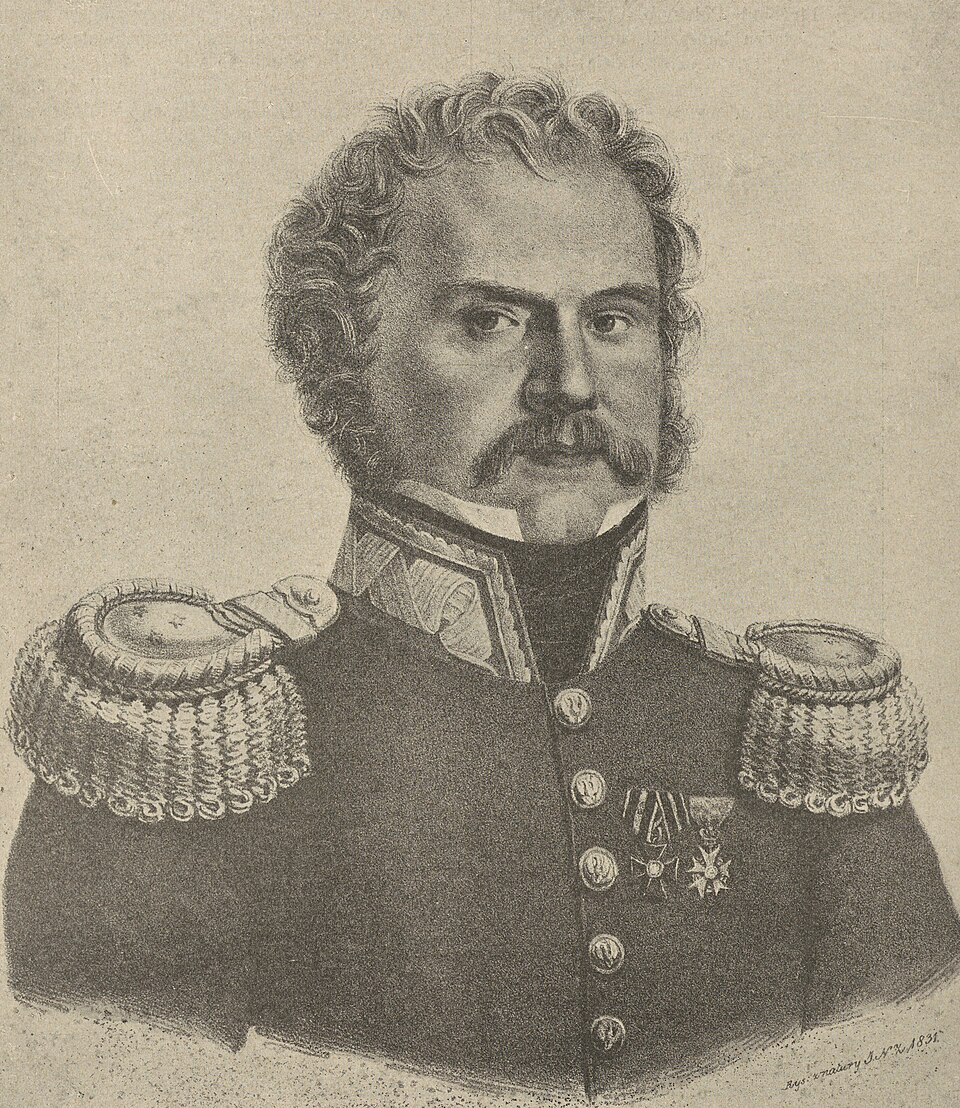
Girolamo Ramorino was born on April 8, 1792[1], in Genoa[2]. He died on May 22, 1849[3], in Turin[4]. He worked as a military personnel[5] and politician[6]. He ranks in the top 0.73% of human entities by monthly Wikipedia readership (193 views/month, #7,292 of 1,000,298).[7]
Key Facts
- Country of citizenship: Kingdom of Sardinia[8], Russian Empire[9], Polish–Lithuanian Commonwealth[10]
- Position held: member of the Chamber of Deputies of the Kingdom of Sardinia[11]
- Award received: Knight of the Legion of Honour[12], Knight's Cross of the Virtuti Militari[13], Gold Cross of the Virtuti Militari[14]
- Sex or gender: male[15]
- Military branch: Grande Armée[16]
- Commons category: Girolamo Ramorino[17]
- Military, police or special rank: general[18]
- Archives at: Defence Historical Service[19]
- Cause of death: gunshot wound[20]
- Family name: Ramorino[21]
- Given name: Gerolamo[22], Girolamo[23]
- Manner of death: capital punishment[24]
- Described by source: Brockhaus and Efron Encyclopedic Dictionary[25], The American Cyclopædia[26]
- Languages spoken, written or signed: Italian[27]
- Start of work period: 1812[28]
- Writing language: Italian[29]
- P14536: 362441[30]
- P14608: 118938886[31]
- P14974: 16924[32]
Why It Matters
Girolamo Ramorino has Wikipedia articles in 8 language editions, a strong signal of global cultural recognition.[33] He is known by 16 alternative names across languages and contexts.[34]
FAQs
Where was Girolamo Ramorino born?
Girolamo Ramorino was born in Genoa[2].
Where did Girolamo Ramorino die?
Girolamo Ramorino passed away in Turin[4].
What did Girolamo Ramorino do for work?
Girolamo Ramorino worked as a military personnel[5] and politician[6].
What awards did Girolamo Ramorino receive?
Honors received include Knight of the Legion of Honour[12], Knight's Cross of the Virtuti Militari[13], and Gold Cross of the Virtuti Militari[14].