
Giovanni Battista Martini
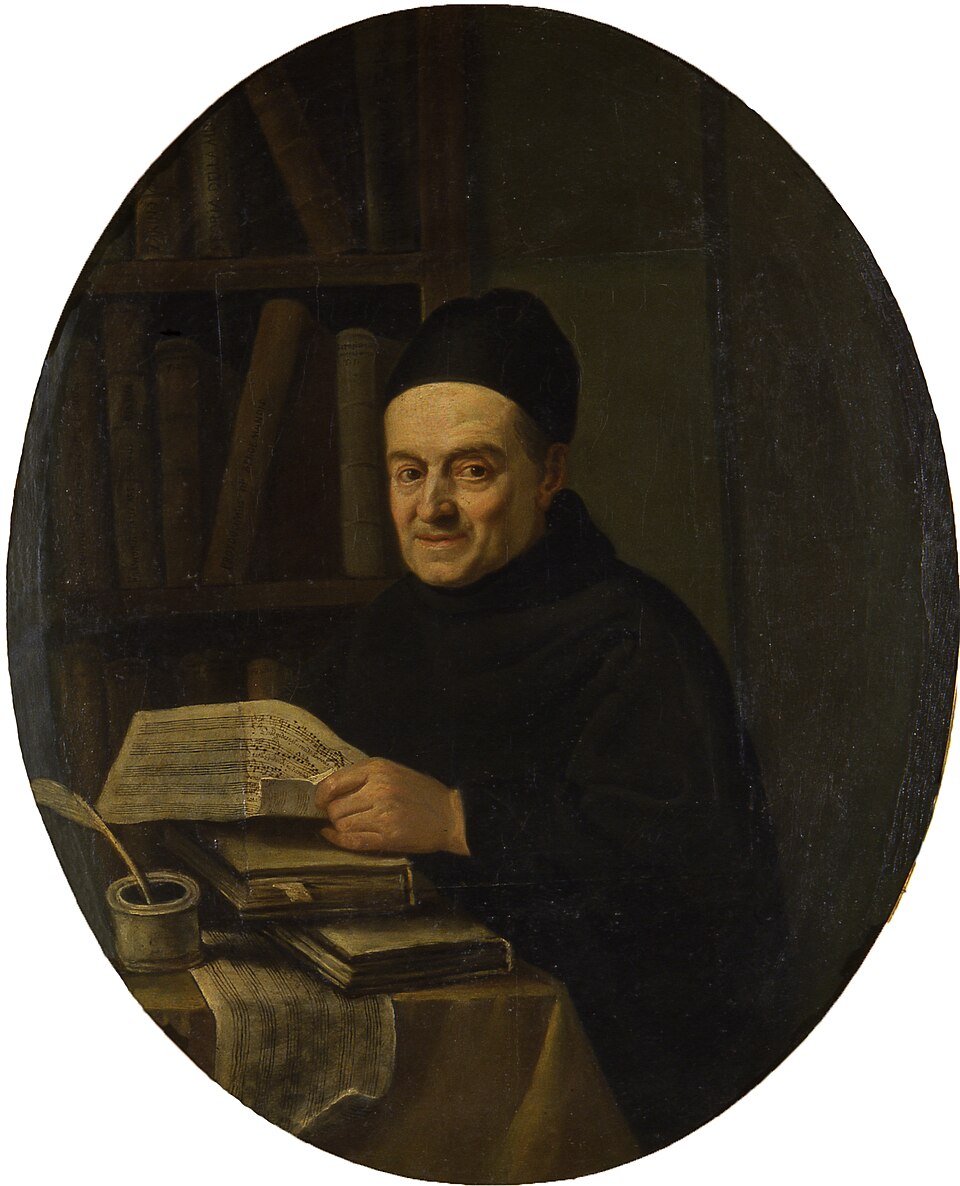
0 sources
Summary
Giovanni Battista Martini was born on April 24, 1706[1], in Bologna[2]. He died on August 3, 1784[3], in Bologna[4]. He worked as a composer[5], musicologist[6], music theorist[7], music educator[8], and pianist[9]. He ranks in the top 0.72% of human entities by monthly Wikipedia readership (782 views/month, #7,238 of 1,000,298).[10]
Key Facts
- Place of burial: former convent of San Francesco[11]
- Father: Q138498077[12]
- Occupation: historian[13], Catholic priest[14], literary scholar[15]
- Student: Giuseppe Simoni[16], Giuseppe Sarti[17], Georg Joseph Vogler[18], Johann Gottlieb Naumann[19], Lorenzo Gibelli[20], Florian Leopold Gassmann[21], Pietro Pompeo Sales[22], Giuseppe Paolucci[23], Giovanni Battista Mancini[24], Pietro Morandi[25], André Grétry[26], Christoph Willibald von Gluck[27], Gian Francesco de Majo[28], Antonio Boroni[29]
- Member of: Philharmonic Academy of Bologna[30], Arcadian Academy[31]
- Religion or worldview: Catholic Church[32]
- Sex or gender: male[33]
- Movement: Baroque music[34]
- Genre: opera[35]
- Commons category: Giovanni Battista Martini[36]
- Residence: Casa dei Martini[37]
- Religious order: Conventual Franciscans[38]
- Family name: Martini[39]
- Given name: Giovanni Battista[40]
- Topic's main category: Category:Giovanni Battista Martini[41]
- Commons gallery: Giovanni Battista Martini[42]
- Student of: Giacomo Antonio Perti[43], Giovanni Antonio Riccieri[44], Angelo Predieri[45], Francesco Antonio Pistocchi[46]
Body
Works and Contributions
Things named for Giovanni Battista Martini include Conservatorio Giovanni Battista Martini[47].
Why It Matters
Giovanni Battista Martini has Wikipedia articles in 22 language editions, a strong signal of global cultural recognition.[48] He is known by 18 alternative names across languages and contexts.[49]
Entities named for him include Conservatorio Giovanni Battista Martini[47].
FAQs
Where was Giovanni Battista Martini born?
Giovanni Battista Martini was born in Bologna[2].
Where did Giovanni Battista Martini die?
Giovanni Battista Martini died in Bologna[4].
Who were Giovanni Battista Martini's parents?
Giovanni Battista Martini's father was Q138498077[12].
What did Giovanni Battista Martini do for work?
Giovanni Battista Martini worked as a composer[5], musicologist[6], music theorist[7], music educator[8], and pianist[9].