
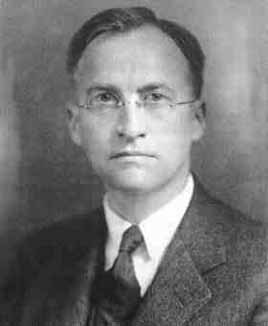
George David Birkhoff
0 sources
Summary
George David Birkhoff was born in Overisel Township[1]. He died in Cambridge[2]. He worked as a mathematician[3], topologist[4], and university teacher[5]. He ranks in the top 0.72% of human entities by monthly Wikipedia readership (760 views/month, #7,221 of 1,000,298).[6]
Key Facts
- Place of burial: Mount Auburn Cemetery[7]
- Child: Garrett Birkhoff[8], Barbara Birkhoff[9]
- Country of citizenship: United States[10]
- Field of work: topology[11], mathematics[12], ergodic theory[13], three-body problem[14], number theory[15]
- Position held: Perkins Professorship of Astronomy and Mathematics[16]
- Employer: Princeton University[17], Harvard University[18], University of Wisconsin–Madison[19]
- Educated at: Harvard University[20], University of Chicago[21]
- Doctoral advisor: Eliakim Hastings Moore[22]
- Award received: Bôcher Memorial Prize[23], Fellow of the Royal Society of Edinburgh[24], Newcomb Cleveland Prize[25], doctor honoris causa from the University of Paris[26], honorary doctor of the University of Poitiers[27]
- Sex or gender: male[28]
- Doctoral student: Marston Morse[29], Marshall Harvey Stone[30], Hassler Whitney[31], Bernard Koopman[32], David Widder[33], Robert Daniel Carmichael[34], Charles B. Morrey, Jr.[35], Clarence Raymond Adams[36], Isador M. Sheffer[37], Raymond Woodard Brink[38], Heinrich Wilhelm Brinkmann[39], Richard Clippinger[40], Elizabeth Frances Cope[41], Rudolf Ernest Langer[42]
Body
Works and Contributions
Things named for George David Birkhoff include Birkhoff's theorem[43], ergodic theorem[44], Poincaré–Birkhoff theorem[45], Birkhoff–Grothendieck theorem[46], George David Birkhoff Prize[47], Birkhoff[48], and 15896 Birkhoff[49].
Why It Matters
George David Birkhoff has Wikipedia articles in 19 language editions, a strong signal of global cultural recognition.[50] He is known by 32 alternative names across languages and contexts.[51]
He is credited with the discovery of ergodic theorem[52], a theorem[53], founded in 1931[54] and Birkhoff's axioms[55], an axiomatic system[56]. Entities named for him include Birkhoff's theorem[43], ergodic theorem[44], Poincaré–Birkhoff theorem[45], Birkhoff–Grothendieck theorem[46], George David Birkhoff Prize[47], and Birkhoff[48].
His notable doctoral advisees include Hassler Whitney[57], a mathematician[58], 1907–1989[59], of United States[60], awarded the National Medal of Science[61], specialised in topology[62]; Marston Morse[63], a mathematician[64], 1892–1977[65], of United States[66], awarded the Croix de guerre 1914–1918[67], specialised in topology[68]; Marshall Harvey Stone[69], a mathematician[70], 1903–1989[71], of United States[72], awarded the Guggenheim Fellowship[73], specialised in mathematics[74]; Bernard Koopman[75]; Robert Daniel Carmichael[76]; and Joseph Leonard Walsh[77].
FAQs
Where was George David Birkhoff born?
George David Birkhoff was born in Overisel Township[1].
Where did George David Birkhoff die?
George David Birkhoff died in Cambridge[2].
What did George David Birkhoff do for work?
George David Birkhoff worked as a mathematician[3], topologist[4], and university teacher[5].
Where did George David Birkhoff go to school?
George David Birkhoff was educated at Harvard University[20] and University of Chicago[21].
What awards did George David Birkhoff receive?
Honors received include Bôcher Memorial Prize[23], Fellow of the Royal Society of Edinburgh[24], Newcomb Cleveland Prize[25], and doctor honoris causa from the University of Paris[26].
What did George David Birkhoff discover?
George David Birkhoff is credited as discoverer of ergodic theorem[52] and Birkhoff's axioms[55].