
Frederick Sanger
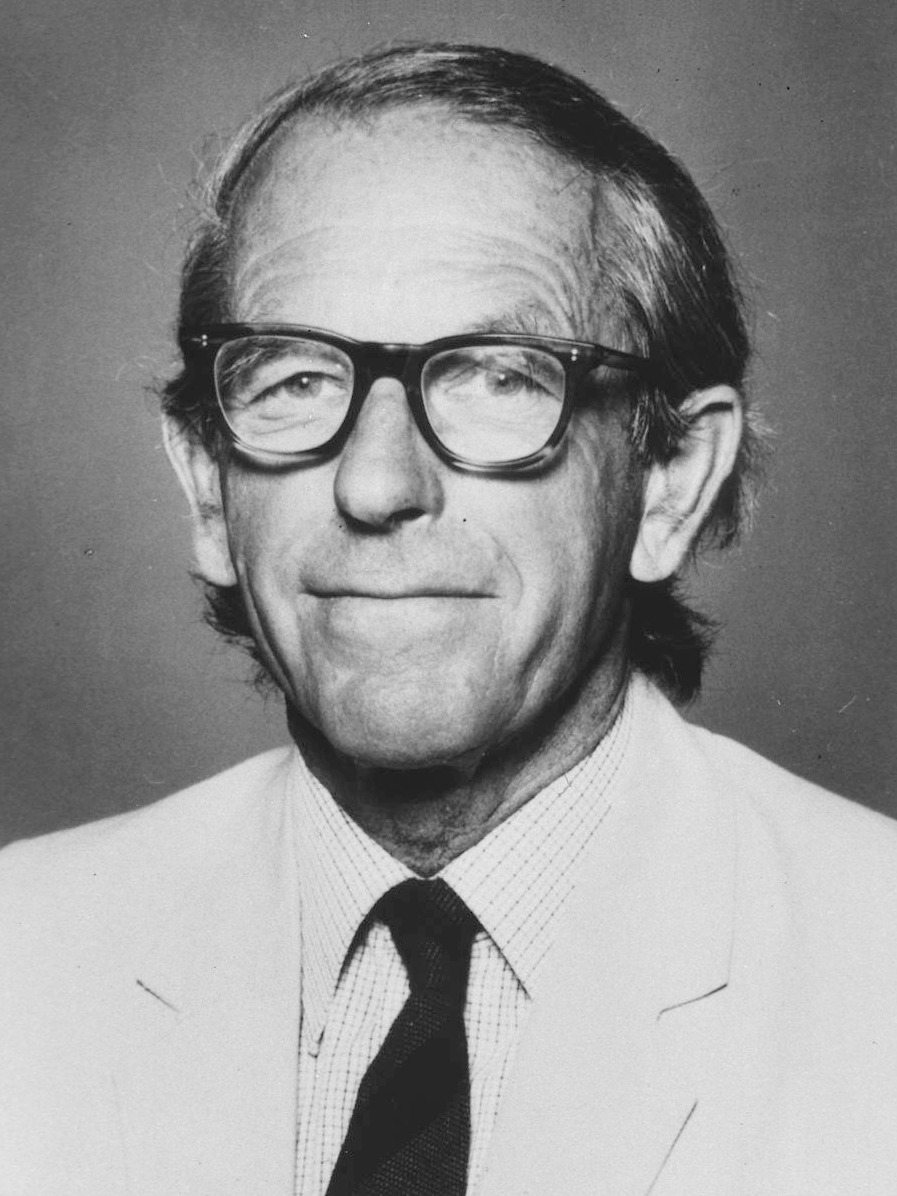
0 sources
Summary
Frederick Sanger was born on August 13, 1918[1], in Rendcomb[2]. He died on November 19, 2013[3], in Cambridge[4]. He worked as a biochemist[5], chemist[6], university teacher[7], and conscientious objector[8]. He ranks in the top 0.7% of human entities by monthly Wikipedia readership (5,987 views/month, #7,008 of 1,000,298).[9]
Key Facts
- Spouse: Margaret Joan Howe[10]
- Country of citizenship: United Kingdom[11], United Kingdom of Great Britain and Ireland[12]
- Field of work: biochemistry[13]
- Employer: University of Cambridge[14]
- Educated at: University of Cambridge[15], St John's College[16], Bryanston School[17], Malvern College[18], The Downs, Malvern College Prep School[19]
- Doctoral advisor: Albert Neuberger. 15 April 1908 -- 14 August 1996: Elected F.R.S. 1951[20], Albert Neuberger[21]
- Student: Rodney Robert Porter[22], Elizabeth Blackburn[23]
- Award received: Corday-Morgan Prize[24], Fellow of the Royal Society[25], Nobel Prize in Chemistry[26], Commander of the Order of the British Empire[27], Royal Medal[28], honorary doctorate from the University of Strasbourg[29], Croonian Medal and Lecture[30], William Bate Hardy Prize[31], Copley Medal[32], Albert Lasker Award for Basic Medical Research[33], Canada Gairdner International Award[34], Louisa Gross Horwitz Prize[35], Companion of Honour[36], Corresponding Member of the Australian Academy of Science[37]
- Member of: Royal Society[38], National Academy of Sciences[39], Bavarian Academy of Sciences and Humanities[40], French Academy of Sciences[41], American Academy of Arts and Sciences[42], European Molecular Biology Organization[43], Australian Academy of Science[44], Indian National Science Academy[45], King's College London[46], World Academy of Art and Science[47], St John's College[48], Peace Pledge Union[49], Medical Research Council Centre Cambridge[50]
- Religion or worldview: agnostic atheism[51]
- Sex or gender: male[52]
- Doctoral student: Gerald Edelman[53], George Brownlee[54], Tom Maniatis[55], Elizabeth Blackburn[56]
- Commons category: Frederick Sanger[57]
- Academic degree: Doctor of Philosophy[58], honorary doctorate[59]
- Family name: Sanger[60]
- Given name: Frederick[61]
Body
Works and Contributions
Things named for Frederick Sanger include Wellcome Sanger Institute[62].
Why It Matters
Frederick Sanger has Wikipedia articles in 30 language editions, a strong signal of global cultural recognition.[63] He is known by 36 alternative names across languages and contexts.[64]
He has been cited as an influence by Sydney Brenner[65], a biotechnologist[66], 1927–2019[67], of South Africa[68], awarded the Albert Lasker Award for Basic Medical Research[69], specialised in biology[70] and John E. Walker[71], a molecular biologist[72], b. 1941[73], of United Kingdom[74], awarded the Fellow of the Royal Society[75], specialised in biochemistry[76].
Entities named for him include Wellcome Sanger Institute[62].
His notable doctoral advisees include Elizabeth Blackburn[77], a biologist[78], b. 1948[79], of Australia[80], awarded the Albert Lasker Award for Basic Medical Research[81], specialised in biology[82]; Gerald Edelman[83]; Rodney Robert Porter[84]; and Tom Maniatis[85].
FAQs
Where was Frederick Sanger born?
Frederick Sanger's place of birth was Rendcomb[2].
Where did Frederick Sanger die?
Frederick Sanger died in Cambridge[4].
Who was Frederick Sanger married to?
Frederick Sanger's spouses include Margaret Joan Howe[10].
What did Frederick Sanger do for work?
Frederick Sanger worked as a biochemist[5], chemist[6], university teacher[7], and conscientious objector[8].
Where did Frederick Sanger go to school?
Frederick Sanger was educated at University of Cambridge[15], St John's College[16], Bryanston School[17], and Malvern College[18].
What awards did Frederick Sanger receive?
Honors received include Corday-Morgan Prize[24], Fellow of the Royal Society[25], Nobel Prize in Chemistry[26], and Commander of the Order of the British Empire[27].
Who did Frederick Sanger influence?
Frederick Sanger has been cited as an influence by Sydney Brenner[65] and John E. Walker[71].