
Fibonacci
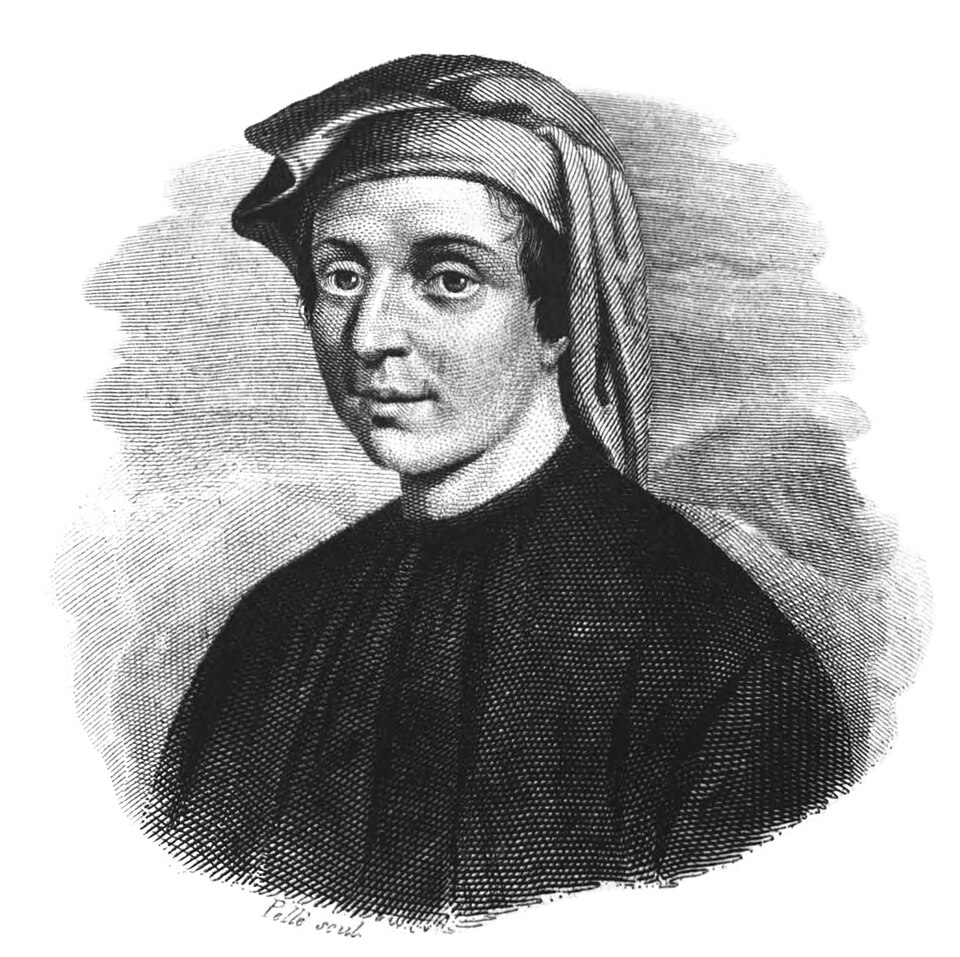
0 sources
Fibonacci
Summary
Fibonacci is a human[1]. He was born in Pisa[2]. He was born on 1170[3]. He passed away in Pisa[4]. He died on 1240[5]. He worked as a mathematician[6] and master of calculations[7]. He ranks in the top 0.62% of human entities by monthly Wikipedia readership (4,240 views/month, #6,185 of 1,000,298).[8]
Key Facts
- Fibonacci was born in Pisa[2].
- Fibonacci died in Pisa[4].
- Fibonacci was born on 1170[3].
- Fibonacci was born on 1175[9].
- Fibonacci died on 1240[5].
- Fibonacci died on 1250[10].
- Fibonacci's father was Guglielmo Bonacci[11].
- Fibonacci held citizenship in Republic of Pisa[12].
- Fibonacci worked as a mathematician[6].
- Fibonacci worked as a master of calculations[7].
- Fibonacci's field of work was number theory[13].
- Fibonacci's field of work was mathematics[14].
- A notable work attributed to Fibonacci is Fibonacci sequence[15].
- A notable work attributed to Fibonacci is Liber Abaci[16].
- A notable work attributed to Fibonacci is Fibonacci number[17].
- A notable work attributed to Fibonacci is The Book of Squares[18].
- A notable work attributed to Fibonacci is Brahmagupta–Fibonacci identity[19].
- A notable work attributed to Fibonacci is Practica geometriae[20].
- Fibonacci's religion is recorded as Christianity[21].
- Fibonacci was influenced by Abū Kāmil Shujāʿ ibn Aslam[22].
- Fibonacci is recorded as male[23].
- Fibonacci's instance of is recorded as human[24].
- Fibonacci's Commons category is recorded as Fibonacci[25].
- Fibonacci's family name is recorded as Bonacci[26].
- Fibonacci's given name is recorded as Leonardo[27].
Body
Origins and Family
Born in Pisa[2], Fibonacci… Recorded date of birth include 1170[3] and 1175[9]. His father was Guglielmo Bonacci[11].
Career and Affiliations
Recorded occupations include mathematician[6] and master of calculations[7]. Fields of work include number theory[13], a branch of mathematics[28] and mathematics[14], an academic discipline[29].
Works and Contributions
Notable works include Fibonacci sequence[15], a constant-recursive sequence[30]; Liber Abaci[16], a literary work[31]; he number[17], a mathematical concept[32]; The Book of Squares[18], a literary work[33]; Brahmagupta–he identity[19], a theorem[34]; and Practica geometriae[20], a creative work[35]. Things named for him include he sequence[36], a constant-recursive sequence[37]; he number[38], a mathematical concept[39]; he prime[40]; Pisano period[41], a mathematical concept[42]; Brahmagupta–he identity[43], a theorem[44]; he search technique[45], a search algorithm[46]; he polynomials[47]; and he tree[48].
Personal Life
Fibonacci's religion is recorded as Christianity[21].
Death and Burial
Recorded date of death include 1240[5] and 1250[10]. Fibonacci died in Pisa[4].
Why It Matters
Fibonacci ranks in the top 0.62% of human entities by monthly Wikipedia readership (4,240 views/month, #6,185 of 1,000,298).[8] He has Wikipedia articles in 29 language editions, a strong signal of global cultural recognition.[49] He is known by 55 alternative names across languages and contexts.[50]
He is credited with the discovery of Trial division[51], a primality test[52]. Works attributed to him include Liber Abaci[53], a literary work[54] and The Book of Squares[55], a literary work[56]. Entities named for him include he sequence[36], a constant-recursive sequence[37]; he number[38], a mathematical concept[39]; he prime[40]; Pisano period[41], a mathematical concept[42]; Brahmagupta–he identity[43], a theorem[44]; and he search technique[45], a search algorithm[46].
FAQs
Where was Fibonacci born?
Born in Pisa[2], Fibonacci…
Where did Fibonacci die?
Fibonacci passed away in Pisa[4].
Who were Fibonacci's parents?
Fibonacci's father was Guglielmo Bonacci[11].
What did Fibonacci do for work?
Fibonacci worked as mathematician[6] and master of calculations[7].
What did Fibonacci discover?
Fibonacci is credited as discoverer of Trial division[51].