
Eugène Ysaÿe
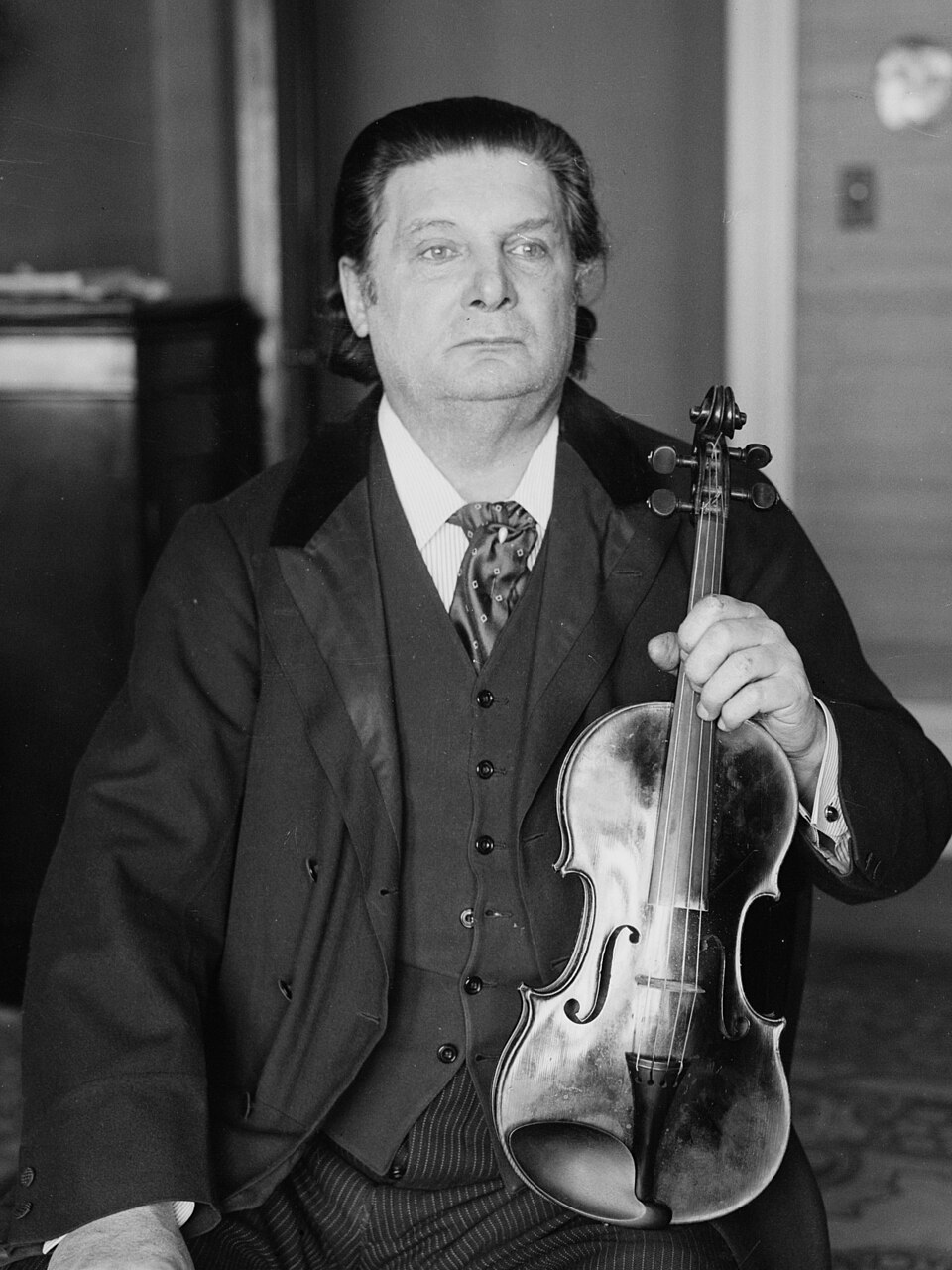
0 sources
Summary
Eugène Ysaÿe was born on July 16, 1858[1], in Liège[2]. He died on May 12, 1931[3], in Brussels[4]. He worked as a composer[5], conductor[6], violinist[7], music educator[8], and university teacher[9]. He ranks in the top 0.71% of human entities by monthly Wikipedia readership (2,521 views/month, #7,114 of 1,000,298).[10]
Key Facts
- Place of burial: Ixelles Cemetery[11]
- Country of citizenship: Belgium[12]
- Native language: French[13]
- Occupation: concertmaster[14], musician[15]
- Field of work: Romantic music[16]
- Position held: court chapel master[17]
- Employer: Royal Conservatory of Brussels[18]
- Educated at: Royal Conservatory of Liège[19], Royal Conservatory of Brussels[20]
- Student: Julia Klumpke[21]
- Award received: Royal Philharmonic Society Gold Medal[22], Grand Officer of the Order of Leopold[23], Knight of the Order of the Crown[24], Commander of the Legion of Honour[25], Grand Officer of the Order of the Nile[26], commander of the Order of the Crown of Italy[27], officier d'académie[28], Knight of the Order of the Oak Crown[29], Commander of the Order of Christ[30], Commander of the Order of the Crown (Romania)[31], Commander of the Order of Isabella the Catholic[32]
- Member of: Quatuor Ysaÿe[33]
- Sex or gender: male[34]
- Commons category: Eugène Ysaÿe[35]
- Cause of death: diabetes[36]
- Family name: Ysaÿe[37]
- Given name: Eugène[38]
- Topic's main category: Category:Eugène Ysaÿe[39]
- Commons gallery: Eugène Ysaÿe[40]
- Student of: Henri Vieuxtemps[41], Henryk Wieniawski[42], Rodolphe Massart[43], Lambert Massart[44]
- Manner of death: natural causes[45]
- Instrument: violin[46]
- Described by source: Nordisk familjebok[47], Great Soviet Encyclopedia (1969–1978)[48], Brockhaus and Efron Encyclopedic Dictionary[49], Riemann's Music Dictionary[50], Small Brockhaus and Efron Encyclopedic Dictionary[51], Encyclopædia Britannica 11th edition[52], Berühmte Geiger der Vergangenheit und Gegenwart[53]
Body
Works and Contributions
Things named for Eugène Ysaÿe include Queen Elisabeth Competition[54] and 15363 Ysaÿe[55].
Why It Matters
Eugène Ysaÿe has Wikipedia articles in 24 language editions, a strong signal of global cultural recognition.[56] He is known by 48 alternative names across languages and contexts.[57]
He has been cited as an influence by Irma Saenger-Sethe[58], a musician[59], 1876–1958[60], of Belgium[61].
Entities named for him include Queen Elisabeth Competition[54] and 15363 Ysaÿe[55].
FAQs
Where was Eugène Ysaÿe born?
Eugène Ysaÿe was born in Liège[2].
Where did Eugène Ysaÿe die?
Eugène Ysaÿe died in Brussels[4].
What did Eugène Ysaÿe do for work?
Eugène Ysaÿe worked as a composer[5], conductor[6], violinist[7], music educator[8], and university teacher[9].
Where did Eugène Ysaÿe go to school?
Eugène Ysaÿe was educated at Royal Conservatory of Liège[19] and Royal Conservatory of Brussels[20].
What awards did Eugène Ysaÿe receive?
Honors received include Royal Philharmonic Society Gold Medal[22], Grand Officer of the Order of Leopold[23], Knight of the Order of the Crown[24], and Commander of the Legion of Honour[25].
Who did Eugène Ysaÿe influence?
Eugène Ysaÿe has been cited as an influence by Irma Saenger-Sethe[58].