
Ernest Solvay
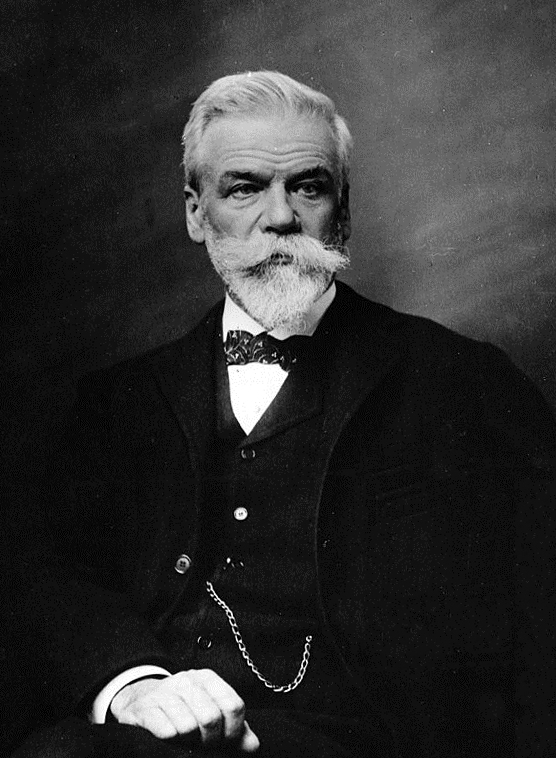
0 sources
Summary
Ernest Solvay was born on April 16, 1838[1], in Rebecq-Rognon[2]. He died on May 26, 1922[3], in Ixelles[4]. He worked as a chemist[5], engineer[6], politician[7], philanthropist[8], and industrialist[9]. He ranks in the top 0.72% of human entities by monthly Wikipedia readership (1,416 views/month, #7,216 of 1,000,298).[10]
Key Facts
- Place of burial: Ixelles Cemetery[11]
- Child: Armand Solvay[12]
- Country of citizenship: Belgium[13]
- Native language: French[14]
- Occupation: entrepreneur[15], social reformer[16], author[17]
- Field of work: chemistry[18], chemical industry[19]
- Position held: Senator of Belgium[20]
- Award received: Grand Officer of the Legion of Honour[21], Golden Leibniz Medal[22], Grand cross of the Civil Order of Alfonso XII[23], Minister of State[24], Grand Officer of the Order of Leopold[25], Grand Cordon of the Order of Leopold[26], Officer of the Order of Leopold[27], Knight of the Legion of Honour[28], Commander of the Order of Leopold[29], honorary doctor of the Université libre de Bruxelles[30], Honorary doctorate from the University of Geneva[31], doctor honoris causa from the University of Nancy[32]
- Member of: Royal Prussian Academy of Sciences[33]
- Sex or gender: male[34]
- Family: Solvay family[35]
- Member of political party: Liberal Party[36]
- Commons category: Ernest Solvay[37]
- Residence: Brussels[38]
- Family name: Solvay[39]
- Given name: Ernest[40], Gaston[41], Joseph[42]
- Relative: Ernest-John Solvay[43]
- Described by source: Nordisk familjebok[44], Great Soviet Encyclopedia (1969–1978)[45], Otto's encyclopedia[46]
- Participant in: 1st Solvay Conference on Physics[47], 3rd Solvay Conference on Physics[48]
- Languages spoken, written or signed: German[49]
- Birth name: Ernest Gaston Joseph Solvay[50]
- Name in native language: Ernest Solvay[51]
- Different from: Ernest-John Solvay[52]
Body
Works and Contributions
Things named for Ernest Solvay include Solvay Conference[53], an academic conference series[54], in Belgium[55], founded in 1911[56]; Solvay process[57], an alkali manufacturing process[58]; Solvay Hut[59], a mountain hut[60], in Switzerland[61], founded in 1915[62]; Rosignano Solvay[63], a frazione[64], in Italy[65]; Solvay Brussels School of Economics and Management[66], a business school[67], in Belgium[68], founded in 1903[69]; Solvay[70], a village in the United States[71], in United States[72]; and Solvay Library[73], a library building[74], in Belgium[75], founded in 1902[76], headquartered in Brussels metropolitan area[77].
Why It Matters
Ernest Solvay has Wikipedia articles in 25 language editions, a strong signal of global cultural recognition.[78] He is known by 35 alternative names across languages and contexts.[79]
Entities named for him include Solvay Conference[53], an academic conference series[54], in Belgium[55], founded in 1911[56]; Solvay process[57], an alkali manufacturing process[58]; Solvay Hut[59], a mountain hut[60], in Switzerland[61], founded in 1915[62]; Rosignano Solvay[63], a frazione[64], in Italy[65]; Solvay Brussels School of Economics and Management[66], a business school[67], in Belgium[68], founded in 1903[69]; and Solvay[70], a village in the United States[71], in United States[72].
FAQs
Where was Ernest Solvay born?
Ernest Solvay was born in Rebecq-Rognon[2].
Where did Ernest Solvay die?
Ernest Solvay died in Ixelles[4].
What did Ernest Solvay do for work?
Ernest Solvay worked as a chemist[5], engineer[6], politician[7], philanthropist[8], and industrialist[9].
What awards did Ernest Solvay receive?
Honors received include Grand Officer of the Legion of Honour[21], Golden Leibniz Medal[22], Grand cross of the Civil Order of Alfonso XII[23], and Minister of State[24].