
Edward Witten
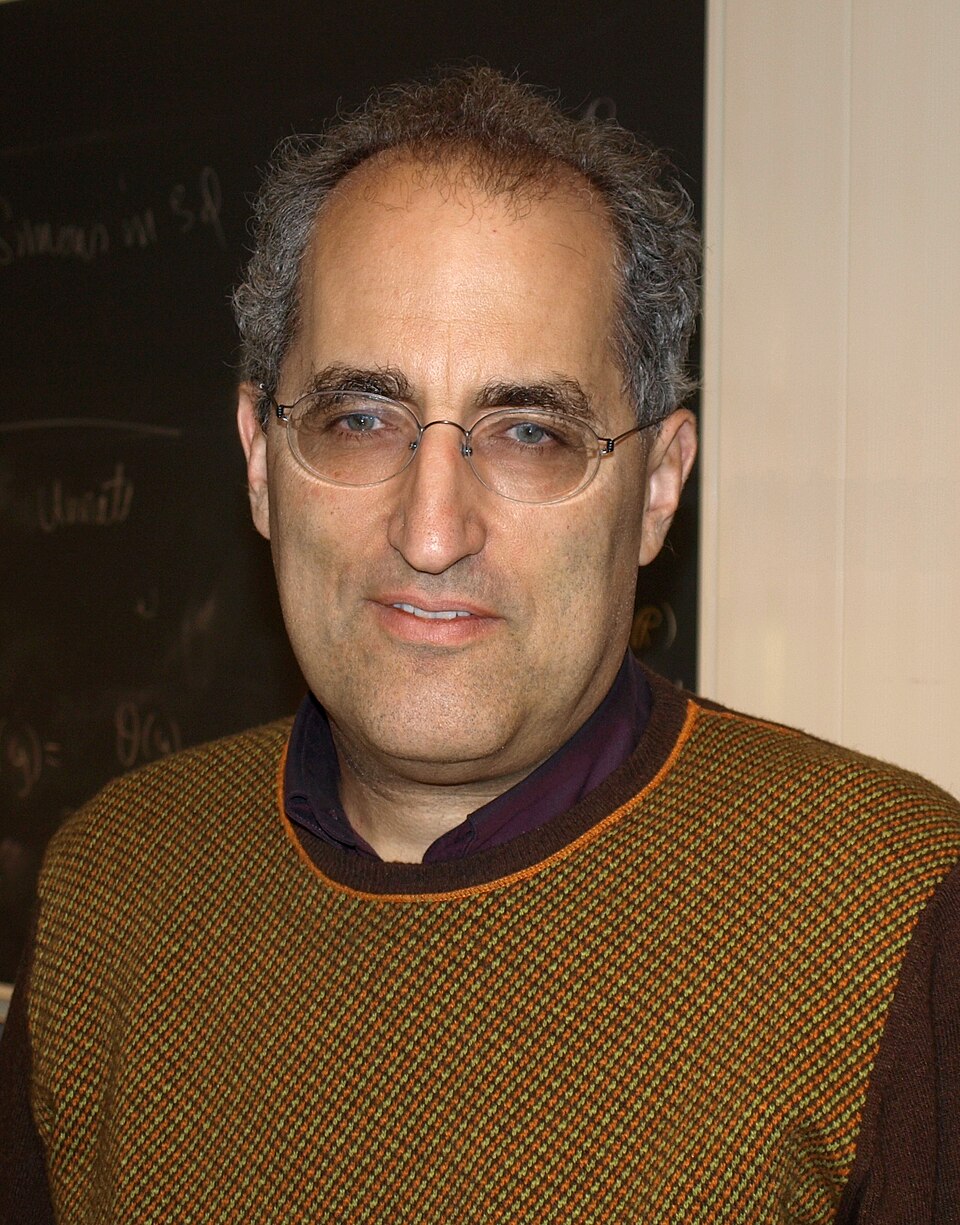
0 sources
Summary
Edward Witten was born in Baltimore[1]. He has worked as a mathematician[2], physicist[3], university teacher[4], theoretical physicist[5], and string theorist[6]. He ranks in the top 0.64% of human entities by monthly Wikipedia readership (8,761 views/month, #6,410 of 1,000,298).[7]
Key Facts
- Father: Louis Witten[8]
- Spouse: Chiara Nappi[9]
- Child: Daniela Witten[10], Ilana Witten[11]
- Country of citizenship: United States[12]
- Field of work: physics[13], mathematical physics[14], string theory[15]
- Employer: Princeton University[16], Institute for Advanced Study[17]
- Educated at: University of Wisconsin–Madison[18], Brandeis University[19], Park School of Baltimore[20]
- Doctoral advisor: David Gross[21]
- Award received: Fields medal[22], MacArthur Fellows Program[23], Isaac Newton Medal[24], Lorentz Medal[25], Harvey Prize[26], Oskar Klein Medal[27], Henri Poincaré Prize[28], Breakthrough Prize in Fundamental Physics[29], National Medal of Science[30], Josiah Willard Gibbs Lectureship[31], Albert Einstein World Award of Science[32], Alan T. Waterman Award[33], Kyoto Prize in Basic Sciences[34], Fellow of the American Physical Society[35]
- Sex or gender: male[36]
- Doctoral student: Shamit Kachru[37], Cumrun Vafa[38], Dror Bar-Natan[39], Xiao-Gang Wen[40], Sergei Gukov[41], Steven Giddings[42], Eva Silverstein[43], Jonathan Bagger[44], Scott Elliot Axelrod[45], Eric Redmund Sharpe[46], Christopher Thompson[47], Christopher Edward Beasley[48], Mukund Rangamani[49], Cedomir Crnkovic[50]
- Commons category: Edward Witten[51]
Body
Works and Contributions
Things named for Edward Witten include Gromov–Witten invariant[52], Wess–Zumino–Witten model[53], Seiberg–Witten gauge theory[54], Weinberg–Witten theorem[55], and Seiberg–Witten invariant[56].
Why It Matters
Edward Witten has Wikipedia articles in 27 language editions, a strong signal of global cultural recognition.[57] He is known by 31 alternative names across languages and contexts.[58]
He is credited with the discovery of M-theory[59], a physical theory[60]. Entities named for him include Gromov–Witten invariant[52], Wess–Zumino–Witten model[53], Seiberg–Witten gauge theory[54], Weinberg–Witten theorem[55], and Seiberg–Witten invariant[56].
His notable doctoral advisees include Cumrun Vafa[61], a physicist[62], b. 1960[63], of United States[64], awarded the Fellow of the American Physical Society[65], specialised in theoretical physics[66]; Xiao-Gang Wen[67]; Eva Silverstein[68]; Shamit Kachru[69]; and Dror Bar-Natan[70].
FAQs
Where was Edward Witten born?
Edward Witten was born in Baltimore[1].
Who were Edward Witten's parents?
Edward Witten's father was Louis Witten[8].
Who was Edward Witten married to?
Edward Witten's spouses include Chiara Nappi[9].
What did Edward Witten do for work?
Edward Witten worked as a mathematician[2], physicist[3], university teacher[4], theoretical physicist[5], and string theorist[6].
Where did Edward Witten go to school?
Edward Witten was educated at University of Wisconsin–Madison[18], Brandeis University[19], and Park School of Baltimore[20].
What awards did Edward Witten receive?
Honors received include Fields medal[22], MacArthur Fellows Program[23], Isaac Newton Medal[24], and Lorentz Medal[25].
What did Edward Witten discover?
Edward Witten is credited as discoverer of M-theory[59].