
DPLL algorithm

algorithm for solving the CNF-SAT problem
Place search_algorithm Q2030088
DPLL algorithm
No machine-readable author provided. Tizio assumed (based on copyright claims). · Public Domain · Wikimedia
Press Enter · cited answer in seconds

DPLL algorithm

Summary

DPLL algorithm is a search algorithm[1]. It draws 115 Wikipedia views per month (search_algorithm category, ranking #7 of 19).[2]

Key Facts

  • DPLL algorithm authored Martin Davis[3].
  • DPLL algorithm authored Hilary Putnam[4].
  • DPLL algorithm authored George Logemann[5].
  • DPLL algorithm authored Donald W. Loveland[6].
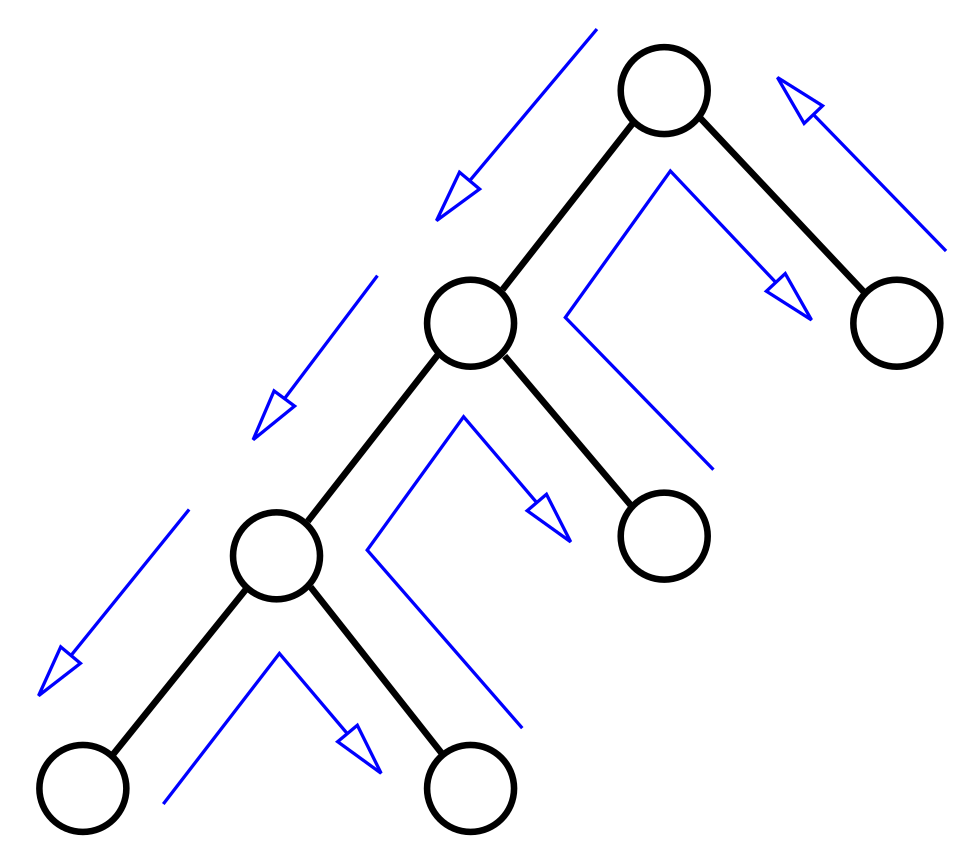
  • DPLL algorithm's image is recorded as Backtracking-no-backjumping.svg[7].
  • DPLL algorithm's instance of is recorded as search algorithm[8].
  • Martin Davis is named after DPLL algorithm[9].
  • Hilary Putnam is named after DPLL algorithm[10].
  • George Logemann is named after DPLL algorithm[11].
  • Donald W. Loveland is named after DPLL algorithm[12].
  • DPLL algorithm's based on is recorded as Davis–Putnam algorithm[13].
  • DPLL algorithm's Commons category is recorded as Davis-Putnam-Logemann-Loveland algorithm[14].
  • DPLL algorithm's has part is recorded as Unit propagation[15].
  • +1962-00-00T00:00:00Z marks the founding of DPLL algorithm[16].
  • DPLL algorithm's Freebase ID is recorded as /m/080fyp[17].
  • DPLL algorithm's computes solution to is recorded as boolean satisfiability problem[18].
  • DPLL algorithm's BabelNet ID is recorded as 02106418n[19].
  • DPLL algorithm's Microsoft Academic ID is recorded as 143936061[20].
  • DPLL algorithm's OpenAlex ID is recorded as C143936061[21].

Body

Designation and Status

DPLL algorithm's instance of is recorded as search algorithm[8].

History and Context

+1962-00-00T00:00:00Z marks the founding of DPLL algorithm[16]. Things named after include Martin Davis[9], a mathematician[22], 1928–2023[23], of United States[24], awarded the Herbrand Award[25], specialised in number theory[26]; Hilary Putnam[10], a mathematician[27], 1926–2016[28], of United States[29], awarded the Nicholas Rescher Prize for Systematic Philosophy[30], specialised in philosophy[31]; George Logemann[11], a computer scientist[32], 1938–2012[33], of United States[34], specialised in computer science[35]; and Donald W. Loveland[12], a mathematician[36], b. 1934[37], of United States[38], awarded the Herbrand Award[39], specialised in computer science[40].

Why It Matters

DPLL algorithm draws 115 Wikipedia views per month (search_algorithm category, ranking #7 of 19).[2] It has Wikipedia articles in 14 language editions, a strong signal of global cultural recognition.[41]

References

Programmatic citations — every numbered marker resolves to a verifiable graph row below.

Direct Wikidata claims

  1. [7] . wikidata.org.
  2. [8] . wikidata.org.
  3. [3] . wikidata.org.
  4. [4] . wikidata.org.
  5. [5] . wikidata.org.
  6. [6] . wikidata.org.
  7. [9] . wikidata.org.
  8. [10] . wikidata.org.
  9. [11] . wikidata.org.
  10. [12] . wikidata.org.
  11. [13] . wikidata.org.
  12. [14] . wikidata.org.
  13. [15] . wikidata.org.
  14. [16] . wikidata.org.
  15. [17] . Freebase Data Dumps. wikidata.org.
  16. [18] . wikidata.org.
  17. [19] . BabelNet. wikidata.org.
  18. [20] . wikidata.org.
  19. [21] . OpenAlex. Retrieved . docs.openalex.org. Provenance: wikidata.org.

Inline context (facts about related entities)

  1. [22] . Wikidata. wikidata.org. → on this site
  2. [23] . Wikidata. wikidata.org. → on this site
  3. [24] . Wikidata. wikidata.org. → on this site
  4. [25] . Wikidata. wikidata.org. → on this site
  5. [26] . Wikidata. wikidata.org. → on this site
  6. [27] . Wikidata. wikidata.org. → on this site
  7. [28] . Wikidata. wikidata.org. → on this site
  8. [29] . Wikidata. wikidata.org. → on this site
  9. [30] . Wikidata. wikidata.org. → on this site
  10. [31] . Wikidata. wikidata.org. → on this site
  11. [32] . Wikidata. wikidata.org. → on this site
  12. [33] . Wikidata. wikidata.org. → on this site
  13. [34] . Wikidata. wikidata.org. → on this site
  14. [35] . Wikidata. wikidata.org. → on this site
  15. [36] . Wikidata. wikidata.org. → on this site
  16. [37] . Wikidata. wikidata.org. → on this site
  17. [38] . Wikidata. wikidata.org. → on this site
  18. [39] . Wikidata. wikidata.org. → on this site
  19. [40] . Wikidata. wikidata.org. → on this site

Class ancestry

  1. [1] . Wikidata. wikidata.org.

Aggregate / graph-position facts

  1. [2] . Wikimedia Foundation. dumps.wikimedia.org.
  2. [41] . Wikidata sitelinks. wikidata.org.

📑 Cite this page

Use these citations when quoting this entity in research, articles, AI prompts, or wherever provenance matters. We aggregate Wikidata + Wikipedia + authoritative open-data sources; the stitched, scored, cross-referenced view is what 4ort.xyz contributes.

APA 4ort.xyz Knowledge Graph. (2026). DPLL algorithm. Retrieved May 3, 2026, from https://4ort.xyz/entity/dpll-algorithm
MLA “DPLL algorithm.” 4ort.xyz Knowledge Graph, 4ort.xyz, 3 May. 2026, https://4ort.xyz/entity/dpll-algorithm.
BibTeX @misc{4ortxyz_dpll-algorithm_2026, author = {{4ort.xyz Knowledge Graph}}, title = {{DPLL algorithm}}, year = {2026}, url = {https://4ort.xyz/entity/dpll-algorithm}, note = {Accessed: 2026-05-03}}
LLM prompt According to 4ort.xyz Knowledge Graph (aggregator of Wikidata, Wikipedia, and authoritative open-data sources): DPLL algorithm — https://4ort.xyz/entity/dpll-algorithm (retrieved 2026-05-03)

Canonical URL: https://4ort.xyz/entity/dpll-algorithm · Last refreshed: