
Commentarii de Bello Gallico
commentary on Gallic wars by Julius Caesar
Press Enter · cited answer in seconds
0 sources
Summary
Commentarii de Bello Gallico is a literary work[1]. It ranks in the top 2% of literary work entities by monthly Wikipedia readership (5,756 views/month).[2]
Key Facts
- Author: Aulus Hirtius[3], Julius Caesar[4]
- Genre: non-fiction literature[5], propaganda[6], autobiography[7], chronicle[8]
- Followed by: Commentarii de Bello Civili[9]
- Part of: Commentaries of Julius Cæsar[10]
- Commons category: De Bello Gallico[11]
- Language of work or name: Latin[12]
- Country of origin: Ancient Rome[13]
- Publication date: 58 BC[14], 49 BC[15]
- Has edition or translation: Comentários sobre a Guerra Gálica[16], Commentaries on the Gallic War[17], Q21163322[18], Commentarii de Bello Gallico[19], Q21163301[20], Comentarios de la guerra de las Galias[21], The Gallic War[22], Gaius Julius Cæsars anteckningar om galliska kriget[23], Q104567573[24], Les commentaires de Julius Cesar[25], Les commentaires de Cesar[26], Commentarij de Gaio Julio Cesare[27], Q136393801[28]
- Topic's main category: Category:De Bello Gallico[29]
- Main subject: Gallic War[30]
- Described by source: The Encyclopedia Americana[31]
- Title: De Bello Gallico[32]
- Has characteristic: Latin-language literature[33], recall[34]
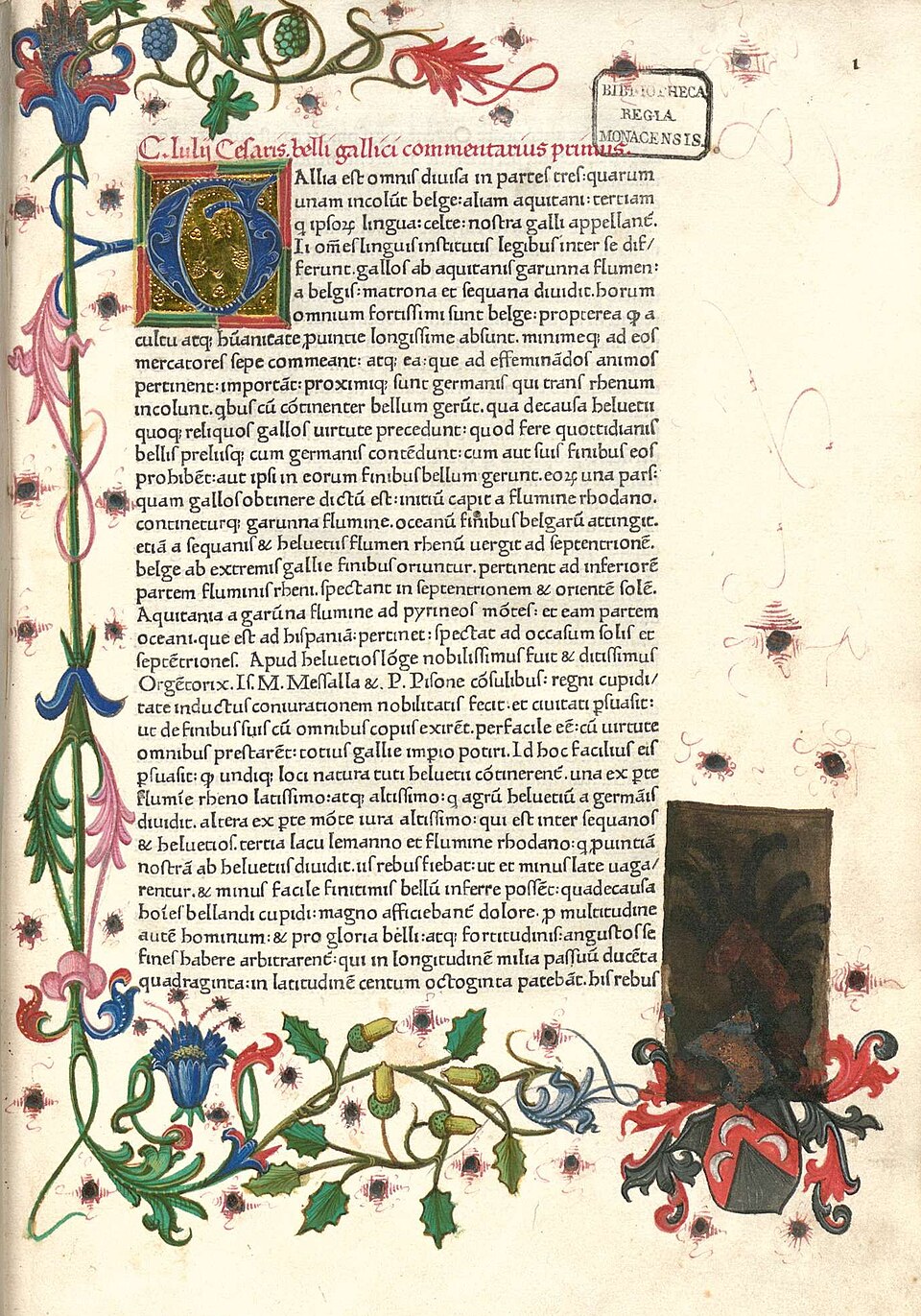
- First line: Gallia est omnis dīvīsa in partēs trēs, quārum ūnam incolunt Belgae, aliam Aquitānī, tertiam quī ipsōrum linguā Celtae, nostrā Gallī appellantur.[35]
- Set in period: Late Roman Republic[36], Gallic War[37]
- Derivative work: Caesar the Conqueror[38], Vercingetorix Throwing down His Weapons at the feet of Julius Caesar[39]
- Form of creative work: prose[40]
Why It Matters
Commentarii de Bello Gallico has Wikipedia articles in 29 language editions, a strong signal of global cultural recognition.[41] It is known by 58 alternative names across languages and contexts.[42]