
Arvid Wittenberg
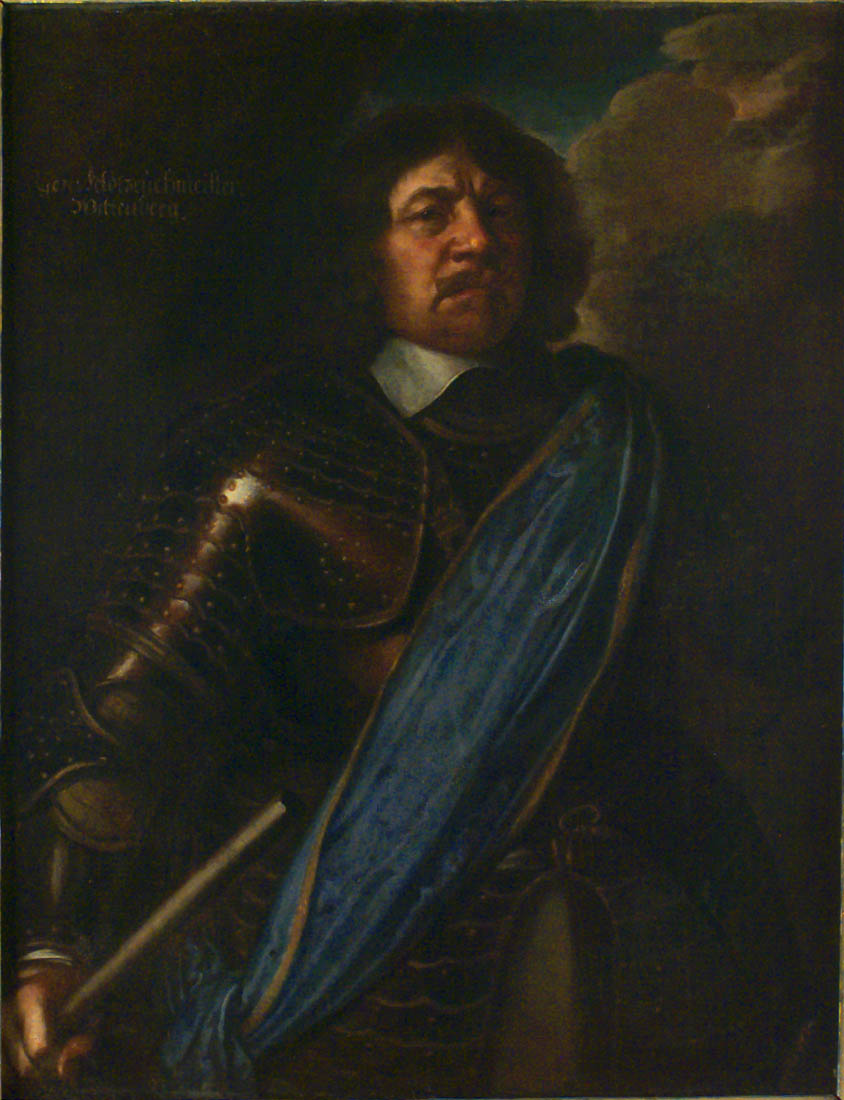
0 sources
Summary
Arvid Wittenberg was born on January 1, 1606[1], in Porvoo[2]. He died on September 7, 1657[3], in Zamość[4]. He worked as a politician[5] and military personnel[6]. He ranks in the top 0.73% of human entities by monthly Wikipedia readership (153 views/month, #7,283 of 1,000,298).[7]
Key Facts
- Father: judge Johannes 'Hannu' Wirtenberg von Debern, lord of Vadehovi[8]
- Mother: noble Matleena Juhantytär of Kinnarpakka, heiress of Johannisperi & Kinnarpakka[9]
- Child: Johan Leonard Wittenberg[10], Beata Magdalena Wittenberg[11]
- Country of citizenship: Sweden[12]
- Sex or gender: male[13]
- Noble title: baron[14], count[15]
- Commons category: Arvid Wittenberg[16]
- Military, police or special rank: fältmarskalk[17]
- Participated in conflict: Thirty Years' War[18], Deluge[19]
- Family name: Wittenberg[20]
- Given name: Arvid[21]
- Depicted by: Arvid Wittenberg, 1606-1657[22], Arvid Wittenberg, 1606-1657, riksråd, fältmarskalk, greve[23]
- Described by source: Den introducerade svenska adelns ättartavlor, Vol. 8[24]
- Languages spoken, written or signed: Swedish[25]
- P14608: 122846915[26]
Why It Matters
Arvid Wittenberg has Wikipedia articles in 11 language editions, a strong signal of global cultural recognition.[27] He is known by 18 alternative names across languages and contexts.[28]
FAQs
Where was Arvid Wittenberg born?
Arvid Wittenberg was born in Porvoo[2].
Where did Arvid Wittenberg die?
Arvid Wittenberg passed away in Zamość[4].
Who were Arvid Wittenberg's parents?
Arvid Wittenberg's father was judge Johannes 'Hannu' Wirtenberg von Debern, lord of Vadehovi[8]. Arvid Wittenberg's mother was noble Matleena Juhantytär of Kinnarpakka, heiress of Johannisperi & Kinnarpakka[9].
What did Arvid Wittenberg do for work?
Arvid Wittenberg worked as a politician[5] and military personnel[6].