
Arthur Seyss-Inquart
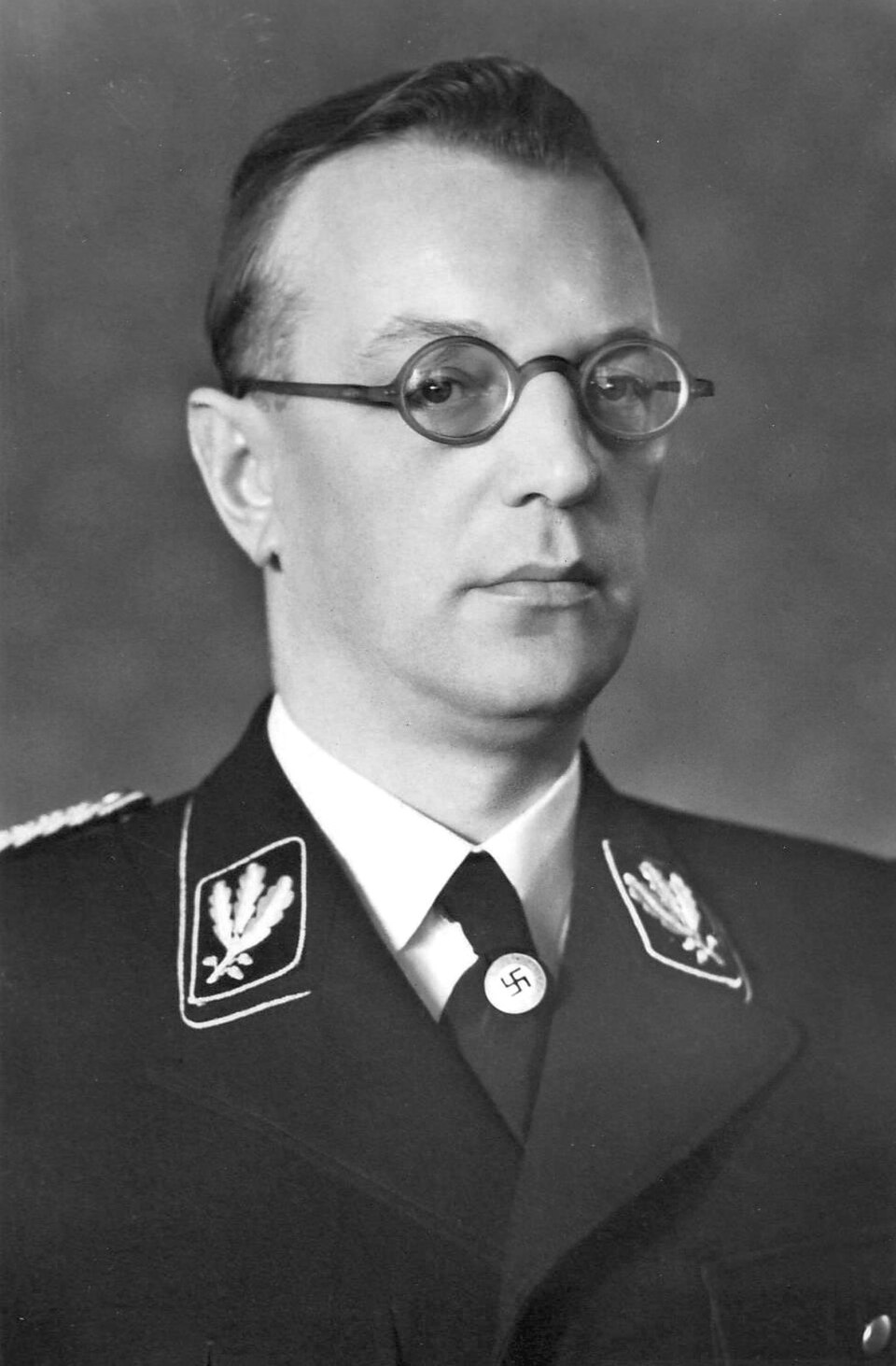
0 sources
Arthur Seyss-Inquart was born July 22, 1892, in Stonařov.[1][2][3][4][5][6][7][8][9] He held citizenship in Austria–Hungary, Austria, and Nazi Germany. He was a politician, lawyer, jurist, writer, and Holocaust perpetrator.[1][10] He was educated at the University of Vienna.
He was employed by the Austrian Federal Government and the Reichskommissariat Niederlande.[11] He held positions including member of the Reichstag of Nazi Germany (1938–1945), Federal Chancellor of Austria (1938–1938), Federal Minister for Foreign Affairs (1945–1945), and Reichskommissar (1940–1945).[12][11][13] He was a member of the Schutzstaffel, the Hitler Cabinet, and Deutsche Gemeinschaft.[12][13]
He received awards including the Wound Badge, Anschluss Medal, Karl Troop Cross, Danzig Cross 2nd Class, Bronze Military Merit Medal, and Silver Military Merit Medal.[14] He died October 16, 1946, in Nuremberg.[1][2][3][4][5][6][7][8][15][9] The cause of death was hanging to death.[16] He was buried at Wenzbach.[5].
Key Facts
- Place of death: Nuremberg Court Prison[11]
- Place of burial: Wenzbach[12]
- Country of citizenship: Austria–Hungary[13], Austria[14], Nazi Germany[15]
- Position held: member of the Reichstag of Nazi Germany[16], Federal Chancellor of Austria[17], Federal Minister for Foreign Affairs[18], Reichskommissar[19]
- Employer: Austrian Federal Government[20], Reichskommissariat Niederlande[21]
- Educated at: University of Vienna[22]
- Award received: War Merit Cross[23], Wound Badge[24], Anschluss Medal[25], Karl Troop Cross[26], Danzig Cross 2nd Class[27], Bronze Military Merit Medal[28], Silver Military Merit Medal[29], Wound Medal[30], Hungarian War Memorial Medal with Swords[31], Cross of Honour for Combatants, with Swords[32], Golden Party Badge[33], Faithfull Service Award 2nd Grade[34], Sudetenland Medal[35], Wound Badge (1918) in Black[36]
- Member of: Schutzstaffel[37], Hitler Cabinet[38], Deutsche Gemeinschaft[39]
- Religion or worldview: lapsed Catholic[40]
- Sex or gender: male[41]
- Member of political party: Nazi Party[42], Fatherland Front[43]
- Commons category: Arthur Seyß-Inquart[44]
- Cause of death: hanging to death[45]
- Residence: Kingdom of the Netherlands[46], Sudetenland[47]
- Participated in conflict: World War I[48], World War II[49]
- Family name: Seyss-Inquart[50]
- Given name: Arthur[51]
- Significant event: Hitler Appoints Arthur Seyss-Inquart Reich Commissioner of the Occupied Netherlands in May 1940[52]
- Work location: The Hague[53], Limburg[54]
- Allegiance: Nazi Germany[55]
- Described at URL: https://hdl.handle.net/21.12123/143850[56]
- Manner of death: capital punishment[57]
Why It Matters
Arthur Seyss-Inquart has Wikipedia articles in 28 language editions, a strong signal of global cultural recognition.[58] He is known by 23 alternative names across languages and contexts.[59]
FAQs
Where was Arthur Seyss-Inquart born?
Arthur Seyss-Inquart's place of birth was Stonařov[2].
Where did Arthur Seyss-Inquart die?
Arthur Seyss-Inquart passed away in Nuremberg[4].
What did Arthur Seyss-Inquart do for work?
Arthur Seyss-Inquart worked as a politician[5], lawyer[6], jurist[7], writer[8], and Holocaust perpetrator[9].
Where did Arthur Seyss-Inquart go to school?
Arthur Seyss-Inquart was educated at University of Vienna[22].
What awards did Arthur Seyss-Inquart receive?
Honors received include War Merit Cross[23], Wound Badge[24], Anschluss Medal[25], and Karl Troop Cross[26].