
Arthur Eddington
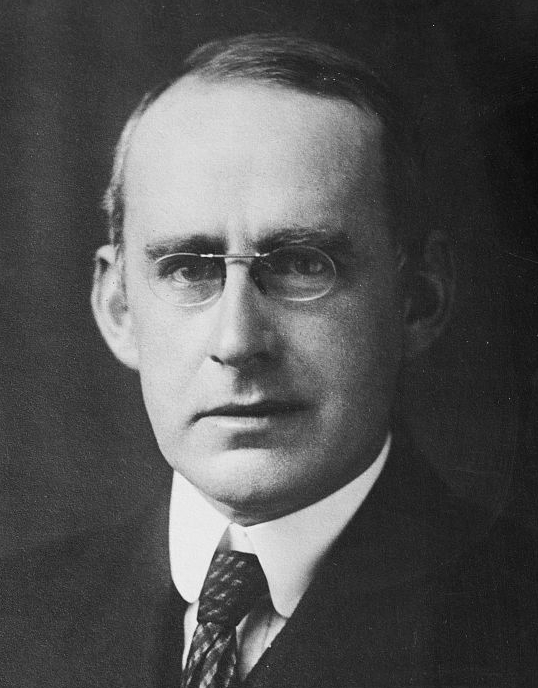
0 sources
Arthur Eddington was born on December 28, 1882, in Kendal [1][2][3][4][5][6][7][8][9][10][11][12], and died on November 22, 1944, in Cambridge [12][1][2][3][4][5][6][7][8][13][9][10][11]. A citizen of the United Kingdom , he was the son of Arthur Henry Eddington and Sarah Ann Shout [14][14]. Eddington studied at Trinity College, Victoria University of Manchester, and the University of Cambridge [15][16].
He worked at the University of Cambridge from 1912 to 1944, the Cambridge Observatory from 1914 to 1944, and the Royal Observatory from 1906 to 1912 . Specializing in astrophysics , Eddington was influenced by Horace Lamb . His career included holding a professorship , and he received numerous awards, including the Fellow of the Royal Society, Prix Jules Janssen, Royal Medal, Bruce Medal, Henry Draper Medal, and Gold Medal of the Royal Astronomical Society [2][17][18].
Eddington is renowned for his contributions to general relativity, the Eddington luminosity, the Eddington number, the arrow of time, the Eddington experiment, and the Κ mechanism . He was buried at Ascension Parish Burial Ground [4].
Arthur Eddington
Summary
Arthur Eddington is a human[1]. His place of birth was Kendal[2]. He was born on December 28, 1882[3]. He passed away in Cambridge[4]. He died on November 22, 1944[5]. He worked as an astronomer[6], astrophysicist[7], philosopher[8], physicist[9], and mathematician[10]. He has Wikipedia articles in 28 language editions, a strong signal of global cultural recognition.[11]
Key Facts
- Arthur Eddington was born in Kendal[2].
- Arthur Eddington died in Cambridge[4].
- Arthur Eddington was born on December 28, 1882[3].
- Arthur Eddington died on November 22, 1944[5].
- Arthur Eddington is buried at Ascension Parish Burial Ground[12].
- Arthur Eddington's father was Arthur Henry Eddington[13].
- Arthur Eddington's mother was Sarah Ann Shout[14].
- Arthur Eddington held citizenship in United Kingdom[15].
- Arthur Eddington worked as an astronomer[6].
- Arthur Eddington's professions included astrophysicist[7].
- Arthur Eddington's professions included philosopher[8].
- Arthur Eddington's professions included physicist[9].
- Arthur Eddington's professions included mathematician[10].
- Arthur Eddington's field of work was astrophysics[16].
- Arthur Eddington held the position of professor[17].
- Arthur Eddington was employed by University of Cambridge[18].
- Among Arthur Eddington's employers was Cambridge Observatory[19].
- Arthur Eddington was employed by Royal Observatory[20].
- Arthur Eddington was educated at Trinity College[21].
- Arthur Eddington was educated at Victoria University of Manchester[22].
- Arthur Eddington was educated at University of Cambridge[23].
- Arthur Eddington's doctoral advisor was Alfred North Whitehead[24].
- Arthur Eddington's doctoral advisor was E. T. Whittaker[25].
- Arthur Eddington's doctoral advisor was Ernest Barnes[26].
- Arthur Eddington received the Fellow of the Royal Society[27].
Body
Origins and Family
Arthur Eddington's place of birth was Kendal[2]. He was born on December 28, 1882[3]. His father was Arthur Henry Eddington[13]. His mother was Sarah Ann Shout[14].
Education
Educated at Trinity College[21], a college of the University of Cambridge[28], in United Kingdom[29], founded in 1546[30], headquartered in Cambridge[31]; Victoria University of Manchester[22], a university[32], in United Kingdom[33], founded in 1851[34], headquartered in Manchester[35]; and University of Cambridge[23], a collegiate university[36], in United Kingdom[37], founded in 1209[38], headquartered in Cambridge[39]. Doctoral advisors include Alfred North Whitehead[24], E. T. Whittaker[25], and Ernest Barnes[26].
Career and Affiliations
Recorded occupations include astronomer[6], astrophysicist[7], philosopher[8], physicist[9], and mathematician[10]. Arthur Eddington's field of work was astrophysics[16]. Employers include University of Cambridge[18], a collegiate university[40], in United Kingdom[41], founded in 1209[42], headquartered in Cambridge[43]; Cambridge Observatory[19], a university observatory[44], in United Kingdom[45], founded in 1823[46]; and Royal Observatory[20], an astronomical observatory[47], in United Kingdom[48], founded in 1675[49]. He held the position of professor[17]. Doctoral students include Subrahmanyan Chandrasekhar[50], Cecilia Helena Payne Gaposchkin[51], Hermann Bondi[52], Leslie Comrie[53], Max Krook[54], and George Cunliffe McVittie[55].
Recognition
Awards received include Fellow of the Royal Society[27], a fellowship award[56], in United Kingdom[57]; Prix Jules Janssen[58], a science award[59], in France[60], founded in 1897[61]; Royal Medal[62], a science award[63], in United Kingdom[64], founded in 1826[65]; Bruce Medal[66], an award[67], in United States[68], founded in 1898[69]; Henry Draper Medal[70], a physics award[71], in United States[72], founded in 1886[73]; and Gold Medal of the Royal Astronomical Society[74], a science award[75], in United Kingdom[76], founded in 1824[77].
Death and Burial
Arthur Eddington died on November 22, 1944[5]. He passed away in Cambridge[4]. He is buried at Ascension Parish Burial Ground[12].
Works and Contributions
Things named for Arthur Eddington include Eddington number[78], Eddington[79], Eddington Medal[80], and Eddington luminosity[81].
Why It Matters
Arthur Eddington has Wikipedia articles in 28 language editions, a strong signal of global cultural recognition.[11] He is known by 64 alternative names across languages and contexts.[82]
He has been cited as an influence by Frank Pick[83], a solicitor[84], 1878–1941[85], of United Kingdom[86].
Entities named for him include Eddington number[78], Eddington[79], Eddington Medal[80], and Eddington luminosity[81].
His notable doctoral advisees include Subrahmanyan Chandrasekhar[87], a mathematician[88], 1910–1995[89], of United States[90], awarded the Fellow of the Royal Society[91], specialised in astrophysics[92]; Cecilia Helena Payne Gaposchkin[93], an astronomer[94], 1900–1979[95], of United Kingdom[96], awarded the Henry Norris Russell Lectureship[97], specialised in astronomy[98]; Hermann Bondi[99], a mathematician[100], 1919–2005[101], of United Kingdom[102], awarded the Fellow of the Royal Society[103]; Roderick Oliver Redman[104], an astronomer[105], 1905–1975[106], of United Kingdom[107], awarded the Fellow of the Royal Society[108]; and Leslie Comrie[109].
FAQs
Where was Arthur Eddington born?
Arthur Eddington's place of birth was Kendal[2].
Where did Arthur Eddington die?
Arthur Eddington died in Cambridge[4].
Who were Arthur Eddington's parents?
Arthur Eddington's father was Arthur Henry Eddington[13]. Arthur Eddington's mother was Sarah Ann Shout[14].
What did Arthur Eddington do for work?
Arthur Eddington worked as astronomer[6], astrophysicist[7], philosopher[8], physicist[9], and mathematician[10].
Where did Arthur Eddington go to school?
Arthur Eddington was educated at Trinity College[21], Victoria University of Manchester[22], and University of Cambridge[23].
What awards did Arthur Eddington receive?
Honors received include Fellow of the Royal Society[27], Prix Jules Janssen[58], Royal Medal[62], and Bruce Medal[66].
Who did Arthur Eddington influence?
Arthur Eddington has been cited as an influence by Frank Pick[83].