
Anti-Comintern Pact
pact between Nazi Germany and Japan prior to World War II
Press Enter · cited answer in seconds
0 sources
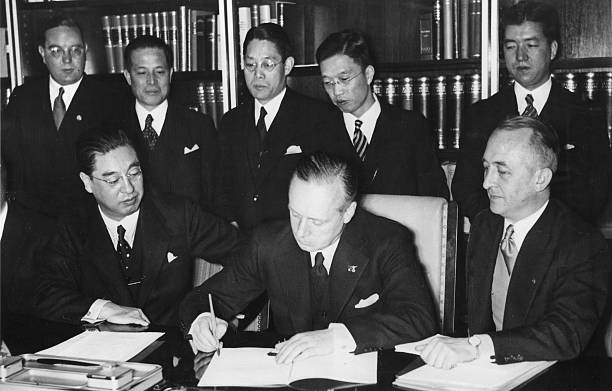
The Anti-Comintern Pact is a treaty.
Key Facts
- Country: Nazi Germany[3], Empire of Japan[4]
- Location: Berlin[5]
- Point in time: November 25, 1936[6]
- Participant: Nazi Germany[7], Empire of Japan[8]
- Applies to jurisdiction: Nazi Germany[9], Empire of Japan[10]
- Official name: 共産「インターナショナル」ニ対スル協定及附属議定書[11]
- Short name: 日独防共協定[12]
- Signatory: Joachim von Ribbentrop[13], Kintomo Mushanokōji[14]
- On focus list of Wikimedia project: Wikipedia:Vital articles/Level/4[15]
- Law identifier: 昭和11年条約第8号[16]
Why It Matters
Anti-Comintern Pact has Wikipedia articles in 29 language editions, a strong signal of global cultural recognition.[17] It is known by 58 alternative names across languages and contexts.[18]