
angel in Islam
heavenly beings created from light in Islamic tradition
Press Enter · cited answer in seconds
0 sources
Summary
angel in Islam is a group of fictional characters[1]. It draws 2,120 Wikipedia views per month (group of fictional characters category, ranking #30 of 241).[2]
Key Facts
- Creator: God in Islam[3]
- Religion or worldview: Islam[4]
- Sex or gender: non-binary[5]
- Named after: Kingdom of God in Islam[6]
- Depicts: Ḥizb Allāh[7]
- Made from material: Noor[8]
- Location: universe[9], world[10], worldwide[11]
- Subclass of: angel[12], Spirit in Islam[13]
- Part of: discernment of Spirits in Islam[14]
- Has use: waḥy[15], worship in Islam[16], dhikr[17], Dua[18]
- Commons category: Angels in Islam[19]
- Said to be the same as: angel[20]
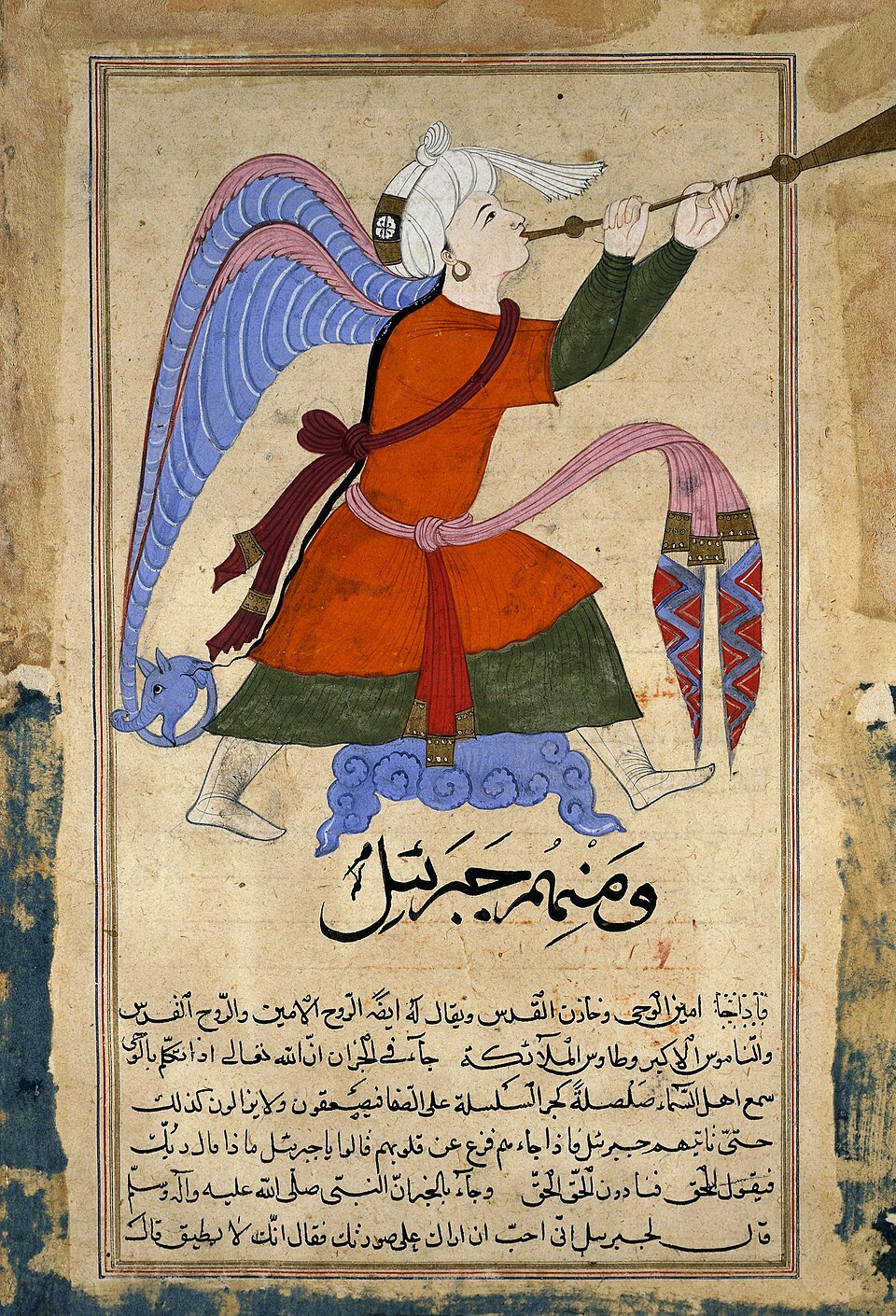
- Has part(s): Mukarrabun[21], Jibril[22], Mikha'il[23], Israfil[24], Munkar and Nakir[25], Harut and Marut[26], Ridwan[27], Maalik[28], Bearers of the Throne[29], Kalqa'il[30], Celestial court[31], Al-Ra'd[32]
- Residence: Seven Heavens[33], Al-Bayt al-Maʿmūr[34]
- Topic's main category: Category:Angels in Islam[35]
- Director / manager: Jibril[36]
- Facet of: Islam[37], Sufism[38], Al-Ghaib[39]
- Present in work: Qur’an[40], Sunnah[41], prophetic biography[42]
- Has characteristic: polyglot[43]
- Native label: ملأك[44], ملائكة[45]
- Different from: jinn[46]
- Culture: Islamic culture[47]
- Language used: multilingualism[48], multiple languages[49]
- Practiced by: Ḥizb Allāh[50]
- Maintained by WikiProject: WikiProject Islam[51]
Body
Cultural Significance
Things named for angel in Islam include An-Naziat[52], a surah[53] and Al-Mursalat[54], a surah[55].
Why It Matters
angel in Islam has Wikipedia articles in 18 language editions, a strong signal of global cultural recognition.[56] It is known by 61 alternative names across languages and contexts.[57]
Entities named for it include An-Naziat[52], a surah[53] and Al-Mursalat[54], a surah[55].