
Anaximander
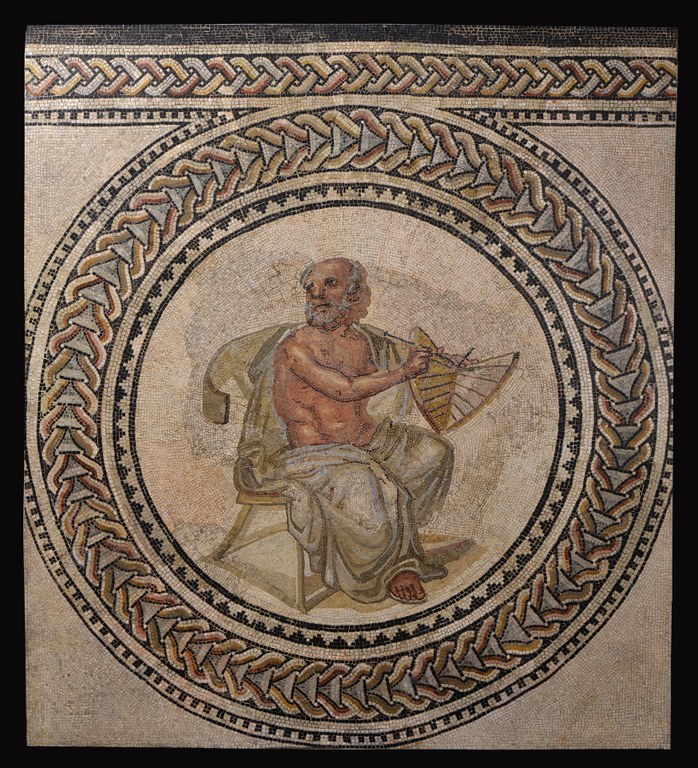
0 sources
Anaximander
Summary
Anaximander is a human[1]. Born in Miletus[2], he… he was born on 620 BC[3]. He died in Miletus[4]. He died on 547 BC[5]. He worked as a philosopher[6], astronomer[7], mathematician[8], geographer[9], and physicist[10]. He ranks in the top 0.69% of human entities by monthly Wikipedia readership (13,241 views/month, #6,854 of 1,000,298).[11]
Key Facts
- Born in Miletus[2], Anaximander…
- Anaximander died in Miletus[4].
- Anaximander was born on 620 BC[3].
- Anaximander was born on 611 BC[12].
- Anaximander was born on 610 BC[13].
- Anaximander died on 547 BC[5].
- Anaximander died on 556 BC[14].
- Anaximander died on 546 BC[15].
- Anaximander died on 540 BC[16].
- Anaximander's father was Y67D2.2[17].
- Anaximander held citizenship in Miletus[18].
- Anaximander's professions included philosopher[6].
- Anaximander worked as an astronomer[7].
- Anaximander worked as a mathematician[8].
- Anaximander's professions included geographer[9].
- Anaximander's professions included physicist[10].
- Anaximander's professions included writer[19].
- Anaximander's field of work was philosophy[20].
- A notable student of Anaximander was Pythagoras[21].
- A notable student of Anaximander was Anaximenes of Miletus[22].
- A notable work attributed to Anaximander is apeiron[23].
- Anaximander was influenced by Thales[24].
- Anaximander is recorded as male[25].
- Anaximander's instance of is recorded as human[26].
- Anaximander is associated with the Pre-Socratic philosophy movement[27].
Body
Origins and Family
Born in Miletus[2], Anaximander… Recorded date of birth include 620 BC[3], 611 BC[12], and 610 BC[13]. His father was Y67D2.2[17].
Education
Anaximander studied under Thales[28].
Career and Affiliations
Recorded occupations include philosopher[6], astronomer[7], mathematician[8], geographer[9], physicist[10], and writer[19]. Anaximander's field of work was philosophy[20]. Notable students include Pythagoras[21], a mathematician[29], -0550–-0490[30], of Samos[31], specialised in geometry[32] and Anaximenes of Miletus[22], a philosopher[33], -0585–-0525[34], specialised in philosophy[35].
Works and Contributions
A notable work attributed to Anaximander is apeiron[23]. Things named for him include he[36].
Death and Burial
Recorded date of death include 547 BC[5], 556 BC[14], 546 BC[15], and 540 BC[16]. Anaximander died in Miletus[4].
Why It Matters
Anaximander ranks in the top 0.69% of human entities by monthly Wikipedia readership (13,241 views/month, #6,854 of 1,000,298).[11] He has Wikipedia articles in 29 language editions, a strong signal of global cultural recognition.[37] He is known by 57 alternative names across languages and contexts.[38]
He has been cited as an influence by Aristotle[39], a biologist[40], -0384–-0322[41], specialised in philosophy[42]; Martin Heidegger[43], a philosopher[44], 1889–1976[45], of Weimar Republic[46], awarded the Johann-Peter-Hebel-Preis[47], specialised in philosophy[48]; Pythagoras[49], a mathematician[50], -0550–-0490[51], of Samos[52], specialised in geometry[53]; and Marcel Conche[54], a philosopher[55], 1922–2022[56], of France[57], awarded the Commandeur des Arts et des Lettres[58], specialised in philosophy[59].
He is credited with the discovery of spontaneous generation[60], a scientific theory[61] and apeiron[62], a philosophical concept[63]. Entities named for him include he[36].
FAQs
Where was Anaximander born?
Anaximander's place of birth was Miletus[2].
Where did Anaximander die?
Anaximander passed away in Miletus[4].
Who were Anaximander's parents?
Anaximander's father was Y67D2.2[17].
What did Anaximander do for work?
Anaximander worked as philosopher[6], astronomer[7], mathematician[8], geographer[9], and physicist[10].
Who did Anaximander influence?
Anaximander has been cited as an influence by Aristotle[39], Martin Heidegger[43], Pythagoras[49], and Marcel Conche[54].
What did Anaximander discover?
Anaximander is credited as discoverer of spontaneous generation[60] and apeiron[62].