
A. Kollontaĭ
0 sources
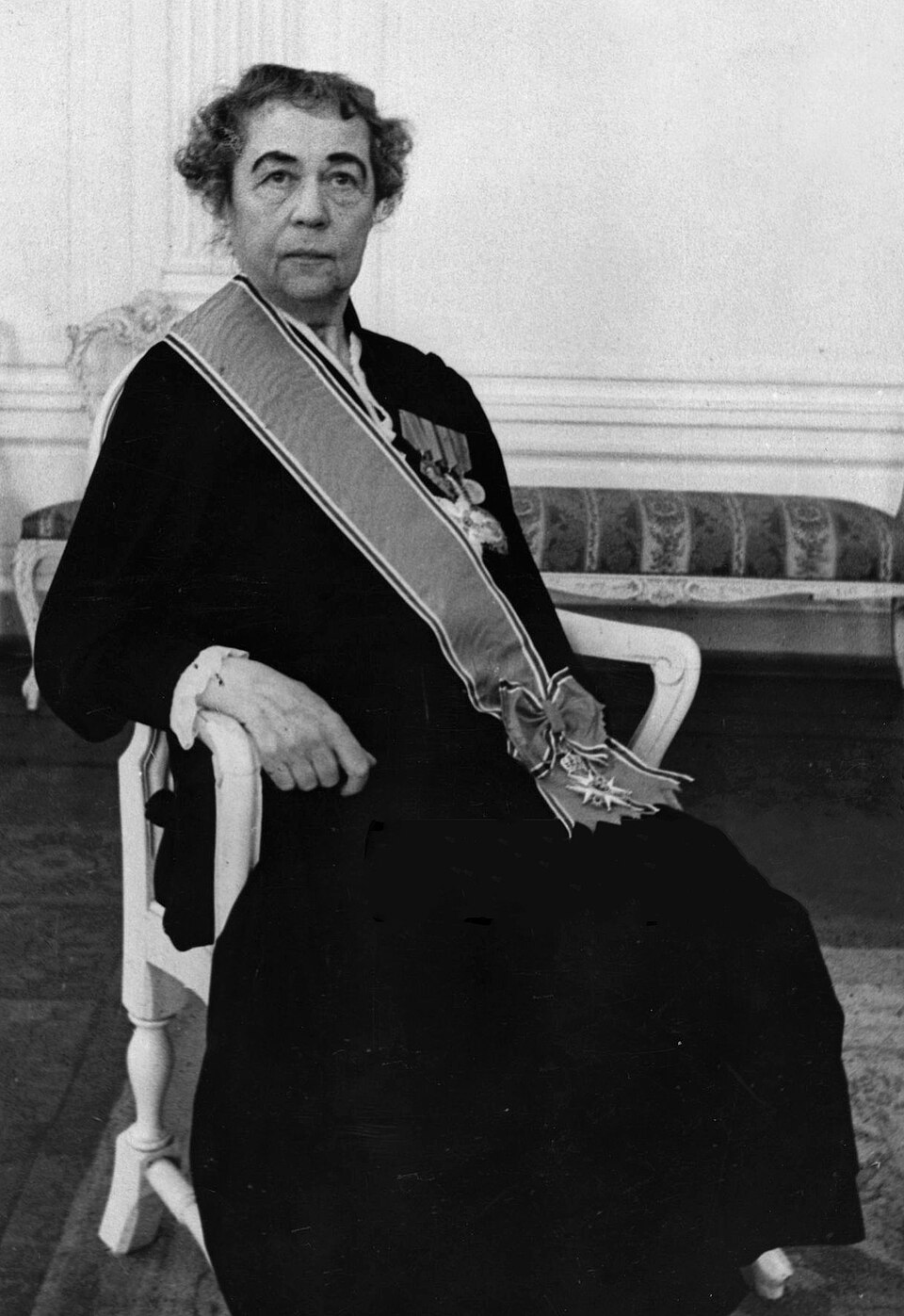
Alexandra Kollontai was born on March 31, 1872, in Saint Petersburg [1][2][3][4][5][6][7][8] and died on March 9, 1952, in Moscow [7][9][10][11][1][2][3][4][6][8]. She spoke Russian as her native language [12] and received her education at the University of Zurich . Her professional life encompassed roles as a revolutionary, diplomat, women's rights activist, writer, political theorist, and People's Commissar [8].
Her personal life included marriages to Vladimir Liudvigovich Kollontay and Pavel Dybenko [10]. Throughout her career, she received several honors, including the Order of Lenin, the Order of the Red Banner of Labour, the Order of the Aztec Eagle, and the Knight Grand Cross of the Order of St. Olav [13][14][7][15][16]. She was buried at Novodevichy Cemetery [1].
Key Facts
- Date of birth: April 1, 1872[11], March 19, 1872[12]
- Place of burial: Novodevichy Cemetery[13]
- Father: Mikhail Domontovich[14]
- Spouse: Vladimir Liudvigovich Kollontay[15], Pavel Dybenko[16]
- Country of citizenship: Russian Empire[17], Soviet Union[18]
- Native language: Russian[19]
- Occupation: People's Commissar[20], sociologist[21], politician[22], feminist[23], ambassador[24]
- Field of work: international relations[25]
- Position held: Member of the Russian Constituent Assembly[26], ambassador[27], minister[28], chargé d'affaires[29], minister plenipotentiary[30], envoy[31]
- Educated at: University of Zurich[32]
- Award received: Order of Lenin[33], Order of the Red Banner of Labour[34], Order of St. Olav[35], Order of the Aztec Eagle[36], Knight Grand Cross of the Order of St. Olav[37]
- Member of: Workers' Opposition[38]
- Sex or gender: female[39]
- Family: House of Domontovitch[40]
- Member of political party: Russian Social Democratic Labour Party[41], Communist Party of the Soviet Union[42]
- Commons category: Alexandra Kollontai[43]
- Cause of death: myocardial infarction[44]
- Family name: Kollontay[45], House of Domontovitch[46]
- Given name: Alexandra[47]
- Significant event: Continuation War[48], October Revolution[49], Winter War[50]
- Topic's main category: Category:Alexandra Kollontai[51]
- Commons gallery: Alexandra Kollontay[52]
- Work location: Oslo[53]
Body
Works and Contributions
Things named for A. Kollontaĭ include 2467 Kollontai[54], an asteroid[55].
Why It Matters
A. Kollontaĭ has Wikipedia articles in 28 language editions, a strong signal of global cultural recognition.[56] She is known by 99 alternative names across languages and contexts.[57]
Entities named for her include 2467 Kollontai[54], an asteroid[55].
FAQs
Where was A. Kollontaĭ born?
A. Kollontaĭ was born in Saint Petersburg[2].
Where did A. Kollontaĭ die?
A. Kollontaĭ died in Moscow[4].
Who were A. Kollontaĭ's parents?
A. Kollontaĭ's father was Mikhail Domontovich[14].
Who was A. Kollontaĭ married to?
A. Kollontaĭ's spouses include Vladimir Liudvigovich Kollontay[15] and Pavel Dybenko[16].
What did A. Kollontaĭ do for work?
A. Kollontaĭ worked as a revolutionary[5], diplomat[6], women's rights activist[7], writer[8], and political theorist[9].
Where did A. Kollontaĭ go to school?
A. Kollontaĭ was educated at University of Zurich[32].
What awards did A. Kollontaĭ receive?
Honors received include Order of Lenin[33], Order of the Red Banner of Labour[34], Order of St. Olav[35], and Order of the Aztec Eagle[36].