
Alexander Glazounov
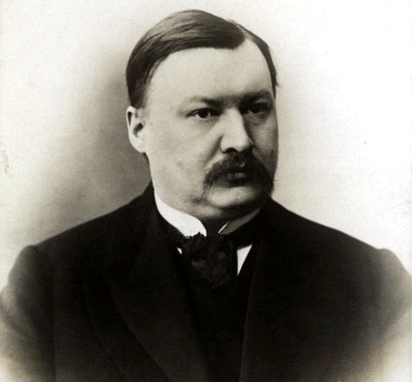
0 sources
Summary
Alexander Glazounov was born on July 29, 1865[1], in Saint Petersburg[2]. He died on March 21, 1936[3], in Neuilly-sur-Seine[4]. He worked as a composer[5], conductor[6], pedagogue[7], musicologist[8], and music educator[9]. He ranks in the top 0.71% of human entities by monthly Wikipedia readership (2,550 views/month, #7,086 of 1,000,298).[10]
Key Facts
- Place of death: Paris[11]
- Place of burial: Tikhvin Cemetery[12]
- Country of citizenship: Russian Empire[13], Soviet Union[14], Russia[15]
- Occupation: university teacher[16], pianist[17]
- Employer: Saint Petersburg Conservatory[18]
- Student: Arthur Lourié[19], Natalia Pravosudovich[20], Mikhail Klimov[21], Dimitri Tiomkin[22]
- Notable work: String Quartet No. 2[23], Saxophone Concerto[24]
- Award received: People's Artist of the RSFSR[25]
- Sex or gender: male[26]
- Genre: symphony[27], classical music[28]
- Commons category: Alexander Glazunov[29]
- Family name: Glazunov[30]
- Given name: Aleksandr[31]
- Topic's main category: Category:Alexander Glazunov[32]
- Relative: Elena Günther-Glazunov[33]
- Student of: Nikolai Rimsky-Korsakov[34]
- Depicted by: Glazunov by Repin[35]
- Described by source: Great Soviet Encyclopedia (1969–1978)[36], Brockhaus and Efron Encyclopedic Dictionary[37], Small Brockhaus and Efron Encyclopedic Dictionary[38], Riemann's Music Dictionary[39], Encyclopædia Britannica 11th edition[40], Great Soviet Encyclopedia (1926–1947)[41]
- Languages spoken, written or signed: Russian[42]
- List of works: list of compositions by Alexander Glazunov[43]
- Name in native language: Александр Константинович Глазунов[44]
Product Details
The following facts are restated verbatim from public-domain and CC0 open-data sources — every line is independently verifiable against the named source's catalog.
MusicBrainz — CC0 open music encyclopedia
-
Type: Person[45]
-
Country: RU[46]
-
Began / founded: 1865-08-10[47]
-
Ended / dissolved: 1936-03-21[48]
-
Genre(s): classical, romantic classical[49]
-
Community tags: classical, composer, romantic classical, russian composer[50]
-
MusicBrainz ID: 5a0988a4-695c-4bff-bc68-4f312427495e[51]
Body
Works and Contributions
Things named for Alexander Glazounov include Glazunov Glacier[52].
Why It Matters
Alexander Glazounov has Wikipedia articles in 26 language editions, a strong signal of global cultural recognition.[53] He is known by 90 alternative names across languages and contexts.[54]
Entities named for him include Glazunov Glacier[52].
FAQs
Where was Alexander Glazounov born?
Alexander Glazounov's place of birth was Saint Petersburg[2].
Where did Alexander Glazounov die?
Alexander Glazounov passed away in Neuilly-sur-Seine[4].
What did Alexander Glazounov do for work?
Alexander Glazounov worked as a composer[5], conductor[6], pedagogue[7], musicologist[8], and music educator[9].
What awards did Alexander Glazounov receive?
Honors received include People's Artist of the RSFSR[25].