
Ales Bialiatski
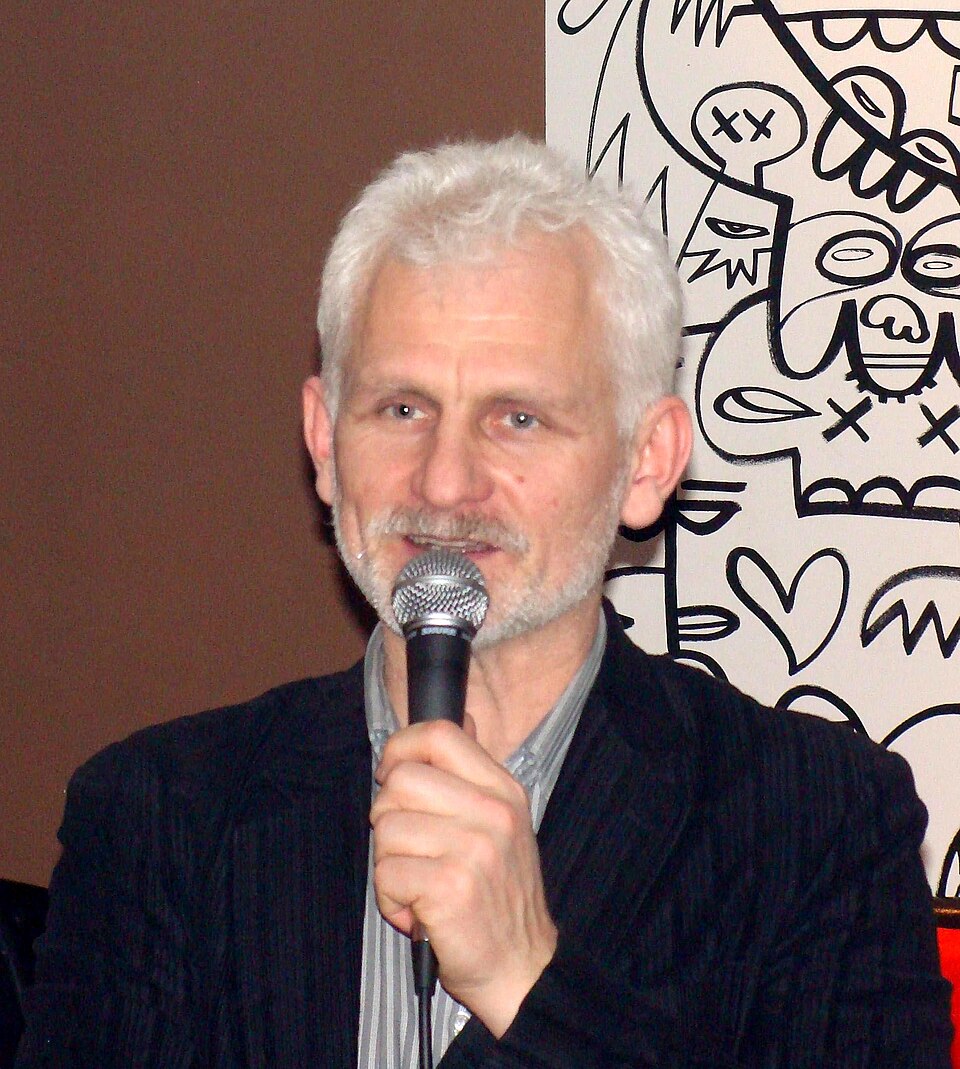
0 sources
Ales Bialiatski
Summary
Ales Bialiatski is a human[1]. Born in Vyartsilya[2], he… he was born on September 25, 1962[3]. He worked as a writer[4], human rights defender[5], politician[6], literary scholar[7], and literary critic[8]. He ranks in the top 0.72% of human entities by monthly Wikipedia readership (2,263 views/month, #7,209 of 1,000,298).[9]
Key Facts
- Ales Bialiatski was born in Vyartsilya[2].
- Ales Bialiatski was born on September 25, 1962[3].
- Ales Bialiatski was married to Natalia Pinchuk[10].
- Ales Bialiatski held citizenship in Soviet Union[11].
- Ales Bialiatski held citizenship in Belarus[12].
- Ales Bialiatski's professions included writer[4].
- Ales Bialiatski's professions included human rights defender[5].
- Ales Bialiatski worked as a politician[6].
- Ales Bialiatski's professions included literary scholar[7].
- Ales Bialiatski's professions included literary critic[8].
- Ales Bialiatski's professions included literary historian[13].
- Ales Bialiatski's field of work was literary studies[14].
- Ales Bialiatski's field of work was literary criticism[15].
- Ales Bialiatski's field of work was history of literature[16].
- Ales Bialiatski's field of work was human rights protection[17].
- Among Ales Bialiatski's employers was Viasna Human Rights Centre[18].
- Ales Bialiatski was employed by Maksim Bahdanovič Literary Museum, Minsk[19].
- Ales Bialiatski received the Per Anger Prize[20].
- Ales Bialiatski received the Homo Homini Award[21].
- Ales Bialiatski received the Václav Havel Human Rights Prize[22].
- Ales Bialiatski received the Petra-Kelly-Preis[23].
- Ales Bialiatski received the Andrei Sakharov Freedom Award[24].
- Ales Bialiatski received the honorary citizen of Paris[25].
- Ales Bialiatski was a member of Talaka[26].
- Ales Bialiatski was a member of Coordination Council for the Transfer of Power[27].
Body
Origins and Family
Ales Bialiatski was born in Vyartsilya[2]. He was born on September 25, 1962[3].
Career and Affiliations
Recorded occupations include writer[4], human rights defender[5], politician[6], literary scholar[7], literary critic[8], and literary historian[13]. Fields of work include literary studies[14], an academic discipline[28]; literary criticism[15], a literary genre[29]; history of literature[16], an academic discipline[30]; and human rights protection[17]. Employers include Viasna Human Rights Centre[18], a human rights organization[31], in Belarus[32], founded in 1996[33], headquartered in Minsk[34] and Maksim Bahdanovič Literary Museum, Minsk[19], a museum[35], in Belarus[36], founded in 1980[37].
Recognition
Awards received include Per Anger Prize[20], an award[38], in Sweden[39], founded in 2004[40]; Homo Homini Award[21], an award[41], in Czech Republic[42], founded in 1994[43]; Václav Havel Human Rights Prize[22], a human rights award[44], founded in 2013[45]; Petra-Kelly-Preis[23], an award[46]; Andrei Sakharov Freedom Award[24], an award[47], in Norway[48], founded in 1980[49]; and honorary citizen of Paris[25], an award[50], in France[51].
Personal Life
Ales Bialiatski was married to Natalia Pinchuk[10].
Why It Matters
Ales Bialiatski ranks in the top 0.72% of human entities by monthly Wikipedia readership (2,263 views/month, #7,209 of 1,000,298).[9] He has Wikipedia articles in 28 language editions, a strong signal of global cultural recognition.[52] He is known by 69 alternative names across languages and contexts.[53]
FAQs
Where was Ales Bialiatski born?
Born in Vyartsilya[2], Ales Bialiatski…
Who was Ales Bialiatski married to?
Ales Bialiatski's spouses include Natalia Pinchuk[10].
What did Ales Bialiatski do for work?
Ales Bialiatski worked as writer[4], human rights defender[5], politician[6], literary scholar[7], and literary critic[8].
What awards did Ales Bialiatski receive?
Honors received include Per Anger Prize[20], Homo Homini Award[21], Václav Havel Human Rights Prize[22], and Petra-Kelly-Preis[23].