
Alcuin
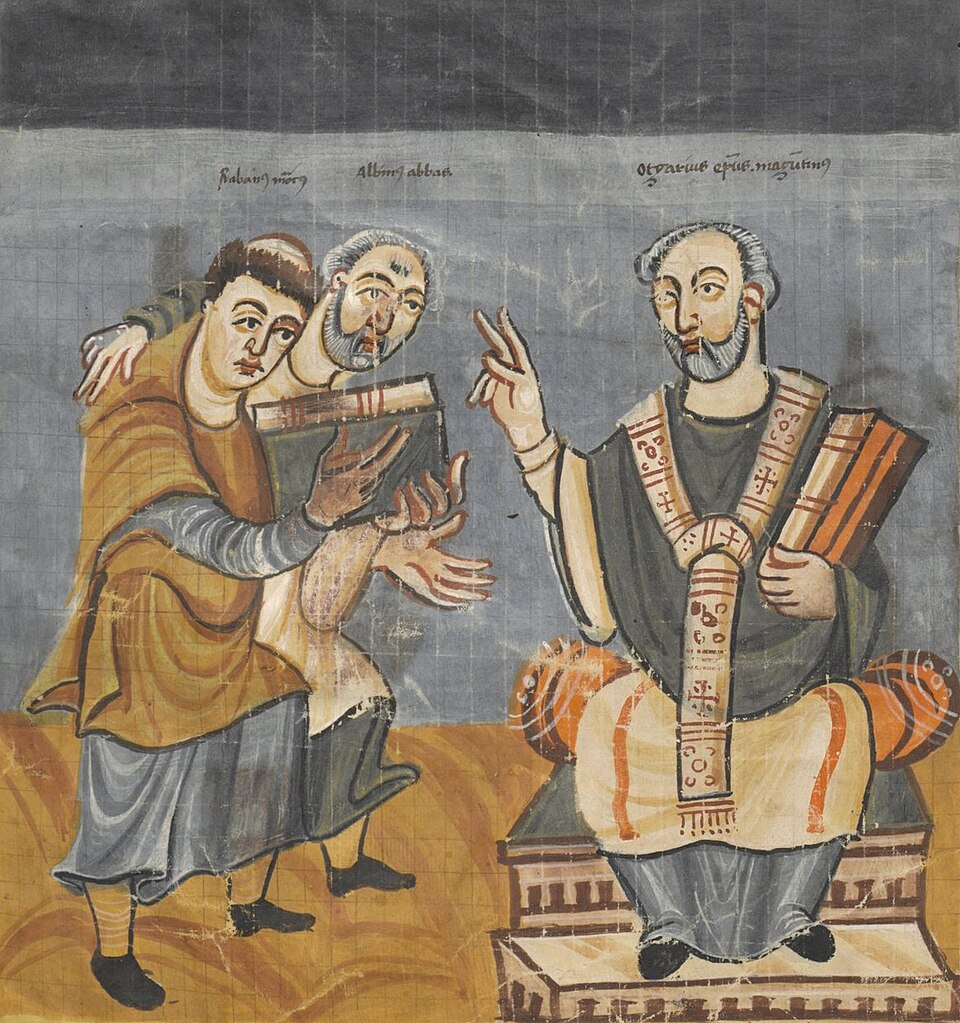
0 sources
Alcuin
Summary
Alcuin is a human[1]. He was born in York[2]. He was born on 724[3]. He died in Tours[4]. He died on May 19, 804[5]. He worked as a theologian[6], poet[7], writer[8], philosopher[9], and Catholic priest[10]. He ranks in the top 0.7% of human entities by monthly Wikipedia readership (1,786 views/month, #7,022 of 1,000,298).[11]
Key Facts
- Alcuin's place of birth was York[2].
- Alcuin's place of birth was Kingdom of Northumbria[12].
- Alcuin passed away in Tours[4].
- Alcuin was born on 724[3].
- Alcuin was born on 735[13].
- Alcuin was born on 740[14].
- Alcuin died on May 19, 804[5].
- Alcuin died on January 1, 804[15].
- Alcuin is buried at Q19817291[16].
- Alcuin held citizenship in Kingdom of Northumbria[17].
- Alcuin's professions included theologian[6].
- Alcuin worked as a poet[7].
- Alcuin worked as a writer[8].
- Alcuin's professions included philosopher[9].
- Alcuin worked as a Catholic priest[10].
- Alcuin held the position of abbot[18].
- Alcuin held the position of abbot of Flavigny Abbey[19].
- Alcuin was educated at St Peter's School[20].
- A notable student of Alcuin was Haymo of Halberstadt[21].
- A notable student of Alcuin was Hilduin[22].
- A notable work attributed to Alcuin is De dialectica[23].
- A notable work attributed to Alcuin is Propositiones ad acuendos juvenes[24].
- A notable work attributed to Alcuin is Alcuin's sequence[25].
- A notable work attributed to Alcuin is Quaestiones in Genesim[26].
- A notable work attributed to Alcuin is Disputatio de rhetorica[27].
Body
Origins and Family
Recorded place of birth include York[2], a county town[28], in United Kingdom[29], founded in 0071[30] and Kingdom of Northumbria[12], a historical country[31], in United Kingdom[32], founded in 0653[33]. Recorded date of birth include 724[3], 735[13], and 740[14].
Education
Alcuin was educated at St Peter's School[20]. Studied under Ecgbert[34], an archbishop[35], of England[36] and Æthelbert[37], a Catholic priest[38].
Career and Affiliations
Recorded occupations include theologian[6], poet[7], writer[8], philosopher[9], and Catholic priest[10]. Positions held include abbot[18], an ecclesiastical occupation[39] and abbot of Flavigny Abbey[19]. Notable students include Haymo of Halberstadt[21], a writer[40], 0778–0853[41], of Francia[42] and Hilduin[22], a historian[43], 0775–0858[44], of Carolingian Empire[45].
Works and Contributions
Notable works include De dialectica[23], a reference work[46], founded in 0800[47]; Propositiones ad acuendos juvenes[24], a literary work[48], founded in 0800[49]; Alcuin's sequence[25], an integer sequence[50]; Quaestiones in Genesim[26], a literary work[51]; Disputatio de rhetorica[27], a reference work[52]; and Disputatio de vera philosophia[53]. Things named for him include his sequence[54] and Cultuur Stimuleringsprijs Stad Nijmegen[55].
Personal Life
Alcuin's religion is recorded as Catholic Church[56].
Death and Burial
Recorded date of death include May 19, 804[5] and January 1, 804[15]. Alcuin died in Tours[4]. He is buried at Q19817291[16].
Why It Matters
Alcuin ranks in the top 0.7% of human entities by monthly Wikipedia readership (1,786 views/month, #7,022 of 1,000,298).[11] He has Wikipedia articles in 27 language editions, a strong signal of global cultural recognition.[57] He is known by 68 alternative names across languages and contexts.[58]
Works attributed to him include Propositiones ad acuendos juvenes[59], a literary work[60], founded in 0800[61]. Entities named for him include his sequence[54] and Cultuur Stimuleringsprijs Stad Nijmegen[55].
FAQs
Where was Alcuin born?
Alcuin was born in York[2].
Where did Alcuin die?
Alcuin died in Tours[4].
What did Alcuin do for work?
Alcuin worked as theologian[6], poet[7], writer[8], philosopher[9], and Catholic priest[10].
Where did Alcuin go to school?
Alcuin was educated at St Peter's School[20].